

































Avalanche Energy Achieves Major Plasma Milestone with Compact Fusion Reactor
Avalanche Energy has reached a key fusion milestone by heating plasma to over 11 million °C in its compact reactor prototype. The breakthrough strengthens thecompany’ss vision for smaller, scalable fusion energy systems.
Although no company has yet developed a fusion reactor capable of generating commercial power, researchers generally agree on several key milestones that must be reached along the way. One of the most significant is heating fusion fuel to more than 10 million degrees Celsius, a temperature approaching conditions near the centre of the sun.
Avalanche Energy says it has now crossed that threshold. The company revealed exclusively that its desktop-sized fusion prototype successfully heated plasma to approximately 11 million degrees Celsius, placing it among a small group of fusion companies that have achieved this milestone.
The accomplishment is notable not only for the temperature reached but also for the amount of capital required to get there. According to Avalanche, the company has spent less than $50 million in venture funding to achieve the result, significantly less than many competitors pursuing similar goals.
Fusion researchers typically do not measure plasma temperatures with conventional thermometers. Instead, they calculate the energy of particles in the plasma in units called kiloelectron volts (keV).
Within the fusion industry, reaching temperatures above 1 keV is widely regarded as a meaningful benchmark. Commonwealth Fusion Systems CEO Bob Mumgaard has previously described that level as the point where “the world will take notice.”
Plasma temperature is one of the most important factors physicists evaluate when studying fusion experiments. If the plasma remains too cool, particles are less likely to collide with sufficient energy to fuse. As temperatures increase, the probability of those collisions rises. If the plasma is sufficiently dense and can be sustained long enough, fusion reactions can occur, releasing substantial amounts of energy.
While achieving this milestone does not guarantee future success, it indicates that Avalanche is progressing toward creating the conditions necessary for sustained fusion reactions that could eventually generate more energy than the system consumes.
The company’s approach also suggests that fusion power may be achievable using smaller reactors than those being pursued elsewhere in the industry. Many fusion startups are developing large-scale systems designed to produce tens or even hundreds of megawatts of electricity.
Avalanche, by contrast, is exploring a compact approach that could lead to smaller, less expensive fusion power plants. If successful, such systems could compete with a variety of existing energy technologies, including diesel generators and natural gas turbines.
The company has not yet published its findings in a peer-reviewed scientific journal. However, Avalanche said the results have been reviewed and validated by a plasma physicist at MIT.
Unlike many fusion projects that rely on increasingly large experimental devices, Avalanche deliberately chose a smaller design philosophy. According to the company, compact systems allow engineers to iterate more rapidly and test improvements in shorter development cycles.
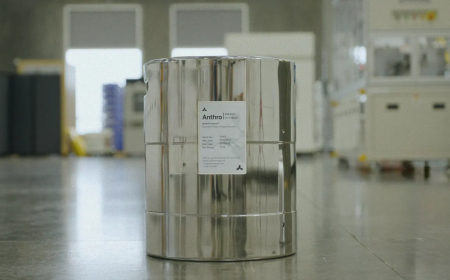
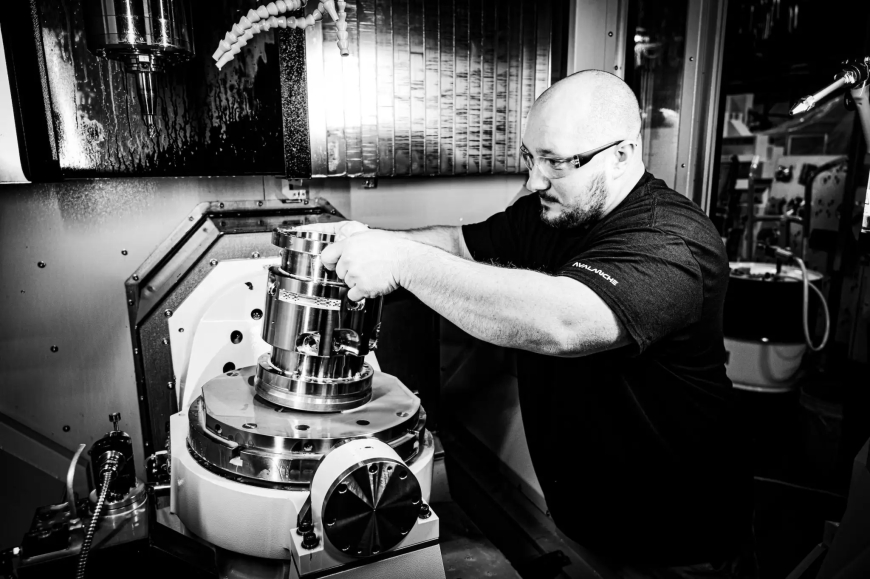
Its latest reactor prototype, known as Jyn, reflects that strategy. The fusion core measures only five inches in diameter, making it dramatically smaller than many competing fusion systems.
Avalanche said it has already updated and refined the Jyn device 25 times since last autumn. The rapid pace of iteration is a central part of the company’s development strategy as it works toward demonstrating more advanced fusion performance.
While substantial technical challenges remain before fusion can become a practical source of electricity, the latest result represents an important step for Avalanche and highlights the growing diversity of approaches being explored across the fusion industry. The company believes its small-scale reactor design could provide a faster and potentially more cost-effective path toward future fusion energy systems.
What's Your Reaction?
 Like
0
Like
0
 Dislike
0
Dislike
0
 Love
0
Love
0
 Funny
0
Funny
0
 Angry
0
Angry
0
 Sad
0
Sad
0
 Wow
0
Wow
0