


































World’s largest privately funded laser facility begins operations
The world’s largest privately owned laser has officially powered on, opening new possibilities for fusion energy research, advanced physics, and scientific innovation.
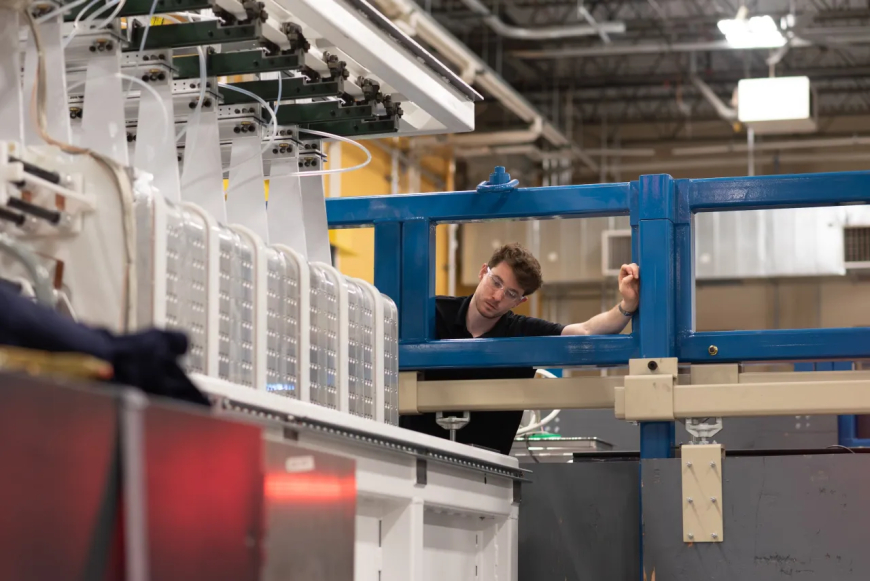
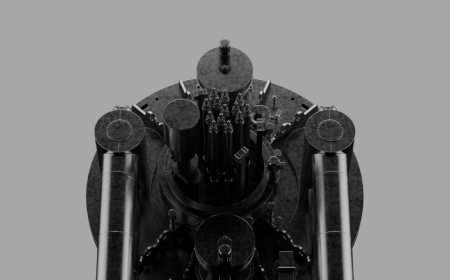
Fusion energy startup Xcimer Energy announced on Wednesday that it has successfully activated its Phoenix laser system, which it describes as the largest privately funded laser facility currently operating.
The milestone marks an important step in Xcimer’s effort to develop commercial fusion power using technology inspired by the groundbreaking work at the National Ignition Facility (NIF), which in December 2022 demonstrated that a controlled fusion reaction could generate more energy than was required to initiate it.
At the National Ignition Facility, scientists directed 192 powerful laser beams at a tiny fuel target smaller than a pencil eraser. The laser energy struck a gold enclosure surrounding the fuel. As the lasers vaporised the gold target, the energy was converted into X-rays, which were focused onto the fuel pellet inside. This process compressed the fuel to extremely high densities and temperatures, causing atomic nuclei to fuse and release energy.
Xcimer is pursuing a similar approach but believes that more powerful and less complex laser systems could ultimately make fusion power commercially practical and economically viable.
The company’s proposed fusion power plant design calls for two high-powered lasers capable of producing pulses lasting microseconds. Those laser pulses would then pass through a compression system designed to deliver the energy to a fuel target within nanoseconds. According to the company, the faster the fuel can be compressed, the greater the likelihood of achieving efficient fusion reactions that generate useful amounts of energy.
The newly activated Phoenix system represents a significant step toward that long-term objective. The facility utilises excimer laser amplification technology, a system commonly used in semiconductor manufacturing, but engineered on a much larger, more powerful scale for fusion applications.
According to Xcimer, the krypton-fluoride laser at the heart of Phoenix can deliver more than 1 kilojoule of energy at full power. The laser’s core structure measures approximately 38 meters in length, making it one of the largest privately operated laser systems ever constructed.
While Phoenix is a major achievement, it remains only an early-stage demonstration relative to the company’s ultimate ambitions. Xcimer estimates that a commercial fusion power facility would require laser systems capable of delivering more than 12 megajoules of energy, many times greater than the output currently produced by Phoenix.
The company’s development roadmap includes building a prototype fusion system by 2028. Following that milestone, Xcimer plans to develop a larger demonstration facility designed to achieve a critical objective for fusion energy developers: generating at least as much energy as the system consumes.
Looking further ahead, Xcimer expects to begin work on its first commercial-scale fusion power plant sometime during the mid-2030s. If successful, the company hopes its technology will help transform fusion energy from a scientific breakthrough into a practical source of large-scale carbon-free electricity.
The activation of the Phoenix laser system represents another notable development in the rapidly advancing fusion energy industry, where startups and research organisations around the world are racing to commercialise a technology long viewed as one of the most promising solutions for future clean energy generation.
What's Your Reaction?
 Like
0
Like
0
 Dislike
0
Dislike
0
 Love
0
Love
0
 Funny
0
Funny
0
 Angry
0
Angry
0
 Sad
0
Sad
0
 Wow
0
Wow
0