































Helion secures $465M to advance fusion energy project for Microsoft
Helion has raised $465 million to accelerate fusion energy development and support its plan to deliver clean electricity through a future power plant for Microsoft.
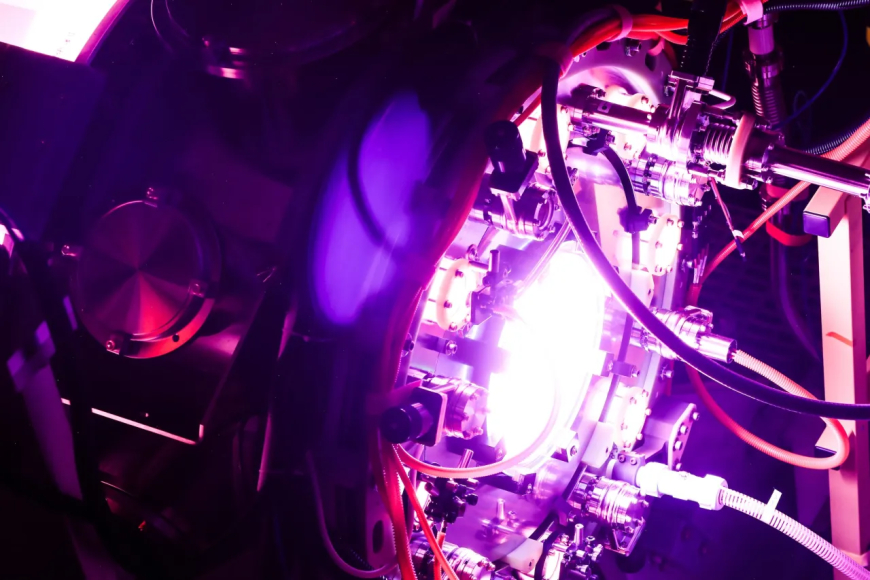
Helion, the fusion energy startup backed by Sam Altman, announced Thursday that it has secured $465 million in fresh funding, bringing the company’s valuation to approximately $15.5 billion.
The new capital arrives as Helion works toward completing Orion, the company’s first planned fusion power facility. The startup continues to pursue an ambitious goal of supplying fusion-generated electricity to the power grid as early as 2028, contingent on meeting the commitments outlined in its agreement with Microsoft.
The company previously raised $425 million in January 2025. With this latest financing, Helion says its total funding to date has reached $1.5 billion.
The Series G funding round was led by Thrive Capital and attracted a broad group of investors. New participants included Alta Park Capital, Anti Fund, BoxGroup, Lux Capital, Peak XV Partners, and Bill Ford. Existing investors also joined the round, including Capricorn Technology Impact Funds, Lightspeed Venture Partners, Mithril Capital, Dustin Moskovitz through Good Ventures Foundation, SoftBank Vision Fund 2, and a university endowment fund.
Helion’s strategy for generating fusion energy differs from that of many other companies pursuing commercial fusion power. While some startups rely on magnetic confinement systems and others use powerful lasers to compress fusion fuel, many of those approaches ultimately plan to generate electricity through conventional steam turbines that convert heat into power.
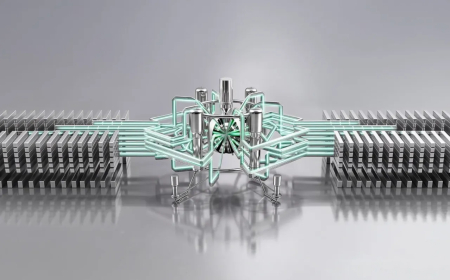
Helion is taking a different route. The company uses magnetic fields to compress fusion fuel, but instead of relying on heat-driven turbines, it plans to extract electricity directly from the magnetic systems themselves.
When fusion reactions occur in the reactor plasma, the plasma expands and exerts force on the surrounding magnetic fields. Helion intends to capture that energy directly from the magnets as electricity. The company compares the concept to regenerative braking in electric vehicles, where motors operate in reverse to recover energy and recharge batteries.
If successful, this design could significantly increase the efficiency of a commercial fusion power plant. However, some experts in the fusion field remain cautious about the approach. Part of the scepticism stems from the fact that Helion publishes relatively little research in peer-reviewed scientific journals compared with many of its competitors. As a result, independent physicists have had limited opportunities to examine the theoretical foundations of the company’s technology closely.
David Kirtley, Helion’s chief executive officer, has previously argued that practical results from the company’s fusion systems will ultimately matter more than theoretical discussions. Speaking last year, he said the company’s focus is on developing practical fusion technology rather than theorising about it. Helion is far from the only fusion company attracting major investor attention. Interest in the sector has accelerated significantly in recent months as investors search for next-generation energy technologies.
Last week alone, Focused Energy announced a $240 million funding round, while Thea Energy secured $100 million. Earlier this year, Inertia Energy emerged from stealth mode with a $450 million Series A financing, and Type One Energy disclosed plans to raise $250 million through a Series B round.
Investor enthusiasm has remained strong despite the long timelines associated with fusion energy development. While several companies have reported technical milestones that they believe move them closer to commercial viability, most still estimate that their first full-scale commercial fusion plants will not begin operating until sometime in the middle of the next decade at the earliest.
One reason for the growing excitement is fusion’s promise of delivering vast amounts of continuous, carbon-free energy using fuel sources derived largely from seawater. That prospect is particularly attractive to technology companies investing heavily in artificial intelligence, where energy demand continues to rise rapidly.
Beyond AI infrastructure, successful fusion technology could also reshape multiple trillion-dollar segments of the global energy market if companies can eventually produce power at competitive costs. While fusion development timelines remain longer than what many venture capital investors traditionally prefer, the potential rewards are equally substantial, making the sector one of the most closely watched areas in advanced energy technology today.
What's Your Reaction?
 Like
0
Like
0
 Dislike
0
Dislike
0
 Love
0
Love
0
 Funny
0
Funny
0
 Angry
0
Angry
0
 Sad
0
Sad
0
 Wow
0
Wow
0