There is a question underneath all the AI subscriptions and API bills that not enough people are asking: what if you just owned it instead?
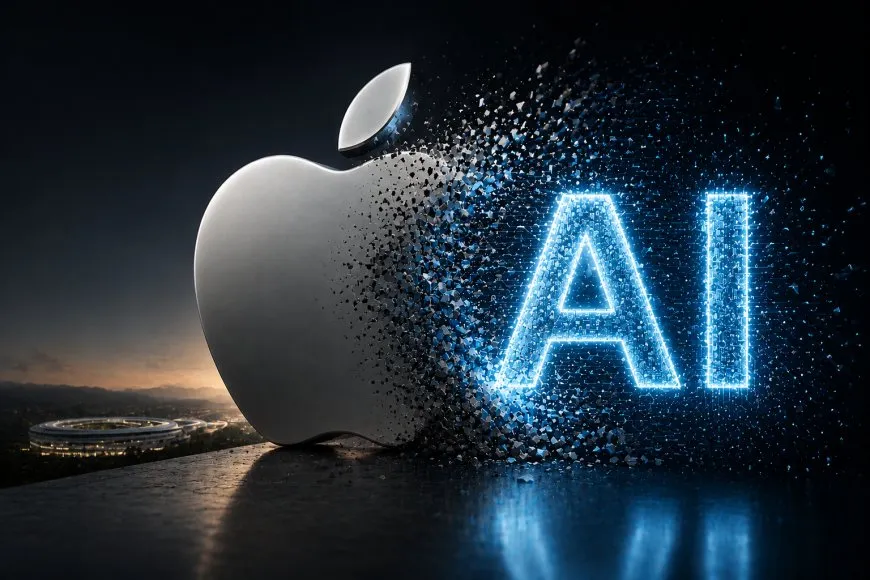
That is the bet Apple just made. On August 25, the company announced a new Mac Mini starting at $899 and a refreshed Mac Studio with configurations up to $5,499, and the marketing language for both was unusually direct for Apple. They called it “always-on, deskside agentic computing.” The Mac Mini is being positioned as a home for AI agents that run continuously, locally on your hardware, without a cloud subscription, a monthly bill, or sending your data anywhere.
Apple is not trying to build the smartest AI model. It is trying to become the machine that runs everyone else’s
What Apple Is Actually Announcing
The new Mac Mini ships with Apple’s first 2nm M6 chip, delivering up to four times faster AI performance than the previous generation, and 4.8 times faster large language model processing. The Mac Studio gets M5 Max and M5 Ultra chips, with the top Ultra configuration reaching 512 gigabytes of unified memory. That is the number that matters most for anyone thinking about local AI: unified memory determines which models can run and at what speed, and 512 gigabytes puts the Studio in a category that, until recently, required a small data centre.
Both machines ship September 22.
Apple’s framing is explicit in a way the company rarely is. The Mac Mini is for always-on agentic workloads. The Studio is for on-device frontier-class models. These are not marketing abstractions. Developers using tools like OpenClaw to run local coding agents have already been gravitating toward Mac hardware for this exact purpose: a machine that sits on a desk, runs quietly, and handles AI workflows around the clock without cloud dependency. Apple is now explicitly naming and targeting that use case.
The M6 in the Mac Mini is built for it. A dual 16-core Neural Engine, Neural Accelerators in every GPU core, and a unified memory architecture that gives the CPU, GPU, and Neural Engine access to the same pool of memory without copying data between chips. That architecture is what makes Apple Silicon unusually efficient for AI inference compared to traditional CPU-plus-discrete-GPU setups.
The Ownership Argument
Here is the part of this story that goes beyond a product announcement.
Every major AI model you can name right now is a subscription or an API. You pay for tokens. You pay per month. Stop paying, and the intelligence stops. Every model upgrade is at theprovider’ss discretion. Every policy change, every rate limit, every outage is someone else’s problem to fix, but it becomes your problem to work around.
The local model approach is different in a fundamental way. You buy the hardware once. You download the weights once. From that point, the only ongoing cost is electricity. When a better open-weight model comes out, you swap it in. Your context, your files, your workflows stay on your machine. The AI changes. Your data does not move.
This is not theoretical. GLM 5.3 Flash, with 320 billion total parameters and 18 billion active per token, is the kind of model that needs significant hardware to run. The full version requires more memory than most machines can offer. But quantised variants are already being developed to bring it within reach of lower-memory configs, and the 512-gigabyte Mac Studio Ultra makes running the full version viable. As open-weight models become more capable and efficient, the range of tasks a local machine can handle without cloud assistance continues to expand.
There are tasks local models handle well today: repetitive workflows, private document processing, anything where sending data to a cloud service is a concern, background agents running continuously while you work on something else. Some tasks still need frontier cloud models: the hardest reasoning, the most complex synthesis, anything where you genuinely need the best available capability in that moment. The future Apple is positioning for is one where an invisible router sorts between the two automatically, local for the routine and private, cloud for the demanding, and the user never has to think about which is which.
Why OpenAI and Anthropic Are Buying Mac Minis
There is a detail in this story that reframes the whole thing.
Mac Minis have been in short supply. The reason is not consumer demand for desktop computers. OpenAI and Anthropic have been purchasing them in large quantities for reinforcement learning training and the development of computer-use agents. The machines sit in racks running AI agents that interact with software environments, learning to use computers the same way a person does. The Mac Mini’s combination of Apple Silicon efficiency, compact footprint, and low power consumption makes it well suited for running many agents simultaneously at scale.
The two most prominent frontier AI labs in the world are training their most capable agents on Apple hardware. That is not a coincidence, and it is not how anyone would have described the AI hardware landscape two years ago.
The Nvidia and Hugging Face Connection
One more piece of context that belongs alongside this Apple story: Nvidia has reportedly agreed to acquire Hugging Face for approximately $12.9 billion, according to The Information and confirmed by multiple sources including TechCrunch and CNBC. The deal has not yet been formally signed as of this writing.
Hugging Face is where most open-weight models live. It is where Qwen, DeepSeek, GLM, Gemma, and hundreds of other open models are distributed. If Nvidia completes this acquisition, it would own the chip hardware most AI runs on and the primary distribution platform for the models those chips run. That is an unusually complete position in the stack.
These two moves, Apple building hardware explicitly for local open-weight AI agents, and Nvidia moving toward owning the platform where those models are distributed, are happening within days of each other. Whether they are coordinated or simply parallel bets on the same underlying trend does not change the direction they both point: the open model ecosystem is becoming valuable enough that the largest hardware companies in the world want to own pieces of it.
What This Actually Means
Apple is not going to win the AI model race. It is not trying to. The company that built the App Store did not need to build every app. It built the platform, took a slice of every transaction, and let everyone else compete. The Mac as a local AI platform follows the same logic. Apple does not care whether Qwen, GLM, DeepSeek, or whatever comes next wins the open model competition. It is selling the hardware that runs them all.
For individuals and businesses considering this in practical terms, a $5,000 Mac Studio is a significant upfront expense. But compared to $200 per month indefinitely for a frontier AI subscription, the break-even point arrives faster than it looks. After roughly two years, you have crossed it, and from then on you are running AI for the cost of electricity. For any workflow where volume is high, privacy matters, or availability needs to be continuous, that math significantly changes the decision.
The desktop computer has not been strategically important in a long time. AI agents that need always-on, local, private computation may be what makes it important again.