

































Caterpillar Uses Mining Automation Experience to Expand AI Deployment
Caterpillar is applying decades of mining automation experience to deploy AI tools, autonomous systems, and workforce training across industries.
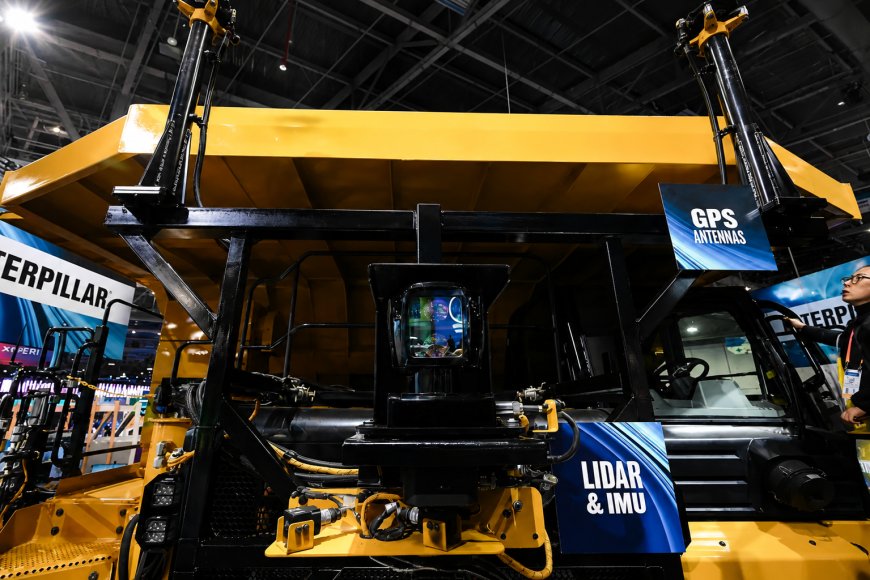
Caterpillar is applying decades of experience with autonomous mining equipment to a broader artificial intelligence strategy to improve industrial operations, technician support, and workplace productivity.
The company’s move into autonomous technology began in mining, where automation helped address challenges such as labour shortages and hazardous working conditions. Caterpillar now offers autonomous haul trucks, drilling systems, underground loaders, dozers, remote-controlled construction equipment, and software platforms that manage fleets and operations.
Jaime Mineart, Caterpillar’s chief technology officer, said the company is using lessons learned from mining automation to bring AI capabilities into more dynamic environments, including construction sites, quarries, and other industrial workplaces.
Caterpillar Builds AI Tools Around Industrial Data
One example is the Cat AI Assistant, a tool that allows field technicians to use voice commands while working near equipment. The system can help technicians access repair procedures, troubleshoot issues, and identify parts needed before starting maintenance.
The assistant uses Caterpillar’s proprietary data from connected machines. Mineart said the company has about 1.6 million connected assets worldwide and more than 16 petabytes of structured data.
Caterpillar is also using AI for applications such as site scanning, digital twins in manufacturing, enterprise operations, and software development. The company uses AI agents to help modernise older code, generate and test software, and identify defects earlier.
AI Deployment Requires Changes Beyond Technology
Mineart said implementing AI and autonomous systems involves more than building the technology itself. Companies also need to redesign workflows and help employees adapt to working alongside increasingly automated machines.
Caterpillar works with experienced operators to train AI systems using knowledge developed through years of real-world operations. As equipment becomes more autonomous, some operators may move from controlling individual machines to managing multiple systems from remote command centres.
To support this transition, Caterpillar plans to invest $100 million over five years in training employees in AI, autonomy, and robotics. The workforce investment was highlighted in Construction Digital’s coverage of the company’s AI and workforce strategy.
AI Infrastructure Demand Supports Caterpillar Growth
Caterpillar is also benefiting from demand linked to the expansion of AI infrastructure. The company reported record quarterly revenue of $20.5 billion in the second quarter, partly supported by demand for power-generation equipment for data centres.
According to Caterpillar’s second-quarter financial results, its power generation business recorded a 72% increase in sales to $3.10 billion.
The company’s AI strategy shows how industrial firms are combining automation experience, proprietary data, and workforce training to integrate artificial intelligence into physical operations.
What's Your Reaction?
 Like
0
Like
0
 Dislike
0
Dislike
0
 Love
0
Love
0
 Funny
0
Funny
0
 Angry
0
Angry
0
 Sad
0
Sad
0
 Wow
0
Wow
0