






























Avataar Unveils Cost-Effective, High-Speed Video AI Tailored for India’s Diverse Market
Avataar’s video AI platform delivers faster, more affordable, and culturally relevant content creation for Indian businesses, helping brands scale personalised video experiences across regions and languages.

India’s progress in developing AI models has lagged behind markets such as the United States, Europe, and China. While a handful of startups have introduced AI models, most have focused on large language models or voice-based systems. To encourage broader AI development, the Indian government launched the India AI Mission, a program worth roughly $1.2 billion that provides selected startups with subsidised GPU computing resources in exchange for making their models publicly available. One of the 12 startups chosen under the initiative, Avataar AI, has now introduced a new video-generation model called Varya, designed to understand India’s cultural and linguistic diversity better.
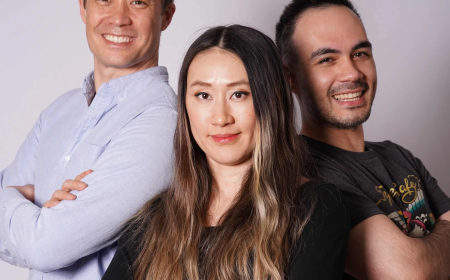
Backed by Peak XV, Avataar AI primarily develops video tools for e-commerce businesses. Rather than building Varya entirely from scratch, the company started with Wan 2.2, Alibaba’s open-source video-generation model, and applied a distillation process to compress its capabilities into a smaller and more efficient version tailored to Avataar’s requirements. According to the company, the resulting model can generate videos in only 4 steps, compared with Wan 2.2’s 50-step process, making it significantly faster and less expensive to operate.
To illustrate the difference, Avataar says Varya can generate a five-second 720p video in approximately 45 seconds using an Nvidia H200 GPU. Under similar conditions, Wan 2.2 requires around 1,230 seconds to complete the same task.
Pricing is one of the model’s most notable features. Avataar plans to charge ₹0.48, or roughly $0.005, per second of generated video through its hosted service. By comparison, competing models such as Veo, Kling, Luma, and Runway generally cost $0.10 or more per second, making Varya around 20 times cheaper.
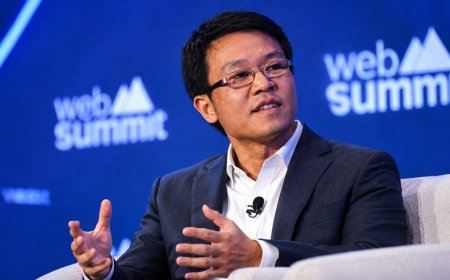
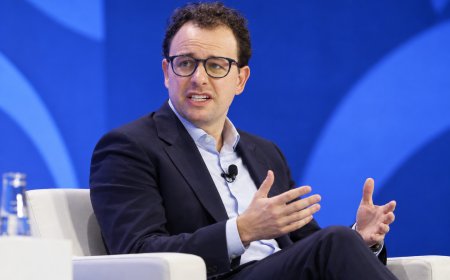
“India is a video-first market. We see this across every large consumer internet product in India: video wins over text. Current AI video models are too expensive for population-scale use in India. If video AI is going to reach students, teachers, MSMEs, creators, enterprises, and public services, costs have to come down dramatically. Cost is the biggest unlock for AI adoption in India,” said Peak XV Managing Director Rajan Anandan.
A common challenge for image and video generation models is their inability to capture cultural details accurately, often resulting in generic or stereotypical outputs. Avataar says it trained Varya on carefully curated datasets so the model can better recognise local elements such as food, clothing, architecture, and regional festivals.
The company plans to release Varya as an open-weight model through AIKosh, the Indian government’s central repository for publicly accessible AI models and datasets. Alongside the model, Avataar will also release training data, allowing developers to self-host, fine-tune, or modify the technology for their own projects. The startup also intends to offer Varya to enterprise customers and is open to partnerships with video platforms including Higgsfield and Adobe Firefly. Users can already test the model through the company’s website using either text prompts or reference images.
The launch of Varya highlights a broader reality within India’s AI ecosystem. Many industry leaders believe the country’s biggest opportunity lies in building AI applications and developer platforms rather than competing directly in the race to create large foundation models. Limited access to computing infrastructure and high-quality datasets has slowed model development compared with some global competitors.
The India AI Mission is part of a wider government effort to address those challenges. Last year, the initiative selected 12 startups, including Avataar AI, and provided them with access to affordable computing resources to support AI model development. Earlier this year, India’s IT Minister, Ashwini Vaishnaw, stated that the country aims to attract $200 billion in AI investment by 2028 and plans to more than double its GPU capacity within the next six months.
What's Your Reaction?
 Like
0
Like
0
 Dislike
0
Dislike
0
 Love
0
Love
0
 Funny
0
Funny
0
 Angry
0
Angry
0
 Sad
0
Sad
0
 Wow
0
Wow
0