

























Boston Dynamics’ next-gen humanoid robot will have Google DeepMind DNA
Boston Dynamics has partnered with Google DeepMind to power its next-generation humanoid robot, Atlas, with advanced AI, with the goal of enabling more natural human-robot interaction.
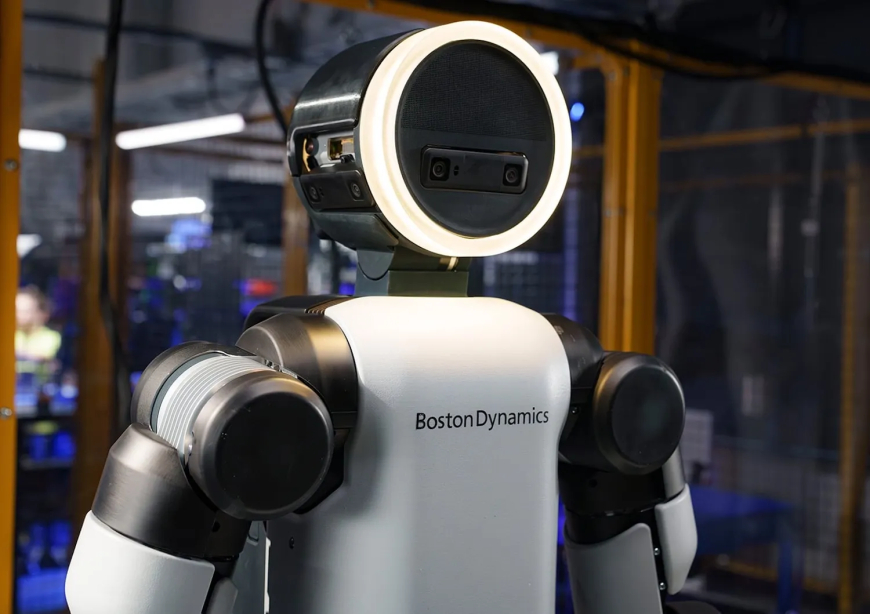
Boston Dynamics has entered into a new partnership with Google’s AI research division to accelerate the development of its next-generation humanoid robot, Atlas, to enable it to behave more naturally around people.
The collaboration was announced Monday during Hyundai’s press conference at CES 2026 and will focus on robotics research powered by Google DeepMind’s AI foundation models. According to Carolina Parada, senior director of robotics at Google DeepMind, Atlas will serve as the first platform to test the technology.
“We’re looking to integrate our cutting-edge AI foundation models with Boston Dynamics’ new Atlas robots, and we’ll aim to develop the world’s most advanced robot foundation model to fulfill the promise of true general-purpose human needs,” Parada said during the event.
The partnership follows Google DeepMind’s announcement less than a year ago of Gemini Robotics, a set of AI models designed to help robots perceive, reason, use tools, and interact with humans. Gemini Robotics is built on Google’s multimodal generative AI model, Gemini, and was trained to generalise behaviour across multiple types of robotic hardware.
Boston Dynamics, along with its majority owner, Hyundai Motor Group, plans to use this collaboration not only to advance research but also to scale real-world deployment. The company already has robots operating in more than 40 countries, including its quadruped robot Spot. Its warehouse robot, Stretc, has unloaded more than 20 million boxes worldwide since its launch in 2023, according to Hyundai.
The next step is Atlas. Boston Dynamics confirmed Monday that the humanoid robot is already in production and is being prepared for deployment at Hyundai’s manufacturing facility in Savannah, Georgia.
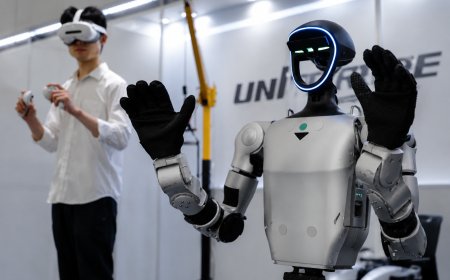
A prototype of Atlas appeared onstage during the press conference, demonstrating its mobility. However, Alberto Rodriguez, director of Behaviour at Boston Dynamics, emphasised that athletic ability alone is not enough.
“Turning Atlas into a product requires more than athletic performance,” Rodriguez said. “To really deliver on their promise, humanoids have to be able to interact with people naturally.”
Boston Dynamics believes recent breakthroughs in artificial intelligence have created a clear path toward that goal. Natural human-robot interaction is also critical to safety, particularly as robots work more closely alongside people.
The production version of Atlas features 56 degrees of freedom, rotational joints, and human-scale hands equipped with tactile sensors. The robot can lift to 110 pounds and is designed to perform repetitive industrial tasks. To support safe interaction, Atlas is equipped with 360-degree cameras that allow it to detect nearby people. DeepMind’s AI models are expected to help the robot understand how to behave appropriately in those situations.
“Rather than giving robots a fixed list of predefined tasks, we believe they should understand the physical world the same way humans do,” Parada said. “They should learn from experience, adapt to new situations, and improve over time — whether that’s assembling a car part or tying shoelaces.”
Hyundai plans to introduce Atlas into its factories later this year, with broader deployment for tasks such as parts sequencing targeted for 2028. To support that rollout, Hyundai announced it is opening a new U.S. facility, the Robot Metaplant Application Centre (RMAC). The centre will be used to train robots on tasks such as lifting and turning, and to combine that data with real-world factory data to improve. It was updated to include additional details about Atlas’ specifications.
What's Your Reaction?
 Like
0
Like
0
 Dislike
0
Dislike
0
 Love
0
Love
0
 Funny
0
Funny
0
 Angry
0
Angry
0
 Sad
0
Sad
0
 Wow
0
Wow
0