


































CES 2026: Everything revealed, from Nvidia’s debuts to AMD’s new chips to Razer’s AI oddities
CES 2026 is underway in Las Vegas with major announcements from Nvidia, AMD, Amazon, Boston Dynamics, Razer, and Lego, highlighting AI, hardware, and emerging tech.
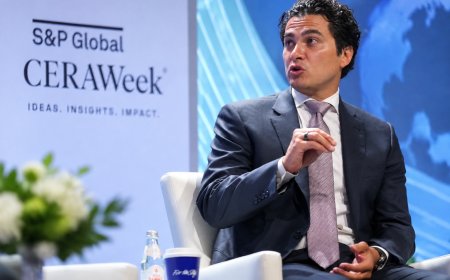
CES 2026 is officially underway in Las Vegas, with the show floor now open to the public following several days of press conferences from major players such as Nvidia, Sony, and AMD, along with early previews from Sunday’s Unveiled event.
As has been the case at CES over the past two years, artificial intelligence dominates much of the conversation. Still, the hardware upgrades, experimental concepts, and unexpected designs that have long defined the annual show remain firmly in the spotlight. We’re rounding up the most significant announcements and surprises here, while real-time reactions and on-the-ground impressions continue via our live blog.
Let’s dive into some of the most notable reveals so far, starting with Monday’s biggest names.
Nvidia unveils an AI model for autonomous vehicles and previews the Rubin architecture.
Nvidia CEO Jensen Huang delivered a characteristically wide-ranging CES presentation, celebrating the company’s AI momentum, outlining its vision for 2026, and — unsurprisingly — sharing the stage with robots.
The company introduced its Rubin computing architecture, designed to meet the growing computational demands of AI workloads. Rubin is expected to begin replacing Nvidia’s Blackwell architecture in the second half of the year, delivering performance and storage improvements.
Nvidia also continued its push to bring AI into the physical world, showcasing its Alpamayo family of open-source AI models and tools for autonomous vehicles. The strategy reflects Nvidia’s broader ambition to position its infrastructure as a foundational platform for robotics and autonomous systems.
AMD’s keynote focuses on new processors and partnerships
AMD Chair and CEO Lisa Su delivered the opening keynote of CES, joined by partners including OpenAI President Greg Brockman, AI pioneer Fei-Fei Li, and Luma AI CEO Amit Jain.
Beyond partner appearances, AMD highlighted its efforts to expand AI capabilities at the personal computing level with its Ryzen AI 400 Series processors, reinforcing the company’s belief that AI-powered PCs will play a central role in everyday computing.
Boston Dynamics and Google team up on Atlas robots
During Hyundai’s press conference, attention centred on its robotics collaborations with Boston Dynamics. The companies revealed they are working with Google’s AI research lab to train and operate both existing Atlas robots and a new iteration of the robot, which was demonstrated onstage.
The partnership underscores a growing emphasis on combining advanced AI with humanoid robotics to enable more natural interaction and real-world deployment.
Amazon extends Alexa and Ring across more devices.
Amazon used CESto further expand its Alexa+ initiative, launching Alexa.com for Early Access users to interact with the AI assistant in a web browser. The company also introduced a redesigned, chatbot-focused Alexa mobile app.
In addition, Amazon unveiled updates to Fire TV, along with new Artline TVs designed to integrate Alexa+ more deeply into the living room experience.
On the smart home front, Amazon announced several new features for Ring, including fire alerts, an app store for third-party camera integrations, and additional sensors aimed at home safety.
Razer embraces AI with Project AVA and Motoko.
Razer has a long history of unveiling unconventional hardware at CES, from multi-screen laptops to experimental gaming accessories. This year, the company’s most eye-catching announcements leaned heavily into AI.
Project Motoko aims to deliver functionality similar to smart glasses — without requiring users to wear glasses. Meanwhile, Project AVA introduces a vcompanion that appears on a US featuring an animated avatar. Concept videos showcased both ideas, underscoring Razer’s continued interest in integrating AI into gaming culture.
Lego Smart Bricks make their CES debut.
Lego made its first-ever appearance at CES with a private showcase of its Smart Play System. The system includes interactive bricks, tiles, and Minifigures that communicate with one another and produce sounds.
The debut Smart Play sets are themed around Star Wars, marking a new direction for the iconic toy maker as it explores interactive, screen-free play powered by embedded technology.
What's Your Reaction?
 Like
0
Like
0
 Dislike
0
Dislike
0
 Love
0
Love
0
 Funny
0
Funny
0
 Angry
0
Angry
0
 Sad
0
Sad
0
 Wow
0
Wow
0