
































ChatGPT Loses Majority AI Market Share as Competition Intensifies
ChatGPT’s global AI assistant market share has dropped below 50% for the first time, as Google Gemini and Anthropic Claude continue gaining users. Despite the decline, ChatGPT remains the world’s leading AI assistant with more than 1.1 billion monthly active users.
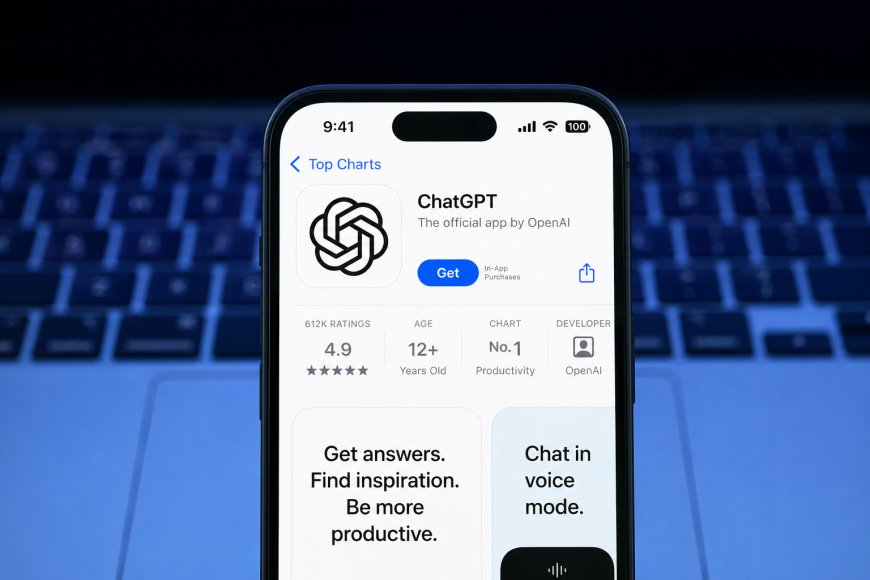
More than three and a half years after ChatGPT launched, AI assistants have become mainstream, with hundreds of millions of people relying on them for work, learning, and everyday tasks. While ChatGPT continues to lead the market, new data suggests its dominance is gradually shrinking as competitors such as Google’s Gemini, Anthropic’s Claude, and xAI’s Grok gain momentum.
According to analytics firm Sensor Tower’s State of AI Report 2026, ChatGPT’s market share has dropped below the 50% mark for the first time. Despite the decline, OpenAI’s chatbot remains the world’s most widely used AI assistant, with more than 1.1 billion monthly users. Google’s Gemini ranks second with 662 million monthly users, followed by Anthropic’s Claude at 245 million.
OpenAI has previously reported weekly active users rather than monthly figures, announcing approximately 900 million weekly active users earlier this year. Sensor Tower’s latest report indicates that until January, ChatGPT controlled more than half of the AI assistant market. By the end of May, however, its share had fallen to 46.4%, while Gemini’s share had increased to 27.7% and Claude’s to 10.3%. Other AI assistants—including Grok, Perplexity, DeepSeek, and Meta AI—each account for less than 5% of the market.
The report also highlights that users are becoming increasingly willing to switch between AI assistants. Certain events appear to influence user behaviour. For example, OpenAI’s partnership with the U.S. Department of Defence reportedly led to a noticeable increase in app uninstalls, suggesting that brand perception and company values can influence user loyalty alongside product capabilities.
Gemini’s rapid growth has largely been driven by its deep integration across Google’s ecosystem of products and services. At the same time, Claude has continued building a strong reputation for productivity-focused tasks and is steadily improving its user retention.
Sensor Tower estimates that consumers are on track to download nearly 2.3 billion AI applications during the first half of 2026 while spending more than $4.2 billion on them. During the same period in 2025, spending reached approximately $1.83 billion. Although downloads and consumer spending continue to rise, growth rates are slowing, suggesting that the AI app market may be entering a more mature phase in which monetisation is becoming increasingly important.
Regional trends also show changing dynamics. Asia experienced its first quarterly decline in AI app downloads during the first quarter of 2026, falling 3.3%, largely due to lower downloads in China and India. Despite leading the world in overall downloads, Asia still trails North America and Europe in consumer spending, making those regions particularly attractive for premium AI subscriptions and paid services.
In the United States, AI assistants are increasingly being used for professional and productivity-related work, driving higher subscription revenue across the industry. Anthropic has emerged as a standout performer in monetisation, with approximately 13% of Claude users paying for premium subscriptions—currently one of the highest conversion rates among major AI assistants.
The report also estimates that total time spent using AI applications will nearly double, rising from 17.2 billion hours in the first half of 2025 to roughly 36 billion hours in the same period in 2026. ChatGPT, Gemini, and Claude together account for approximately 89% of all time spent within AI assistant applications. At the same time, other AI categories, including AI companions and AI content creation tools, remain fragmented and highly competitive.
AI Monetisation Expands Through Advertising and Shopping
OpenAI began experimenting with advertisements inside ChatGPT earlier this year. According to Sensor Tower, the company has gradually increased both the number of advertisements shown and the percentage of users seeing them. By May, approximately 17% of ChatGPT’s daily active users were being served advertisements, highlighting the company’s evolving monetisation strategy beyond paid subscriptions.
Software companies and shopping-related businesses currently represent the largest advertising categories on ChatGPT, followed by media, entertainment, food, and dining brands.
ChatGPT is also becoming a growing source of referral traffic for major retailers, including Target, Walmart, and Costco, as OpenAI expands its shopping-related features. Amazon, which restricts ChatGPT’s web crawlers, has experienced relatively flat referral traffic from the platform.
The changing landscape is creating opportunities for retailers to develop their own AI shopping assistants. Walmart has continued expanding its Spark AI platform, while Amazon’s Rufus has seen relatively stable user growth. Sensor Tower noted that shoppers who actively used Rufus spent more time within Amazon’s app and completed purchases at higher rates, indicating that AI-powered shopping assistants can significantly influence consumer behaviour when effectively integrated into retail experiences.
What's Your Reaction?
 Like
0
Like
0
 Dislike
0
Dislike
0
 Love
0
Love
0
 Funny
0
Funny
0
 Angry
0
Angry
0
 Sad
0
Sad
0
 Wow
0
Wow
0