







































China Is Leading the Fight Against Hidden Car Door Handles
China will ban hidden electronic car door handles from 2027, requiring mechanical releases after safety concerns over trapped passengers.
One of the vehicle design features most closely associated with Tesla is being phased out in China.
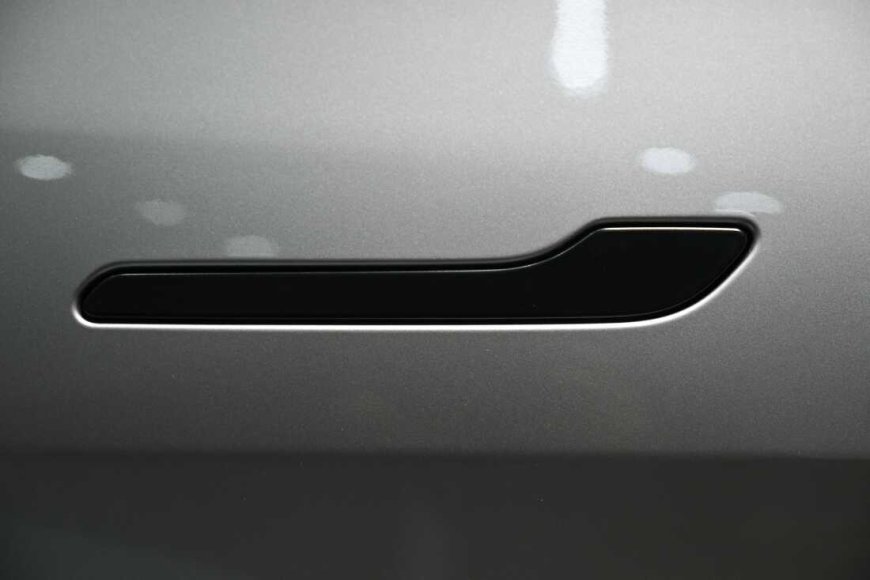
Under new safety regulations released Monday by China’s Ministry of Industry and Information Technology, all vehicles sold in the country will be required to include mechanical door release handles. The rules, which take effect on January 1, 2027, effectively ban the concealed, electronically actuated door handles that Tesla popularised and that have since become common on many electric vehicles sold in China.
According to the updated standards, every passenger door, excluding the tailgate, must be equipped with an externally accessible mechanical handle. In addition, vehicles must also include a mechanical release mechanism on the interior. Bloomberg previously reported on the new safety policy.
Concerns around hidden door handles have intensified following several high-profile fatal crashes in which occupants were unable to exit their vehicles. In multiple cases, electronic door systems failed, leaving passengers trapped inside. Safety advocates and regulators worldwide have raised alarms, but China has become the first country to formally prohibit the design.
A Bloomberg investigation published last September highlighted safety issues related to Tesla’s concealed door handles. The report cited multiple crashes where occupants or emergency responders could not open doors because the electronic locking mechanisms failed due to insufficient power from the vehicle’s battery system.
Following those findings, the National Highway Traffic Safety Administration opened a defect investigation into door handles used on specific Tesla Model Y and Tesla Model 3 vehicles. While Tesla vehicles include manual interior door releases, federal investigators noted that these releases can be difficult for children to reach and that many vehicle owners are unaware of their existence. In response, some U.S. lawmakers have proposed new regulations that would mandate manual door releases in all newly sold vehicles.
In China, fatal crashes — including one involving the Xiaomi SU7 — further intensified scrutiny around electronically operated door handles. These incidents prompted Chinese regulators to begin drafting changes to electric vehicle safety standards last year.
The regulatory process formally began in May 2025, when China’s government launched a research initiative involving more than 40 domestic automakers, parts suppliers, and vehicle testing institutions. More than 100 industry experts participated in multiple rounds of discussions to establish the framework for the new requirements, which eventually led to the draft standard known as the Safety Technical Requirements for Automobile Door Handles, according to China’s national standards authority.
The process included participation from dozens of automakers. Chinese companies involved included BYD, Geely Holdings, SAIC, and Xiaomi. Foreign manufacturers taking part included General Motors, Ford, Hyundai, Nissan, Porsche, Toyota, and Volkswagen.
Tesla, however, was not listed as an official drafter of the standard, according to information published on the standards agency’s website.
What's Your Reaction?
 Like
0
Like
0
 Dislike
0
Dislike
0
 Love
0
Love
0
 Funny
0
Funny
0
 Angry
0
Angry
0
 Sad
0
Sad
0
 Wow
0
Wow
0