

































Current AI Seeks to Build an Open AI Infrastructure for the Public
Nonprofit Current AI is building open, public AI infrastructure through global partnerships, multilingual tools and community-led projects to make artificial intelligence accessible beyond commercial platforms.
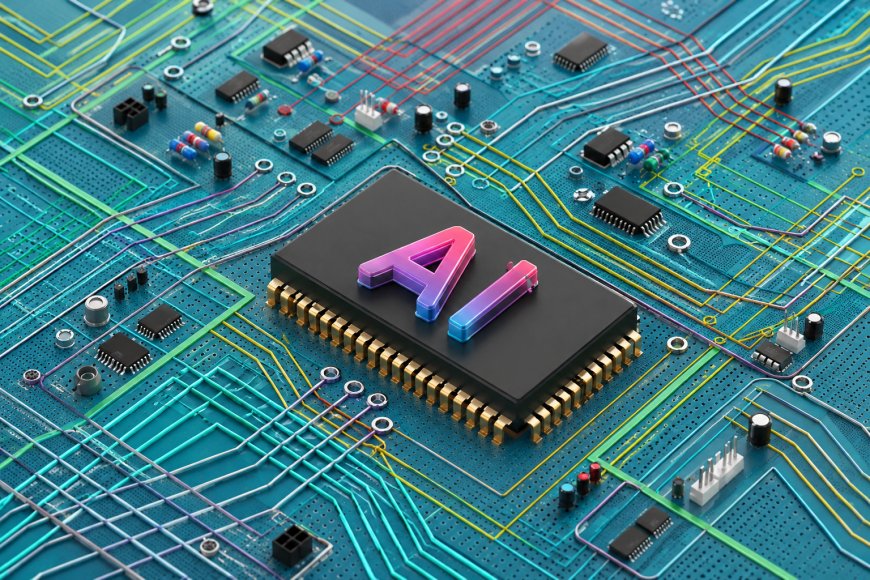
Nonprofit organisation Current AI is accelerating its mission to build open, publicly accessible artificial intelligence infrastructure that serves communities often overlooked by commercial AI systems. Rather than competing with private AI companies, the organisation wants to create what it describes as a public alternative—similar to the early World Wide Web—where AI tools, data and models are freely available and designed for the public good.
One of its latest initiatives highlights that vision. At the India AI Summit earlier this year, Current AI partnered with Bhashini, the Indian government’s AI language initiative, to develop Suno Sutra. This offline, pocket-sized AI device operates in 22 Indian languages without an internet connection. The open-source device is intended to help developers build local AI applications for communities that have traditionally been underserved by mainstream technology.
Supporting languages and cultures beyond English
Current AI Chief Executive Officer Ayah Bdeir said the organisation was created to ensure artificial intelligence reflects the world’s linguistic and cultural diversity. She noted that hundreds of languages and dialects spoken across India are still poorly represented in today’s AI systems, limiting access to information and digital services for millions of people.
Bdeir argued that language represents far more than communication. According to her, language carries knowledge, identity, traditions and cultural memory from one generation to the next. When AI systems cannot understand or operate in local languages, they also fail to preserve and support the communities that rely on them.
The organisation believes this issue extends beyond India. It estimates that nearly half of the world’s spoken languages face the risk of disappearing. At the same time, the dominance of English-language data continues to shape many of today’s largest AI models. Current AI hopes its open-source approach can help protect linguistic diversity while giving communities greater control over how their knowledge is used.
Backed by governments, foundations and technology partners
Founded in February 2025 by Martin Tisne, Current AI operates as a public-private partnership bringing together governments, philanthropic organisations and technology companies to fund AI projects focused on the public interest. The French government provided an initial commitment of $100 million, with additional support from organisations including the Ford Foundation, MacArthur Foundation, Google DeepMind and Salesforce. Total committed funding has now reached approximately $400 million.
Bdeir joined the nonprofit in January after leading Mozilla’s AI strategy. She previously founded littleBits, an educational technology company focused on STEM learning that was acquired by Sphero in 2019.
Unlike venture-backed AI startups, Current AI says its financial supporters are funders rather than investors, allowing the organisation to focus on long-term public benefit instead of commercial returns.
Funding community-led AI projects around the world
The current AI has recently awarded $3.2 million in grants to four organisations working in Kenya, Lebanon and Brazil. Each project focuses on creating AI tools designed and governed by local communities rather than large technology companies.
In Kenya, the Masakhane initiative is developing AI datasets covering more than 50 African languages for healthcare, education and agriculture. Lebanon’s Institute for Worldmaking is digitising Arab cultural history into machine-readable databases that remain under community control. Brazil’s Portal sem Porteiras is building offline AI systems alongside Indigenous Amazon communities while ensuring sensitive data stays within local territories. Meanwhile, the African Internet Rights Alliance is creating AI auditing tools intended to improve accountability across the continent.
Keeping control of data within communities
Data ownership remains one of the organisation’s central priorities. Bdeir said communities should retain authority over their own information rather than allowing technology companies to determine how data is collected, stored and commercialised.
Current AI encourages projects to store data and AI models locally whenever possible, to involve community experts before development begins, and to establish consent procedures that allow participants to stop projects if necessary. While acknowledging that no project has completely solved these challenges, the organisation believes embedding these questions into development is more important than relying on existing commercial models.
Building an OpenAI ecosystem
Current AI is also expanding its technical ecosystem through new partnerships. During the AI for Good Summit in Geneva, the organisation introduced Alpha Chat, an open-source AI chatbot developed in just seven weeks by a coalition of ten organisations, including Hugging Face, Mozilla and the MIT Media Lab. Each partner contributed different elements of the technology stack, including language models, computing resources and safety tools.
The nonprofit has also announced a collaboration with Tokyo-based Sakana AI to develop an open-source AI stack that supports Japanese language and culture while helping communities across the Global South build AI systems tailored to their needs.
Current AI believes the future of artificial intelligence should not be controlled solely by commercial technology companies. Instead, it aims to establish an open ecosystem where communities retain ownership of their languages, cultures and data. At the same time, developers worldwide can build AI tools that remain freely accessible to everyone.
What's Your Reaction?
 Like
0
Like
0
 Dislike
0
Dislike
0
 Love
0
Love
0
 Funny
0
Funny
0
 Angry
0
Angry
0
 Sad
0
Sad
0
 Wow
0
Wow
0