































Google Escalates the AI Subscription Battle With New Pricing Strategy
Google has intensified competition in the AI industry by introducing aggressive subscription pricing and premium AI offerings. The move increases pressure on rivals such as OpenAI, Anthropic, and Meta as companies compete for paid AI users and enterprise adoption.

Google has significantly lowered the cost of its entry-level AI subscription offering, bringing a pricing battle that has been developing in emerging markets directly to U.S. consumers.
On Monday, the company announced that the monthly cost of Google AI Plus will drop from $7.99 to $4.99. At the same time, Google is increasing the storage included with the plan from 200GB to 400GB, effectively doubling the available capacity for subscribers.
Vikas Kansal, product lead for Gemini AI subscriptions, said on X that the expanded storage allocation will be rolled out to users over the coming days.
Google AI Plus debuted in January as one of the most affordable paid AI subscription options available in the United States. The service was designed primarily for individual consumers and students rather than enterprise users, and the latest pricing adjustment further reinforces that positioning.
The plan also includes a range of AI-powered features, including video generation through Omni Flash, access to Google Flow’s creative tools, and NotebookLM, Google’s AI-driven research assistant.
However, the announcement’s broader significance extends beyond the product itself. Until recently, subscription pricing had not been a major battleground among AI providers in the U.S. market. That dynamic now appears to be changing, with potentially significant implications for the industry.
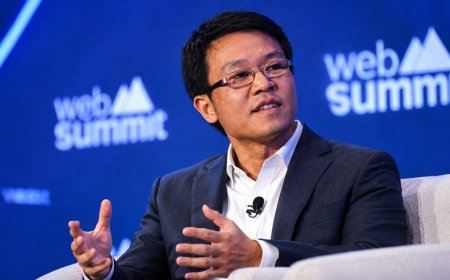
Chi-Hua Chien, co-founder and managing partner of the consumer-focused venture capital firm Goodwater Capital, views Google’s move as another step toward what he calls the commoditisation of AI infrastructure.
According to Chien, Google possesses several structural advantages, including vertical integration, extensive distribution channels, and the ability to bundle products and services. Those advantages could gradually place pressure on profit margins across the broader AI ecosystem, particularly for companies focused solely on AI products.
To illustrate his point, Chien points to previous technology cycles.
“If you look at the web era, the infrastructure companies were Microsoft, Cisco, Oracle, Nortel, Lucent, Akamai, Equinix,” he said. “A lot of those companies survived for a period of time but aren’t worth a lot today.”
He argues that infrastructure providers tend to become increasingly commoditised as technology matures, because end users rarely care about the underlying systems that power their experiences. Instead, they focus primarily on obtaining services at the lowest possible cost.
“During every big tech shift — from PC to web to mobile — the infrastructure players get commoditised very aggressively because the end customer doesn’t think, ‘Ooh, are my bits moving on Cisco networking equipment?’ They’re just thinking, ‘How do I move my bits as cheaply as possible?’” Chien explained.
For companies building foundation models, this possibility has long been understood. Many AI developers have recognised that raw model capabilities could eventually become commoditised, with competition shifting toward applications, user experiences, and distribution channels.
What Chien suggests is that the industry may already be entering that phase.
“My prediction for a lot of these infrastructure companies — and when I say infrastructure, I mean an OpenAI or an Anthropic, or the back-end components, energy, chips, hosting — there will be a period of time when these companies are valuable,” he said. “But over time, you will see them get increasingly commoditised.”
The timing is notable, particularly as both OpenAI and Anthropic have reportedly filed confidentially for public offerings. Investors may soon evaluate whether these companies can sustain premium valuations amid an increasingly competitive pricing environment.
The pricing battle itself has been building for nearly a year in rapidly growing AI markets such as India. OpenAI made an early move in August of last year by introducing ChatGPT Go at roughly $4.60 per month, significantly below the cost of its standard $20 ChatGPT Plus subscription.
Google responded in December with its own sub-$5 AI Plus offering for Indian consumers.
Monday’s announcement indicates that the same strategy used in emerging markets — lowering prices, bundling services, and attracting users before competitors do — has now been extended to the United States.
One notable exception remains Anthropic. Unlike Google and OpenAI, the company has yet to introduce localised pricing in India or launch a lower-cost subscription tier in any market. As rivals continue to reduce prices and expand access, maintaining that position could become increasingly challenging.
The latest move from Google suggests that competition in AI is no longer focused solely on model performance. Pricing, distribution, and ecosystem advantages are becoming increasingly important factors as providers compete for the next wave of users.
What's Your Reaction?
 Like
0
Like
0
 Dislike
0
Dislike
0
 Love
0
Love
0
 Funny
0
Funny
0
 Angry
0
Angry
0
 Sad
0
Sad
0
 Wow
0
Wow
0