




































How GM Used the Chevy Bolt to Navigate EV Market Uncertainty
General Motors uses the Chevy Bolt to manage uncertainty in the electric vehicle market, balancing affordability, production flexibility, and growing EV demand.
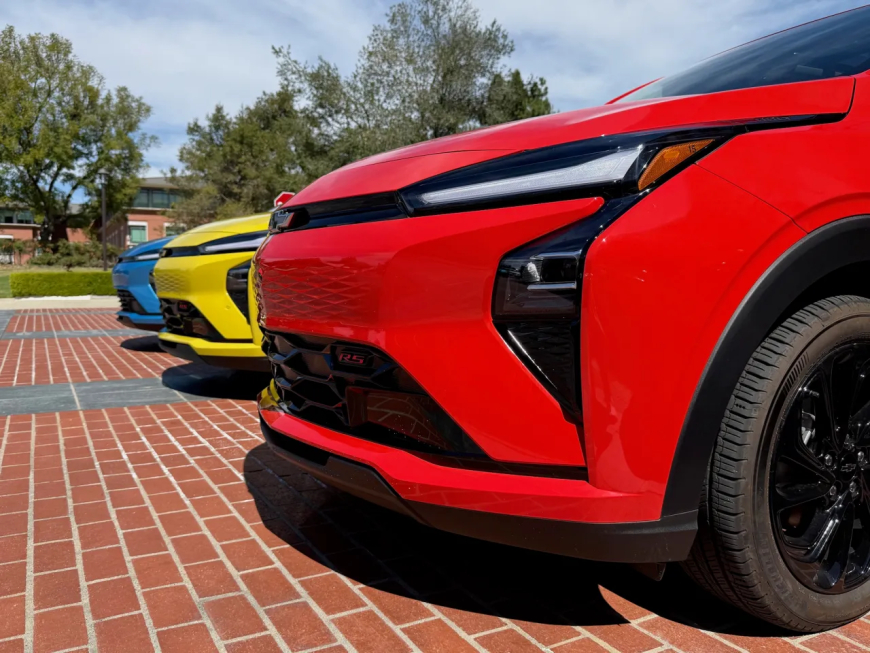
Loyal Chevrolet Bolt enthusiasts had reason to celebrate when General Motors said it would bring an updated version of the electric subcompact back into production.
GM gave substantial credit to those owners — and to advocates for the Bolt within General Motors itself — for helping drive the vehicle’s return. But enthusiasm alone is not enough to restart a program that costs millions of dollars. The numbers need to make sense from multiple angles.
A closer look at GM’s business situation and the broader market environment at the time the decision was made offers some insight into what pushed the automaker to revive the Bolt.
One of the starting points was GM’s factory capacity. The U.S. carmaker had extra room at its Fairfax Assembly Plant in Kansas. That facility previously produced the Chevy Malibu, which ended production two years ago, and is not scheduled to begin production of Chevy Equinox SUVs until mid-2027 or of Buick Envisions until 2028. The Bolt was slotted into that gap.
An even more important factor in the Bolt’s return may have been the wider availability of EV-specific components, which helped lower the costs of the new version. Rather than being built on a flashy all-new platform, the new Bolt leans on incremental upgrades to improve the final product.
The original 2017 Bolt was GM’s first purpose-built electric vehicle in two decades. It was developed from the ground up, which meant GM had to design and build the motor and battery management system while also working with LG Chem (now LG Energy Solution) to produce the battery pack. The vehicle also received an entirely new chassis rather than one adapted from an internal combustion platform. None of those elements came cheaply.
Now, GM sells around a dozen fully electric models in the United States across Chevrolet, Cadillac, and GMC. That gave the company a much broader pool of parts and engineering experience to pull from when developing the new Bolt.
Drivers see that influence as soon as they get inside the vehicle. The large touchscreen runs on the Android Automotive operating system, which monitors the battery’s state of charge. That allows it to suggest charging stops along a route and prepare the battery in advance so it can charge as quickly as possible.
Mechanically, the new Bolt borrows the front-drive motor from the Chevy Equinox. At 200 horsepower, it matches the previous generation exactly. On paper, though, its 169 pound-feet of torque appears noticeably lower. Even so, because of what GM has learned over the years, the new motor spins faster and more efficiently, allowing Chevrolet to use a shorter gear in the single-speed transmission. At the wheels, the motor delivers roughly the same torque as before.
That new motor, paired with more efficient power electronics, allows the 2027 Bolt to travel about 15 miles farther than the previous Bolt EUV, the body style on which the new model is based.
GM expects the new Bolt to be profitable, similar to the earlier version.
The shift toward electric vehicles has not been easy for GM or for many other established automakers. In January, the company said it would take a $6 billion charge after EV adoption moved more slowly than expected. Even so, GM has continued to say it remains committed to EV production. So far, it has also not backed away from its goal of phasing out fossil-fuel vehicles by 2035.
A more cynical reading of the new Bolt is that it represents a half-step—a reworking of an old model meant to squeeze more value from some of the company’s most loyal customers.
But the new version may be better understood as a strong argument for shared technology and steady, incremental progress. A 15-mile range gain from a new motor and battery management system may not sound dramatic, but if GM can keep advancing at that pace, the next decade could prove transformative for both the company and the broader EV market. Brand-new platforms may generate the biggest headlines, but not every meaningful leap forward requires a multibillion-dollar investment.
What's Your Reaction?
 Like
0
Like
0
 Dislike
0
Dislike
0
 Love
0
Love
0
 Funny
0
Funny
0
 Angry
0
Angry
0
 Sad
0
Sad
0
 Wow
0
Wow
0