































India Introduces 0.4% UPI Merchant Fee on Payments Above ₹2,000
India will introduce a 0.4% merchant fee on select UPI payments over ₹2,000 starting October 15, while consumers and most smaller transactions will remain free.
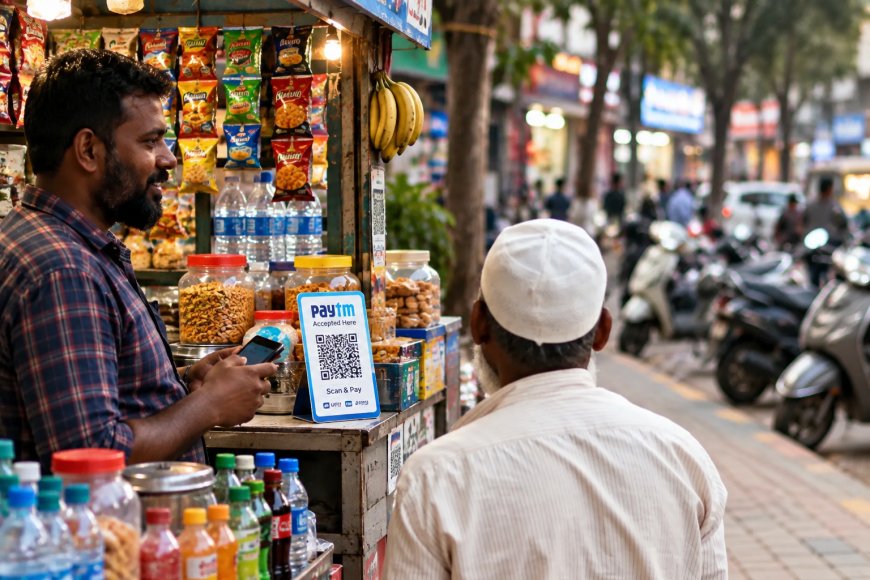
India will begin charging merchants for certain higher-value payments made through the Unified Payments Interface, marking a major change for a system that has operated without merchant fees since 2020.
From Oct. 15, a 0.4% merchant discount rate, or MDR, will apply to eligible person-to-merchant UPI transactions above ₹2,000, according to NPCI’s new merchant fee framework. Consumers will continue to make UPI payments without transaction charges.
How the new UPI merchant fee works
The 0.4% fee will be capped at ₹300 for transactions of ₹75,000 or more. Payments of ₹2,000 or less will remain free for merchants, accounting for more than 95% of UPI merchant transactions by volume, according to NPCI.
Small merchants classified under the P2PM framework will also continue to pay zero MDR if they receive up to ₹1 lakh per month through UPI QR payments. Receiving an individual payment above ₹2,000 will not automatically remove that exemption.
Some sectors will operate under different rates. Railways, telecom services, insurance and fuel are among the categories that will pay a flat ₹5 fee on applicable transactions above ₹2,000. Capital-market transactions, including mutual funds and securities payments, will carry a 0.02% MDR capped at ₹300.
Merchants will not be permitted to pass the MDR directly to customers, NPCI said. Consumers should continue to pay the listed price regardless of whether they use UPI.
India moves away from UPI’s zero-fee model
The policy follows changes to India’s payments framework that opened the door to charges on larger UPI payments. A government notification barred banks from charging for UPI payments of up to ₹2,000, while allowing a different framework for transactions above that threshold, Reuters reported.
India eliminated merchant fees on UPI in January 2020 to encourage adoption, and later provided incentives to banks and payment companies for processing some transactions. NPCI now says maintaining UPI payment operations, including server capacity, fraud prevention and technical support, costs the industry about ₹20,000 crore annually.
The organisation said revenue from the new MDR will remain within the UPI ecosystem and support infrastructure resilience, cybersecurity, fraud prevention, innovation and customer service. NPCI also plans a dedicated fund to expand digital-payment infrastructure and merchant adoption in smaller cities and rural areas, with details to be developed with the Reserve Bank of India.
UPI’s scale makes the change significant
UPI processed 24.51 billion transactions worth ₹29.9 trillion in August alone, according to NPCI, making it a central piece of India’s retail payment infrastructure.
The introduction of merchant fees has also revived debate over whether UPI should be treated primarily as commercial payment infrastructure or as digital public infrastructure. Former chief economic adviser Krishnamurthy Subramanian argued that policymakers should consider the broader social benefits of UPI, including reduced dependence on cash and wider access to digital payments, in a post on X.
That debate comes as India continues to maintain a large physical cash network even while digital payments expand. BBC reporting on India’s continuing use of cash has highlighted that currency in circulation remains substantial despite the rapid growth of electronic payments.
For payment companies and merchants, the immediate change is narrower: most small UPI transactions will stay free, while larger commercial payments will begin contributing directly to the cost of operating the network.
What's Your Reaction?
 Like
0
Like
0
 Dislike
0
Dislike
0
 Love
0
Love
0
 Funny
0
Funny
0
 Angry
0
Angry
0
 Sad
0
Sad
0
 Wow
0
Wow
0