






































Latitude introduces the Voyage platform for building AI-powered RPG experiences
Latitude launches Voyage, a new platform designed to help users create AI-powered RPGs with dynamic storytelling and interactive gameplay features.

If you’ve ever played a role-playing game (RPG), you know how engaging it can be to create a character and explore immersive worlds filled with quests and adventure. Now imagine a text-based RPG powered by AI, where every interaction with non-player characters (NPCs) is fully unscripted and dynamically generated.
Latitude, the startup known for AI-driven open-ended storytelling games featuring “infinite storylines,” has unveiled its new platform called Voyage, designed to let users become game creators themselves.
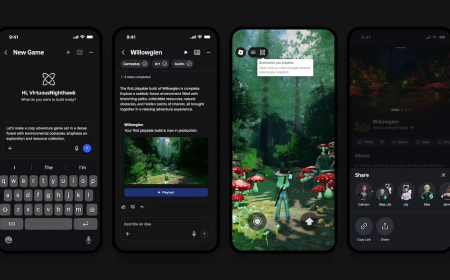
Voyage enables players to design entire gaming worlds using AI assistance. Users can describe environments such as regions, cities, landmarks, major quests, and antagonists, as well as define gameplay systems, including abilities, levelling structures, and combat mechanics.
For example, a user could create a fishing village haunted by a sea monster, and the AI would generate the underlying code and structure needed to bring that world to life. Creators can further refine and customise their worlds before sharing them with others.
For players, Voyage offers interactive experiences across multiple genres, ranging from relaxed “cosy” adventures to more intense quest-driven scenarios. Since the platform is text-based, users read narrative outputs and type their desired actions, with optional audio narration available.
Unlike traditional RPGs, where players are limited to fixed choices like “fight,” “run,” or “hide,” Voyage allows open-ended actions. For instance, a player under goblin attack might instead choose to become a goblin therapist and help resolve their issues rather than engage in combat.
When players input actions, the AI dynamically generates narrative outcomes, including NPC reactions. Because the system is not bound to predefined scripts, interactions can evolve in unexpected and often humorous directions. In one example from testing, a captured troll began discussing its marital problems.
Progression within the game depends on character abilities combined with chance-based mechanics similar to tabletop dice systems. Characters can unlock special abilities by completing quests or defeating bosses, such as “Counterspell” to block magical attacks. Some mechanics draw inspiration from classic tabletop RPG systems like Dungeons & Dragons.
Players who get stuck can also use an integrated chatbot assistant that suggests possible actions or helps them navigate the storyline.
At the core of Voyage is Latitude’s proprietary World Engine, a system developed over five years. It combines multiple AI models to handle narration, gameplay logic, character tracking, object management, and long-term memory of relationships and past events.
This allows NPCs to maintain continuity across interactions. Characters can remember previous encounters, respond differently over time, and even change behaviour based on player actions—such as becoming hostile after betrayal.
“Characters aren’t just reactions to you, but have their own personality backstory, that react to you in ways that feel like real, and that’s really part of the magic of the engine,” Latitude CEO and co-founder Nick Walton said.
Latitude first gained attention in AI gaming with AI Dungeon, launched in 2019, which attracted millions of users and became one of the earliest mainstream examples of generative AI in interactive entertainment.
“It exploded on the internet as one of the first times people interacted with generative AI,” Walton said. “Voyage takes that core concept and blows it up 10x farther from a single AI model to a full-blown world that you have deterministic systems, challenges, progression, and persistence, and solves all the problems that I think AI Dungeon alone couldn’t fully get to.”
Voyage is currently in expanded beta testing, with a public beta planned later this year. Early testers have interacted with more than 160,000 unique AI-generated characters, and players have made nearly 3,000 gameplay decisions on average.
Alongside the launch, Latitude announced a partnership with Google’s AI Futures Fund. The platform integrates its own models with third-party systems such as Google’s Gemini Flash for image generation and Gemma for text, audio, and video capabilities.
The company has also brought in former Roblox Chief Business Officer Craig Donato as an investor and board member. Other investors include Album VC, Griffin Gaming Partners, Midjourney, and NFX.
Voyage is free to access, with upcoming subscription plans priced at $15, $30, and $50. These tiers will unlock advanced AI features and remove limitations on gameplay actions.
While the platform is designed for a broad audience, Latitude notes that some experiences may include mature content, similar to content available on platforms like Steam. The company says it has implemented safety controls and parental options to help users filter content appropriately.
What's Your Reaction?
 Like
0
Like
0
 Dislike
0
Dislike
0
 Love
0
Love
0
 Funny
0
Funny
0
 Angry
0
Angry
0
 Sad
0
Sad
0
 Wow
0
Wow
0