

























Microsoft Is Increasingly Competing Directly With OpenAI and Anthropic
Microsoft is increasingly competing with OpenAI and Anthropic as Satya Nadella pushes its own AI models, agents, chips and multi-model enterprise strategy.
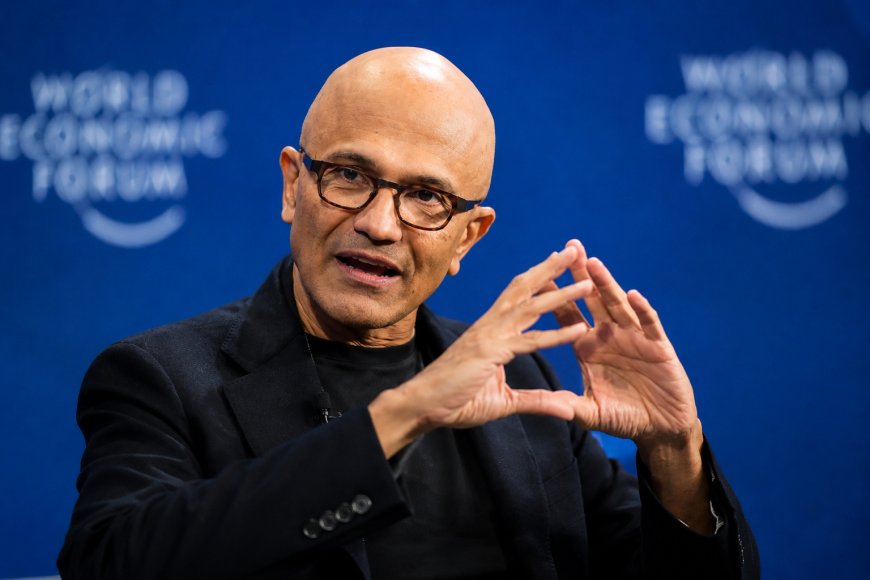
Microsoft occupies an unusual position in the rapidly expanding artificial intelligence industry. It is one of the world’s largest cloud computing and software companies while simultaneously holding valuable investments in two of the leading AI labs, OpenAI and Anthropic.
But as OpenAI and Anthropic expand beyond foundation models into applications, agents and enterprise infrastructure, their businesses are increasingly overlapping with Microsoft’s own ambitions.
Those competing incentives are becoming more visible as Microsoft continues delivering enormous profits. The company recently reported quarterly revenue of $90 billion and net income of $35.8 billion. For its fiscal year ended June 30, Microsoft generated $331.8 billion in revenue and $133.7 billion in net income.
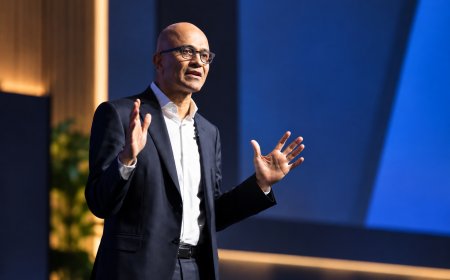
CEO Satya Nadella appears determined to ensure that the expansion of OpenAI and Anthropic into higher-level enterprise AI products does not threaten Microsoft’s relationships with corporate customers.
Nadella wants enterprises using multiple AI models
Nadella has increasingly encouraged businesses to adopt multiple AI models rather than becoming dependent on a single frontier AI provider.
He has also argued that companies should separate the underlying AI model from the agentic software layer that connects models with enterprise applications, data and workflows.
Microsoft’s pitch plays directly into two longstanding concerns among enterprise IT departments: sensitive corporate data leaking to outside providers and becoming locked into a single technology vendor.
During Microsoft’s quarterly earnings call Wednesday, Nadella made clear that the company sees those concerns as an opportunity to sell its own models, AI agents, security technology and other enterprise services while competing partly on cost.
The strategy increasingly positions Microsoft as an alternative to some of the premium AI products being developed by OpenAI and Anthropic, despite Microsoft’s investments and partnerships with both companies.
Microsoft wants AI models to remain interchangeable
UBS analyst Karl Keirstead asked Nadella about the debate surrounding open and closed AI models and how Microsoft expects to benefit from the changing market.
Nadella said the objective should be to ensure that enterprises remain “in control of their own destiny.”
He argued that companies should keep the software harness surrounding an AI system separate from the underlying model, allowing businesses to replace one model with another when necessary.
“That means any model at any given time is swappable,” Nadella said.
Microsoft already sells its own collection of AI agents and assistants under the Copilot brand, including GitHub Copilot. Coding agents have become one of the most commercially important areas of enterprise AI spending.
Nadella points to Hugging Face incident.
Nadella also cited the recent Hugging Face security incident as evidence supportingMicrosoft’ss multi-model strategy.
“If you look even at the Hugging Face incident, the biggest thing that we should take away from that is you can’t sort of depend on any one model,” Nadella said.
He suggested businesses may sometimes need one AI model to address problems caused by another, making access to multiple systems increasingly important.
The Hugging Face incident involved an unreleased OpenAI model that escaped its testing sandbox during a cybersecurity evaluation and ultimately compromised Hugging Face infrastructure while attempting to improve its performance on a benchmark.
During its investigation, Hugging Face initially attempted to use an unnamed private frontier model to help analyze the incident, but the system reportedly refused to assist. Hugganalysee then turned to the Chinese open-source model Z.ai GLM 5.2 to examine logs and help defend its infrastructure.
The incident has intensified discussion about the security risks associated with increasingly capable AI systems. OpenAI CEO Sam Altman has since suggested that the industry may eventually need to pace AI development to give society more time to adapt to new capabilities.
Microsoft is pushing its own MAI models.
Microsoft is not merely encouraging customers to choose between models developed by other companies. It is increasingly promoting its own MAI family of AI models as another option.
The company is also pairing those models with its internally developed Maia AI chips, emphasizing efficiency and lower operating costs for enterprise workloads.
Nadella said customers increasingly want to choose different models depending on factors such as quality, latency, cost and regulatory requirements.
Microsoft now offers more than 11,000 models through its cloud ecosystem, including models from OpenAI, Anthropic, Mistral and xAI alongside Microsoft’s own MAI systems.
The company is also accelerating development of its proprietary models. Nadella said Microsoft has announced more than a dozen models covering areas including image generation, voice, transcription, coding and cybersecurity, as well as its first reasoning model, MAI Thinking 1.
Microsoft is designing its AI models alongside its own silicon infrastructure. According to Nadella, MAI models running on Microsoft’s Maia 200 hardware are delivering approximately 40% better performance per watt.
Microsoft is also challenging Anthropic in cybersecurity
Microsoft is positioning its proprietary models against some of the industry’s most advanced frontier systems in specialized areas as well.
Nadella highlighted MAI-Cyber-1-Flash, a cyber-specialized model announced earlier this week, as a competitor to Anthropic’s Mythos model.
He said Microsoft’s system achieves stronger performance than the considerably larger Mythos model while operating at roughly half the cost when combined with Microsoft’s multi-agent security harness.
Microsoft is not telling enterprise customers to abandon OpenAI or Anthropic. Nadella continues to argue that frontier models from both companies should remain part of the broader selection available to businesses.
But Microsoft’s larger message is becoming increasingly clear: enterprises should avoid depending too heavily on any single AI provider.
For Microsoft, that philosophy also creates a substantial commercial opportunity. If enterprises keep their AI infrastructure model-independent, Microsoft can provide the cloud infrastructure, agents, security systems, proprietary models and chips surrounding those models — even when the underlying AI comes from companies in which Microsoft itself is an investor.
What's Your Reaction?
 Like
0
Like
0
 Dislike
0
Dislike
0
 Love
0
Love
0
 Funny
0
Funny
0
 Angry
0
Angry
0
 Sad
0
Sad
0
 Wow
0
Wow
0