




































Moderna and Merck Say mRNA Cancer Vaccine Succeeded in Phase 3 Melanoma Trial
Moderna and Merck say their personalised mRNA cancer therapy met key Phase 3 goals in melanoma, reducing the risk of recurrence and distant metastasis.
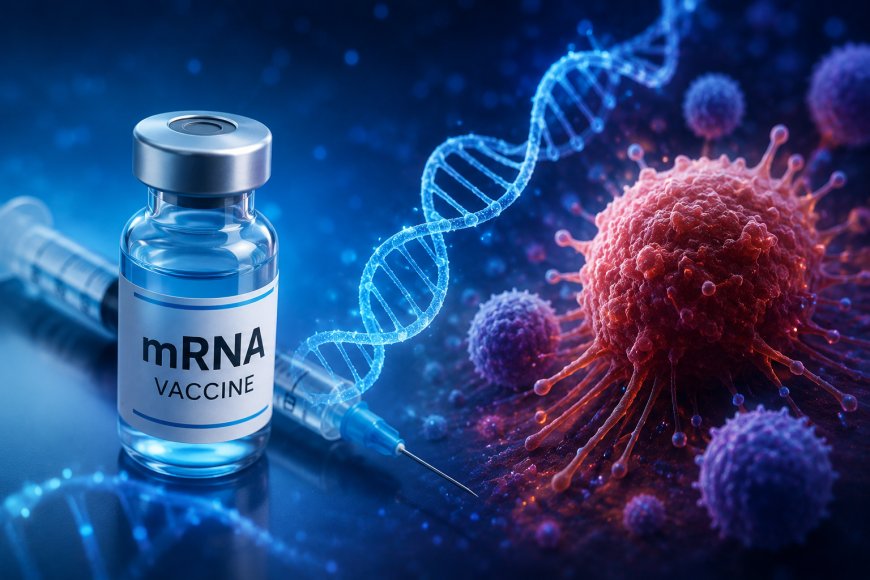
Moderna and Merck say their personalized mRNA-based cancer therapy has succeeded in a Phase 3 melanoma trial, marking an important milestone for a treatment designed individually around the mutations found in each patient’s tumour.
The companies announced Aug. 19 that intismeran autogene, also known as V940 or mRNA-4157, combined with Merck’s Keytruda, met the primary endpoint of recurrence-free survival in the Phase 3 INTerpath-001 study. The combination also met a key secondary endpoint measuring distant metastasis-free survival.
According to the companies, both improvements were statistically significant and clinically meaningful compared with Keytruda alone.
Merck’s official announcement of the Phase 3 INTerpath-001 results
The result is significant, but there is an important limitation: Moderna and Merck have not yet released the detailed Phase 3 efficacy numbers, including the hazard ratios and absolute recurrence rates. The companies say they plan to present the full results at an upcoming international medical meeting and discuss regulatory submissions with health authorities.
Intismeran also remains an investigational treatment. The U.S. Food and Drug Administration has not yet approved it as a melanoma therapy.
The Phase 3 Trial Enrolled Patients With High-Risk Melanoma
INTerpath-001 is a randomized Phase 3 study testing intismeran plus pembrolizumab, the generic name for Keytruda, against pembrolizumab alone after melanoma has been surgically removed.
The trial enrolled adults with completely resected stage IIB through stage IV cutaneous melanoma who remained at high risk of their cancer returning.
The study is registered with the U.S. National Library of Medicine as NCT05933577.
View the official INTerpath-001 trial record on ClinicalTrials.gov
More than 1,100 participants were randomized in the global trial. Patients were assigned to receive either the personalized mRNA treatment plus Keytruda or placebo plus Keytruda.
The primary endpoint is recurrence-free survival, which measures how long patients remain alive without their melanoma returning.
One of the most important secondary endpoints is distant metastasis-free survival, measuring the time before cancer spreads to a distant part of the body or the patient dies.
Those are particularly relevant measures in the adjuvant setting because the patients have already had their visible cancer surgically removed. The purpose of additional treatment is to reduce the risk that microscopic cancer cells left behind eventually cause a recurrence.
This Is Not a Traditional Preventive Vaccine
Calling intismeran an “mRNA cancer vaccine” is convenient, but it can create the wrong impression.
It is not intended to prevent healthy people from developing melanoma.
Instead, intismeran is an individualized neoantigen therapy created for a patient who already has cancer.
The process begins with tumour tissue obtained from the patient. Researchers sequence the tumour and identify mutations that could produce abnormal proteins, known as neoantigens, that distinguish cancer cells from normal cells.
A personalized mRNA sequence is then created for that patient.
Merck says intismeran can encode up to 34 neoantigens selected from the unique mutational signature of an individual tumour.
Merck’s official description of intismeran autogene and its development program
Once administered, the mRNA provides temporary instructions to help the immune system recognize tumour-specific targets and generate T-cell responses against cancer cells that express them.
The underlying idea is therefore very different from manufacturing one identical cancer vaccine for every patient.
Each Intismeran treatment is personalized.
Why Keytruda Is Part of the Combination
Intismeran is being tested alongside Keytruda because the two treatments target different aspects of the immune response.
Keytruda is a PD-1 checkpoint inhibitor.
Cancer can exploit immune checkpoint pathways to reduce the ability of immune cells to attack tumours. Pembrolizumab blocks PD-1 and can help restore antitumor immune activity. The FDA already approves Keytruda for several melanoma indications, including adjuvant treatment after complete resection of stage IIB, II C, or III melanoma.
Read the FDA’s current Keytruda prescribing information
The FDA originally approved pembrolizumab for adjuvant treatment of certain resected stage III melanoma in 2019 and later expanded its melanoma indication.
Read the FDA’s official melanoma approval information for pembrolizumab
The experimental strategy is to use intismeran to teach the immune system which tumour-specific targets to recognize while Keytruda helps prevent the tumour from suppressing that immune response.
Phase 3 Numbers Have Not Yet Been Released
The companies’ announcement is a topline result, not a full presentation of the Phase 3 dataset.
Moderna and Merck said the combination produced statistically significant and clinically meaningful improvements in both recurrence-free survival and distant metastasis-free survival.
They have not yet disclosed the Phase 3 hazard ratio for either endpoint.
They also have not released the percentage of patients in each treatment group who remained recurrence-free at specific time points.
Overall survival data remain immature, meaning there has not yet been sufficient follow-up to determine whether the combination ultimately improves survival.
That distinction is important.
Meeting recurrence and metastasis endpoints can support a future regulatory application. Still, a detailed assessment of the treatment will require the complete dataset, including the magnitude of benefit, adverse events, treatment discontinuations and longer-term survival results.
Earlier Phase 2 Data Were Encouraging
Although the full Phase 3 numbers are not yet available, a smaller randomized Phase 2b study provides some indication of why Moderna and Merck moved the treatment into late-stage development.
The KEYNOTE-942 study enrolled 157 patients with high-risk stage III or IV melanoma following complete surgical resection.
At a median follow-up of about five years, intismeran plus Keytruda was associated with a 49% reduction in the risk of recurrence or death compared with Keytruda alone.
The combination was also associated with a 59% reduction in the risk of distant metastasis or death.
Read Merck and Moderna’s official five-year Phase 2b results
The five-year recurrence-free survival rate in that earlier study was 68.8% for patients receiving intismeran plus Keytruda, compared with 49.1% for Keytruda alone.
Those results cannot simply be applied to the Phase 3 trial. The Phase 3 study is larger and includes a somewhat broader patient population.
The earlier results nevertheless provided the evidence supporting the larger INTerpath-001 study.
Safety Will Be Closely Watched
Moderna and Merck said the safety profile in the Phase 3 study was consistent with what had previously been observed and that no new safety signals were identified.
Detailed Phase 3 adverse-event numbers have not yet been released.
The earlier Phase 2b study provides more information about what patients experienced.
At five-year follow-up, the most frequently reported adverse events attributed to intismeran in the combination group included fatigue, injection-site pain and chills.
Merck reported fatigue and injection-site pain in 59.6% of patients receiving the combination, and chills in 51%.
Most adverse events attributed to intismeran were Grade 1 or Grade 2 in severity.
Those figures come from the smaller Phase 2b trial and should not be presented as the final Phase 3 safety profile.
Keytruda also carries its own risks because checkpoint inhibitors can cause the immune system to attack healthy tissues and organs.
The FDA-approved Keytruda prescribing information details immune-mediated adverse reactions and other potential risks associated with pembrolizumab.
The Treatment Is Tailored to Each Patient. Personalization could be one of the therapy’s biggest scientific advantages, but it also creates a manufacturing challenge.
Traditional medicines are produced in batches containing the same drug for thousands or millions of patients.
Intismeran must be prepared separately for each person.
A tumour sample must be collected and genetically analyzed. Relevant mutations have to be identified. A patient-specific mRNA construct then has to be designed, manufactured, tested, and delivered back to the treatment centre.
Doing this reliably for a Phase 3 clinical trial is one challenge. Doing it for potentially thousands of patients in routine cancer care would require a highly coordinated manufacturing and logistics system.
That means regulatory approval would not be the only hurdle if intismeran eventually reaches the market.
Cost, manufacturing capacity, and the time between surgery and delivery of a personalized treatment could all affect how widely it can be used.
Moderna and Merck Are Testing the Approach in Other Cancers
Melanoma is only one part of the companies’ development program.
Merck’s pipeline lists intismeran studies in non-small cell lung cancer, bladder cancer and renal cell carcinoma, alongside the melanoma program.
See Merck’s official interim clinical development pipeline.
The company has multiple Phase 2 and Phase 3 trials underway, testing the individualized mRNA approach across different cancer stages and types.
A positive melanoma trial does not prove that the treatment will work in every tumour type. Cancers differ greatly in their biology, mutation patterns and response to immunotherapy.
Still, a successful large Phase 3 trial provides stronger evidence that individualized mRNA technology can produce clinically meaningful results beyond infectious-disease vaccines.
What Happens Next
The immediate next step is publication and presentation of the full INTerpath-001 data.
Moderna and Merck say they intend to present the results at an international medical meeting and engage with regulators about filing submissions for intismeran plus Keytruda.
Until those detailed results become available, several important questions remain unanswered.
The size of the Phase 3 recurrence-free survival benefit has not yet been made public.
The distant metastasis-free survival hazard ratio has not been released.
Overall survival remains immature.
Detailed Phase 3 safety data are also still pending.
Most importantly, intismeran is not currently an FDA-approved cancer treatment.
The positive Phase 3 result therefore represents an important clinical milestone, not the end of the regulatory process.
If the complete data support the topline announcement and regulators ultimately approve the therapy, the trial could help establish personalized mRNA treatment as a new option for patients with high-risk melanoma following surgery.
What's Your Reaction?
 Like
0
Like
0
 Dislike
0
Dislike
0
 Love
0
Love
0
 Funny
0
Funny
0
 Angry
0
Angry
0
 Sad
0
Sad
0
 Wow
0
Wow
0