































OpenAI Confidential IPO Filing Signals Next Phase in AI Industry Race
OpenAI has confidentially filed for a U.S. IPO, following rival Anthropic’s recent filing. The move highlights growing investor demand for artificial intelligence companies and could lead to one of the largest technology stock market debuts in history.

OpenAI, the company behind ChatGPT, has confidentially filed for an initial public offering, according to a blog post published Monday. The announcement arrives just over a week after rival AI company Anthropic also submitted paperwork to go public, intensifying competition between two of the industry’s most closely watched firms.
The company, which was most recently valued at approximately $852 billion post-money, said it had submitted a draft registration statement to the U.S. Securities and Exchange Commission for a proposed IPO. OpenAI did not disclose any details regarding pricing, timing, or the amount it intends to raise. The company noted that it chose to announce the filing because it anticipated the information would likely become public.
“We have not decided on timing yet; it may be a while because there are things we want to do that are likely easier as a private company,” OpenAI wrote. “But it’s a complicated set of tradeoffs, and this gives us the option to go public sooner if that ends up being best.”
At roughly the same time, OpenAI published a separate blog post outlining its broader vision for artificial general intelligence, its mission, and its belief that AI should benefit humanity. Such forward-looking statements are often handled carefully by companies preparing for a public offering, making the timing notable as OpenAI moves toward a potential IPO.
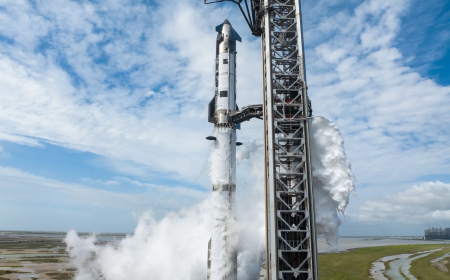
The filing further signals what could become a landmark year for public markets. Alongside OpenAI and Anthropic, SpaceX is also widely expected to pursue a public listing at an estimated valuation of $1.75 trillion. If all three companies debut within a similar timeframe, it would represent one of the largest concentrations of high-profile technology offerings since the dot-com era.
OpenAI’s IPO preparations come despite reports that the company has recently fallen short of certain internal goals for user growth and revenue. According to The Wall Street Journal, Chief Financial Officer Sarah Friar has raised concerns about the sustainability of OpenAI’s massive data-centre spending requirements.
The company’s financial demands continue to grow. In March, OpenAI secured approximately $122 billion in what was described as the largest funding round in Silicon Valley history, including $3 billion reportedly from retail investor participation via banking channels. However, the company is expected to spend a similar amount on AI computing infrastructure alone by 2028 and projects losses of roughly $85 billion that year despite substantial revenue growth.
The situation highlights a broader challenge facing the AI sector. Training and operating advanced AI models require enormous investment, often outpacing current revenue growth. Public-market investors evaluating future offerings will likely weigh those costs carefully.
Anthropic has presented a somewhat more optimistic financial picture, recently indicating that it is approaching its first profitable quarter. Even so, the company continues to raise substantial capital and remains heavily invested in computing infrastructure and AI development.
By filing confidentially, OpenAI can begin preparing for a public offering without immediately disclosing detailed financial information, business risks, or share-pricing plans. Nevertheless, secondary markets continue to provide clues about investor sentiment.
Anthropic recently reached a reported $1 trillion valuation on Forge Global’s secondary marketplace, surpassing OpenAI’s roughly $880 billion secondary-market valuation recorded earlier this year.
David Shapiro, founder and CEO of OpenVC and overseer of the NYSE OpenVC 500 Index, said Anthropic’s valuation growth has outpaced OpenAI’s in 2026. However, he noted that investor demand for OpenAI shares remains strong.
“From a secondary investor standpoint, OpenAI had already grown into a significant portion of its valuation,” Shapiro said. “We haven’t seen OpenAI crater or anything close, and the valuation is still enormously successful.”
He added that OpenAI’s secondary-market pricing has risen modestly in recent days, suggesting investors increasingly view OpenAI and Anthropic as the two leading contenders in the large language model race.
Industry observers also note that timing could play a significant role. Companies that reach public markets first may attract a larger share of available investor capital, particularly as major offerings such as SpaceX compete for attention.
In addition, Anthropic’s eventual IPO disclosures could establish valuation benchmarks that influence how investors assess OpenAI’s offering. Some analysts have suggested OpenAI’s valuation may be difficult to justify relative to current financial fundamentals if comparable companies adopt more conservative pricing.
Founded in 2015 as a nonprofit research organisation, OpenAI transformed the AI industry with the launch of ChatGPT in 2022. The chatbot’s success accelerated adoption of large language models and sparked a wave of competition throughout the technology sector.
Since then, OpenAI has expanded beyond consumer products into enterprise and government services while building a user base that reportedly reaches around 900 million weekly active users.
The company’s path to a potential IPO has been marked by several years of internal and external challenges. In 2023, OpenAI’s board temporarily removed CEO Sam Altman, citing concerns over transparency and alignment with the company’s mission. Altman was reinstated shortly afterwards, while several board members involved in the decision, including co-founder Ilya Sutskever, later departed.
OpenAI has also faced multiple legal disputes. Most recently, the company and Altman were named in a lawsuit filed by the state of Florida alleging harms related to AI chatbot usage. The filing adds to a growing list of legal challenges confronting OpenAI and other AI developers.
Last month, OpenAI prevailed in a separate case brought by co-founder Elon Musk, who argued that the organisation had abandoned commitments to remain a nonprofit. The lawsuit was dismissed after courts determined the claim had been filed outside the applicable statute of limitations.
The company has additionally faced scrutiny over political donations made by OpenAI President Greg Brockman and his wife. Both contributed substantial sums to pro-AI and pro-Trump political organisations. OpenAI has stated that those donations were personal decisions and were not made on behalf of the company.
As OpenAI moves toward a possible public listing, investors will weigh not only the company’s rapid growth and influence in AI but also the financial, governance, and regulatory challenges that continue to shape the industry’s future.
What's Your Reaction?
 Like
0
Like
0
 Dislike
0
Dislike
0
 Love
0
Love
0
 Funny
0
Funny
0
 Angry
0
Angry
0
 Sad
0
Sad
0
 Wow
0
Wow
0