


























Ouster unveils colour lidar technology designed to challenge traditional cameras
Ouster’s new colour lidar technology could transform imaging and sensing by offering advanced depth perception and visual accuracy beyond what traditional cameras provide.
The tech industry has spent the past decade debating whether autonomous vehicles should rely on lidar sensors, cameras, or a combination of both. Lidar company Ouster now says it has a new solution: combine both capabilities into a single sensor.
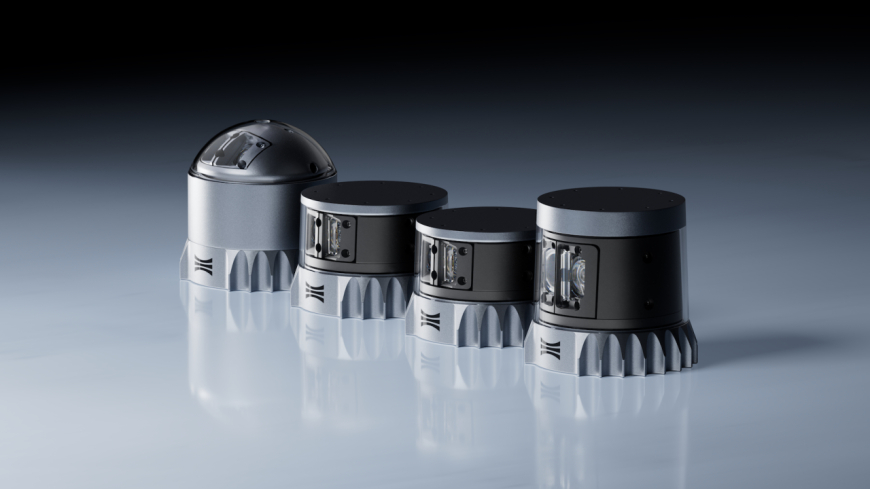
On Monday, the San Francisco-based firm revealed a new range of lidar sensors called “Rev8,” all featuring what it describes as “native colour lidar.” These sensors can capture colour imagery alongside three-dimensional depth data simultaneously, effectively merging the functionality of two separate systems into one device.
Ouster CEO Angus Pacala explained that this advancement has been in development for nearly a decade and described the new lineup as a breakthrough, calling it the “holy grail of what a roboticist has always wanted” during an interview.
“For all of human history, it’s been: you buy a lidar sensor, you buy a camera, and you try to make sense of the combination with some higher-level reasoning, and waste an enormous amount of time doing this,” he said. “And companies only get really halfway there in terms of calibrating and fusing the data streams.”
According to Pacala, the Rev8 sensors are designed to eliminate that complexity.
“The goal is to obviate cameras. There’s no reason that one sensor can’t do both,” he added.
The announcement comes at a time of major shifts in the lidar industry. Consolidation has been ongoing, with Ouster previously acquiring Velodyne, while Luminar’s assets were recently acquired following bankruptcy proceedings.
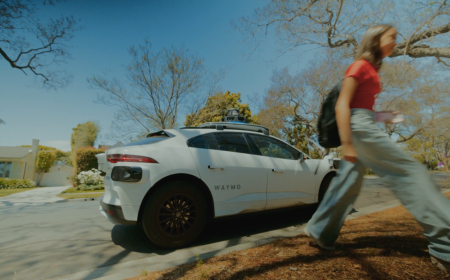
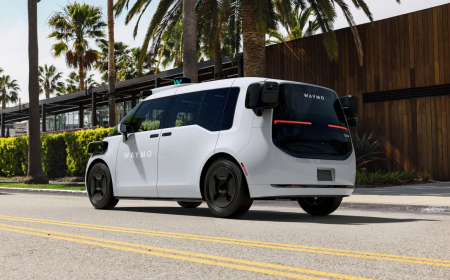
Meanwhile, demand for sensing technologies is rapidly increasing. Companies like Waymo have begun scaling robotaxi deployments, while robotics firms — including those developing humanoid and industrial systems — are drawing significant investment and require advanced perception tools. New entrants such as Teradar are also exploring alternative sensing approaches, including terahertz imaging.
Pacala noted that a colour lidar system combining precise depth perception with high-quality imaging could be particularly valuable for robotics applications. He added that Ouster collaborated with Fujifilm and DXOMARK to understand better what defines high-performance camera systems.
He even suggested that Ouster’s approach could outperform conventional cameras in certain respects due to its sensor design.
The company relies on what it calls “digital lidar” architecture. Instead of using traditional analogue systems with multiple moving components, Ouster captures lidar data directly on custom chips using single-photon avalanche diode (SPAD) detectors. This same SPAD-based technology is now used to capture colour image data within the Rev8 sensors. Pacala explained that this method allows for greater sensitivity compared to standard cameras.
“It’s 48-bit colour, 116 dB of dynamic range, like megapixel resolution. These are top-line numbers that make it a good camera pound for pound. But it just so happens it’s coming as a pre-fused data stream as a 3D colourised point cloud,” he said. “You can actually use the data as a camera stream as well, but one of the powers of this system is that you can use just the lidar data stream, you can use just the camera data stream, or you can use the pre-fused data stream, depending on how kind of forward-thinking your perception team is.”
Pacala said that samples of the new sensors have already been shipped to customers and that orders are now being accepted. He highlighted the OS1 Max sensor as a standout product, describing it as “the industry’s best long-range lidar.” According to him, it can detect objects up to 500 meters away in all directions while remaining smaller than other long-range systems.
“We’ve had a long-range lidar, but it hasn’t been just like clearly a cut above everything else,” he said. “That’s a big leap for Ouster. I think it means that we’ll start to see it much more on high-speed robo-trucking, robotaxi applications, I think a lot of drone stuff will transition to the OS1 Max.” Additional lidar models built on the Rev8 platform will include the OS0, OS1, and OSDome, as outlined in the company’s announcement.
Ouster is not alone in pursuing colour lidar technology. Recently, the Chinese firm Hesai introduced its own version, with plans to begin mass production later this year. Other companies, such as Innoviz, have also explored similar concepts.
However, Pacala argued that many competing approaches package separate lidar and camera systems together, rather than integrating them at the chip level. Ouster’s method — also being explored by Hesai — embeds both sensing and imaging capabilities in a single chip.
This integration significantly reduces the effort required for customers to process and align data from multiple sensors, potentially enabling them to eliminate cameras. It also aims to deliver improvements in cost efficiency and size compared to earlier technologies.
“This is kind of fundamentally changing the value proposition of what we’re selling to a customer from this stage forward,” he said.
What's Your Reaction?
 Like
0
Like
0
 Dislike
0
Dislike
0
 Love
0
Love
0
 Funny
0
Funny
0
 Angry
0
Angry
0
 Sad
0
Sad
0
 Wow
0
Wow
0