

































Ring expands beyond home security with new AI-powered app store
Ring launches a new app store powered by AI, aiming to expand beyond home security into smarter automation, integrations, and personalised home experiences.
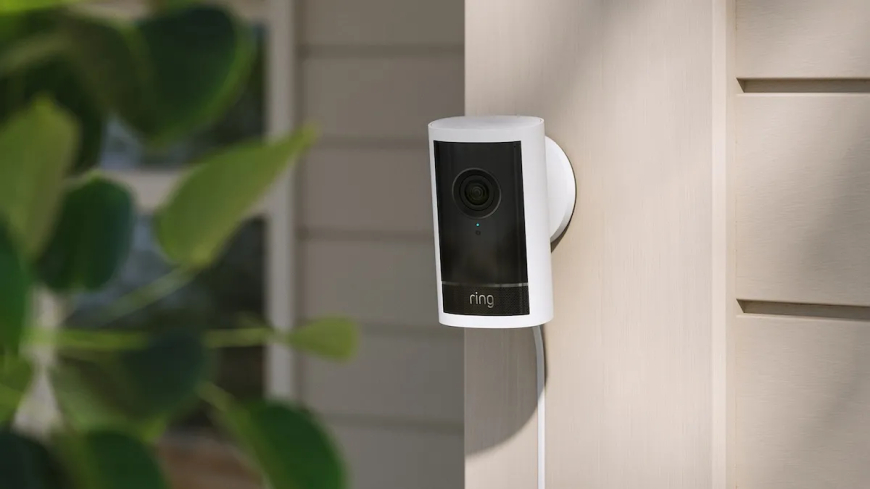
Ring, the Amazon-owned smart home brand, is taking a significant step beyond its traditional focus on home security by introducing a new app store designed to extend the functionality of its devices. With more than 100 million cameras already deployed globally, the company is now aiming to leverage that installed base by allowing third-party developers to build services on top of its ecosystem.
The app store, which was initially revealed earlier this year at the Consumer Electronics Show, is launching alongside Ring’s broader push into business-focused hardware and services. While Ring first built its reputation on video doorbells and residential security cameras, the company is now positioning its platform as something far more versatile, particularly with the help of advances in artificial intelligence.
AI plays a central role in enabling this expansion. Ring’s devices, which can already capture audio and video from real-world environments, are now being paired with software that can interpret that data in context-specific ways. This shift opens up new use cases across industries such as elder care, workplace monitoring, and property management.
Among the initial launch partners is Density, a SoftBank-backed company introducing an app called Routines. This application focuses on elder care and uses Ring cameras to help families monitor loved ones, particularly older relatives. It can notify users of potential concerns such as falls or noticeable changes in daily activity patterns.
Another partner, QueueFlow, is offering a solution for businesses that need insights into customer flow and wait times. Its app analyses congestion and queue behaviour at locations such as restaurants, service counters, events, and waiting areas, helping organisations better understand and manage customer experiences.
Meanwhile, Minut is targeting the short-term rental market. Its app enables hosts on platforms like Airbnb to monitor their properties more effectively. By integrating with Ring cameras and Minut’s own sensor technology, the app can track environmental factors such as noise levels and temperature, offering a more comprehensive view of property conditions.
According to Ring founder and CEO Jamie Siminoff, the goal is to unlock new possibilities for devices that customers already own. He emphasised that AI is enabling a wide range of long-tail use cases that were previously unimaginable, allowing the platform to deliver value far beyond its original purpose of home security.
At the same time, Ring is taking a cautious approach to avoid privacy-related backlash. The company has faced criticism in the past over surveillance concerns, particularly regarding how its devices and partnerships could be used. As a result, the app store will enforce strict guidelines, prohibiting certain types of applications such as facial recognition systems and license plate readers.
Siminoff noted that these restrictions are intended to ensure the platform is used in ways that genuinely benefit customers while remaining sensitive to broader concerns about surveillance and data use. Ring has already taken steps in this direction, including ending its partnership with Flock Safety, a company known for sharing camera data with law enforcement agencies. The company has also faced scrutiny over its collaborations with organisations such as Axon.
The new app store will be accessible through the Ring app on both iOS and Android devices. Initially, it will be available only to users in the United States, with plans for expansion into other regions over time. Unlike traditional app marketplaces, however, this ecosystem operates differently. Users will still need to download partner applications separately from standard app stores, as Ring itself does not directly distribute these apps on its platform.
This structure also means that Ring avoids paying commissions to Apple or Google for in-app purchases. Instead, the company will generate revenue by taking a commission—currently set at 10%—when customers sign up for services through its partner integrations. Ring has indicated that it is open to supporting various business models, including subscriptions, one-time purchases, and even ad-supported offerings.
At launch, the app store features around 15 applications, but the company says many more are in development. Developers can submit their apps through Ring’s dedicated developer platform, signalling the company’s intention to build a broad ecosystem over time.
Other early apps include WhatsThatBird.AI for identifying bird species, memories.ai for detecting risks such as fire or leaks, Lumeo for business analytics like people counting, LawnWatch for monitoring lawn conditions, ProxView for detecting loitering, StoreTraffic for analysing customer flow, Package Protect for tracking deliveries, and Amazon’s own Cheer Chime feature, which provides alerts tied to tipping events.
Looking ahead, Siminoff said the ambition is to scale the platform significantly, with plans to host hundreds of apps across multiple verticals by the end of the year. The broader vision is to transform Ring from a hardware-focused company into a platform that supports a wide array of AI-driven services built on its extensive network of connected devices.
What's Your Reaction?
 Like
0
Like
0
 Dislike
0
Dislike
0
 Love
0
Love
0
 Funny
0
Funny
0
 Angry
0
Angry
0
 Sad
0
Sad
0
 Wow
0
Wow
0