































Ring founder Jamie Siminoff faces ongoing privacy concerns despite efforts to reassure users
Ring founder Jamie Siminoff continues to address privacy concerns following a Super Bowl campaign, but critics say the company’s explanations may not fully ease users' worries.
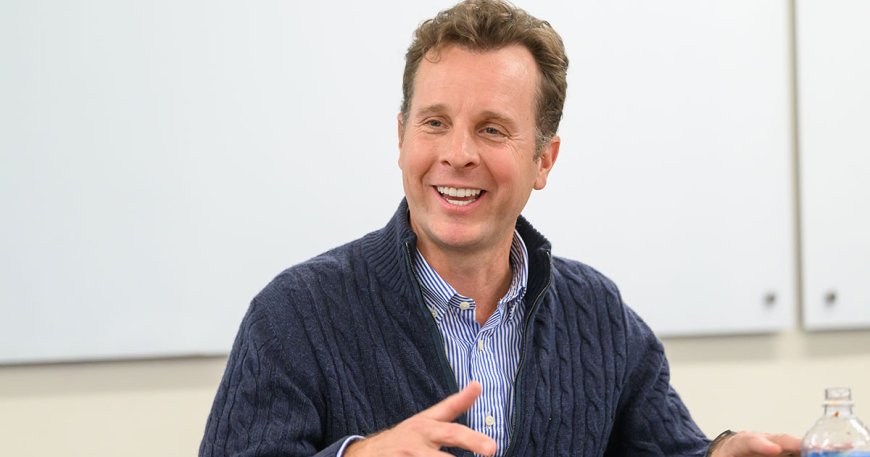
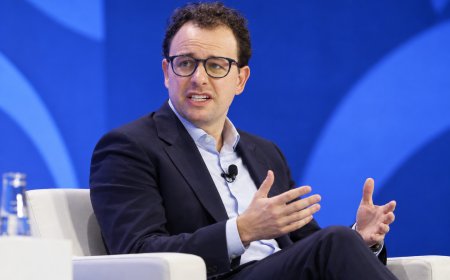
When Ring founder and CEO Jamie Siminoff chose the company's first-ever Super Bowl advertisement to unveil Search Party — an AI-driven feature that uses footage from Ring cameras to help locate lost dogs — he believed Americans would embrace the idea. Instead, the commercial triggered an immediate wave of criticism.
In fact, almost from the moment the ad aired in February, Siminoff has appeared on NBC and in The New York Times, arguing that critics have fundamentally misunderstood what Ring is trying to build.
The feature at the centre of the backlash is, on the surface, relatively simple and something we originally covered fairly directly when it first launched. A dog disappears; Ring sends alerts to nearby camera owners asking whether the missing animal appears in their footage; users can either respond or ignore the request, remaining invisible to everyone involved. During our conversation, Siminoff returned to this point repeatedly — that doing nothing is itself an opt-out, and that no one is being forced to participate.
"It is no different than finding a dog in your backyard, looking at the collar and deciding whether or not to call the number," he said.
What Siminoff believes really ignited the backlash was the imagery in the Super Bowl commercial: a map showing blue circles pulsing outward from home to home, as cameras appeared to activate across an entire neighbourhood. "I would change that," he said. "It wasn't our job to try to poke anyone to try and get some response."
But Ring made its pitch at an especially delicate moment. Nancy Guthrie — the 84-year-old mother of Today show anchor Savannah Guthrie — had disappeared from her Tucson home in late January. Video from a Google Nest camera at the property, showing a masked figure attempting to cover the lens with foliage, spread widely online and thrust home surveillance cameras directly into the middle of a national debate over safety, privacy, and who gets to observe whom.
Rather than distancing himself from the Guthrie case, Siminoff leaned into it. In a separate interview with Fortune, he argued that the case made the argument for placing even more cameras in homes. "I do believe if they had more [footage from Guthrie's home], if there were more cameras on the house, I think we might have solved" the case, he said. He also noted that Ring's own network had captured footage of a suspicious vehicle located roughly 2.5 miles from the Guthrie home.
Whether that feels reassuring or unsettling depends largely on perspective. Siminoff clearly sees video as an unequivocal public good. Still, others may hear the same comments and see a company founder using a kidnapping case to argue for putting more of his products into people's homes.
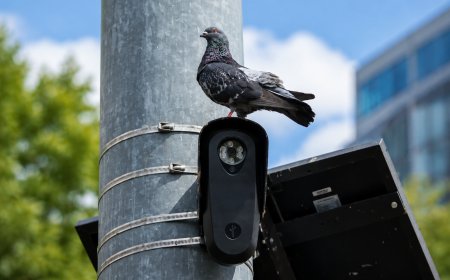
Either way, unease around Search Party is not only about the blue concentric circles shown in the commercial. The feature exists alongside two others: Fire Watch, which crowdsources neighbourhood fire mapping, and Community Requests, which allows local law enforcement to ask Ring users in a particular area whether they have footage relevant to an incident.
Ring relaunched Community Requests in September through a partnership with Axon, the company known for making police body cameras and Tasers, and for operating the evidence management system Evidence.com. Axon and Ring first announced the partnership in April of last year, shortly after Siminoff returned to the company following his departure in 2023.
An earlier version of that arrangement had involved Flock Safety, a company best known for AI-powered license plate readers. Ring ended that partnership just days after the Super Bowl commercial aired, citing the "workload" it would create.
When asked directly whether Flock's reported data-sharing with U.S. Customs and Border Protection had also influenced the decision, Siminoff declined to say. Concerns about exactly that issue have led dozens of towns across the United States to cut ties with Flock. Even so, Ring's timing was notable. While Siminoff believes some users are misinterpreting what his products do, he also understands that Ring cannot afford to dismiss public anxieties, especially under current circumstances.
None of this is unfolding in a vacuum. Just days ago, NPR reported on its own investigation, based on dozens of accounts from people who found themselves caught up in the Department of Homeland Security's widening surveillance apparatus, including U.S. citizens with no immigration-related issues whatsoever.
One woman, described as a constitutional observer following an ICE vehicle in Minneapolis in late January, said a masked federal agent leaned out of a window, photographed her, and then called out both her name and her home address. "Their message was not subtle," she told NPR. "They were, in effect, saying, 'We see you. We can get to you whenever we want to."
Siminoff appears to understand that in this environment, Ring's own privacy answers carry added weight. In a conversation, he emphasised end-to-end encryption as Ring's most powerful privacy safeguard. He confirmed that, once enabled, even Ring employees cannot view the footage because decryption depends on a passphrase stored on the user's device. He described that as an industry first among residential camera companies.
The question of facial recognition is where things become more complicated. Ring introduced a feature called Familiar Faces in December, two months before the Super Bowl ad ran. It lets users create a catalogue of up to 50 recurring visitor family members, delivery workers, and neighbours so that, instead of receiving a generic motion alert, a Ring owner could get a message like "Mom at Front Door." During our discussion, Siminoff spoke enthusiastically about the feature, saying that he receives alerts, for example, when his teenage son arrives in the driveway.
He compared it to the facial recognition now commonly used at TSA checkpoints, suggesting the public has largely accepted this technology. When asked about consent from people who appear on Ring cameras but have not agreed to be catalogued, he replied only that Ring complies with applicable local and state laws.
He was equally careful when asked whether Amazon uses Ring's facial recognition data. "Amazon does not access that data," he said, before adding: "In the future, if we could see a feature where the customer wanted to opt in to do something with that, maybe you could see that happening."
He also volunteered that end-to-end encryption is optional, meaning users must turn it on manually in the Ring app's Control Centre. But according to Ring's own support materials, the tradeoff is substantial. Turning on end-to-end encryption turns off a long list of features, including event timelines, rich notifications, quick replies, video access on Ring.com, shared user access, AI video search, 24/7 video recording, pre-roll, snapshot capture, bird's eye view, person detection, AI video descriptions, video preview alerts, virtual security guard, and Familiar Faces, which depends on cloud processing. Put differently, the two features Ring is currently promoting most heavily — AI-powered recognition of who is at your door and genuine privacy even from Ring itself — cannot coexist. Users can choose one, but not both.
As for whether Ring users should be concerned that their footage could end up in the hands of a federal immigration agency, Siminoff said they should not. Community requests that moves be made only through local law enforcement channels. He pointed to Ring's transparency report on government subpoenas. He did not directly address what happens when those boundaries become porous.
Not surprisingly, Siminoff is aiming well beyond doorbell cameras. Ring already has more than 100 million cameras in the field and is now quietly moving into enterprise security with a new "elite" camera line and a trailer-based security product. He said small businesses have already begun bringing Ring into their operations, whether or not the company actively markets to them. He also said he is open to outdoor drones "if we could get the cost in a place where it made sense," and when it came to license plate detection — the core of Flock Safety's business — he stopped short of ruling it out permanently. Ring is "definitely not" developing it right now, he said when asked whether the company might explore it. Then, after a pause, he added that "it's very hard to say we're never going to do something in the future."
Siminoff frames all of this through a philosophy he says has guided the company from the beginning: that each home is a node controlled by the homeowner, and that residents should be free to decide whether they want to participate in neighbourhood-level cooperation when something happens.
But at a time when an NPR investigation has documented federal agents photographing and identifying civilians whose only action was observing arrests, and when a kidnapping case has become a national flashpoint over both surveillance cameras and privacy, the real issue is not only whether Ring's opt-in model is well designed. It is whether the system Ring is constructing — a network of tens of millions of cameras, AI-powered search tools, and facial recognition — can remain as harmless as Siminoff appears to intend, no matter who holds power, which partnerships are formed, or how the underlying data ultimately moves.
What's Your Reaction?
 Like
0
Like
0
 Dislike
0
Dislike
0
 Love
0
Love
0
 Funny
0
Funny
0
 Angry
0
Angry
0
 Sad
0
Sad
0
 Wow
0
Wow
0