



































The Marketing Guru Who Helped Turn Khosla Ventures Into an AI Powerhouse Is Moving On
Shernaz Daver is leaving Khosla Ventures after reshaping the firm’s brand and elevating its position as a leading AI-focused VC. Her next move could signal what’s ahead for tech.
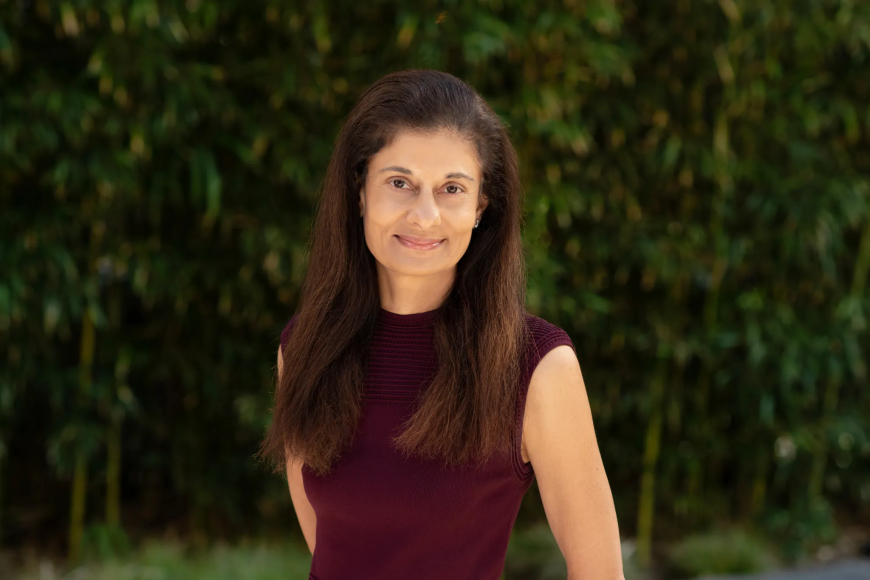
Shernaz Daver may be small in physical stature, but her influence across Silicon Valley spans decades. Over the course of her career, she earned a reputation for getting anyone to pick up the phone with nothing more than a short text — "Can you call me?" or "Let's talk tomorrow." People always responded.
Now, as she prepares to depart Khosla Ventures (KV) after nearly five years as the firm's first-ever Chief Marketing Officer, Daver's next move could once again signal where the tech industry is heading. Her professional path has consistently aligned with the next significant wave: she was at Inktomi during the search engine boom of the late 1990s, joined Netflix when mailing DVDs seemed laughable, helped Walmart adopt technology to compete with Amazon, and worked with Guardant Health explaining liquid biopsy diagnostics long before Theranos cast a shadow on blood testing. She even once found herself being scolded by Steve Jobs over the marketing of a Motorola microprocessor — an anecdote worthy of its own chapter.
KV founder Vinod Khosla summarised her contribution: "Shernaz had a strong impact at KV as she helped me build our KV brand and was a valuable partner to our founders. I'm grateful for her time here and know we'll stay close."
Daver is similarly straightforward about her exit. She says she joined KV with a clear mission: build the KV brand, elevate Khosla's presence, and establish a marketing framework that portfolio companies could rely on. "And I've done all of that," she said.
There's little doubt about the transformation. Today, when founders think of top AI investors, Khosla Ventures consistently appears on the shortlist — a significant shift for a firm once better known publicly for Khosla's legal fight over coastal access rights than for its startup successes.
The Daver Playbook
Daver's impact at KV largely came from identifying the firm's central identity and repeating it everywhere. "VCs don't have a product," she noted. "The people themselves are the product."
KV already had its branding pillars — bold, early, impactful. Her role was to embed those words deeply into the firm's public narrative and support each claim with real examples.
The turning point was defining what "early" truly meant. For Daver, it meant either inventing a category or writing the first check. When OpenAI released ChatGPT in 2022, she asked Sam Altman for permission to share that KV was the first VC investor publicly. He agreed.
"Once you can own that first investor narrative, it helps tremendously," she explained. In a venture where liquidity events often take a decade or more, people quickly forget who backed a company at the very beginning. By emphasising KV's early role from the outset, the firm ensured its contributions wouldn't fade from memory.
She repeated the formula across the portfolio: KV was the first investor in Square and DoorDash, and the pattern continued. It took more than two years of persistence for the message to stick — a complete turnaround, she argues, given the industry's speedy pace. Today, when Khosla steps onstage, he is almost always introduced as the first investor in OpenAI.
Her core lesson for founders is simple but complex to execute: you must repeat yourself far more than you feel comfortable doing.
"You're on mile 23, the rest of the world is on mile five," she says. Founders move quickly and assume everyone remembers the latest update — but they don't.
Another key tactic is what she calls the "equals exercise." She asks every company she works with to define the word they want to own.
"Search equals Google. Shopping equals Amazon. Toothpaste equals Crest or Colgate."
Then she asks them: "What word describes your company?"
Some KV portfolio companies have succeeded with this approach, such as Commonwealth Fusion Systems (nuclear fusion) and Replit (vibe coding). The goal is simple: when someone hears a specific word, your company should automatically come to mind.
Why 'Going Direct' Doesn't Work for Early Startups
Despite the growing trend of startups skipping traditional media and going directly to users, Daver believes this is misguided — especially for young companies.
"You have a seed investment, nobody's heard of you, and then you say, 'go direct.' Well, who's going to hear you? Nobody even knows you exist."
She compares it to being new in a neighbourhood
"You're not invited to the barbecue because nobody knows you."
For early startups, media remains essential. Her approach blends press coverage with video, podcasts, social content, and live events. She sees these tactics as different units in a coordinated army: the infantry, the cavalry, the heavy artillery. Used together, they can turn a small company into a dominant force.
When it comes to social media, she believes platforms — especially X — push people toward louder, more extreme behaviour because attention is the currency. For founders, she warns that relevance often becomes confused with controversy.
At KV, Daver oversees the firm's official messaging but not Khosla's personal posts. "There has to be some freedom of speech," she says. Her one rule: share what you like — family moments, PTA meetings, personal hobbies — as long as it doesn't harm the firm or its partnerships.
Her Unconventional Path to Khosla Ventures
Daver's career showcases a pattern: she consistently joins companies just before they hit a central turning point. Born at Stanford while her father completed his PhD, she grew up in India before returning to Stanford on a Pell Grant. Her early dream was to work for Sesame Street and use interactive technologies for education.
That didn't pan out — she received 100 rejections. A near-hire at Electronic Arts fell through at the last minute. Someone encouraged her to try PR, which eventually led to her work in marketing semiconductors and the now-famous encounter with Steve Jobs.
From there came major roles at Sun Microsystems in Paris working on Solaris and Java, a stint at 3DO, and then Inktomi during the first wave of search competition. After the dot-com crash, she moved between consulting and full-time roles at Netflix, Walmart, Khan Academy, Guardant Health, Udacity, 10x Genomics, GV, and Kitty Hawk.
Eventually, Khosla called — though she didn't recognise his number and waited a week before checking the voicemail. After months of conversations and despite warnings from others that Khosla could be demanding, she joined KV anyway.
And she doesn't regret it.
What's Next?
Even now, she remains turned off by one thing prevalent across Silicon Valley: generic storytelling. "Everybody is so scripted," she says, praising Sam Altman as someone who breaks the mould
She recalls someone telling her they felt uncomfortable with something Khosla said onstage at Disrupt. Her reaction? "No, that was great."
As for her future, Daver hasn't revealed what comes next, describing it only as "different opportunities." But given her history — arriving early to search, early to streaming, early to genomics, early to AI — her next step is worth watching.
She's always been able to see where the world is going.
And she knows exactly how to repeat the message until everyone else sees it too.
What's Your Reaction?
 Like
0
Like
0
 Dislike
0
Dislike
0
 Love
0
Love
0
 Funny
0
Funny
0
 Angry
0
Angry
0
 Sad
0
Sad
0
 Wow
0
Wow
0