































This Khosla-Backed Startup Can Track Drones, Trucks, and Robotaxis With Centimeter Precision
Point One Navigation raised $35M in funding, led by Khosla Ventures, to expand its centimetre-accurate location technology for drones, vehicles, robots, wearables, and industrial systems.
For San Francisco–based startup Point One Navigation, the phrase “location, location, location” goes far beyond real estate — and investors clearly agree.
The company, which specialises in high-precision positioning technology, has raised $35 million in a Series C round led by Khosla Ventures, bringing its post-money valuation to $230 million, according to a source familiar with the deal.
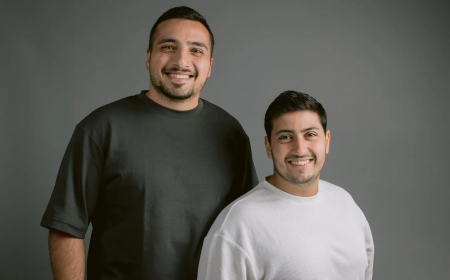
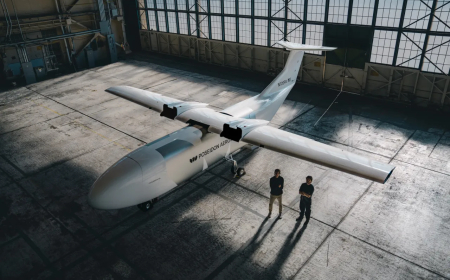
Founded in 2016, Point One has built a location technology platform that can be embedded into virtually any moving vehicle or device — from autonomous lawnmowers, drones, and robots to consumer cars, agricultural machinery, and even wearable devices. Co-founder Aaron Nathan told TechCrunch that the company’s positioning engine can determine a device’s location to within one centimetre under optimal conditions.
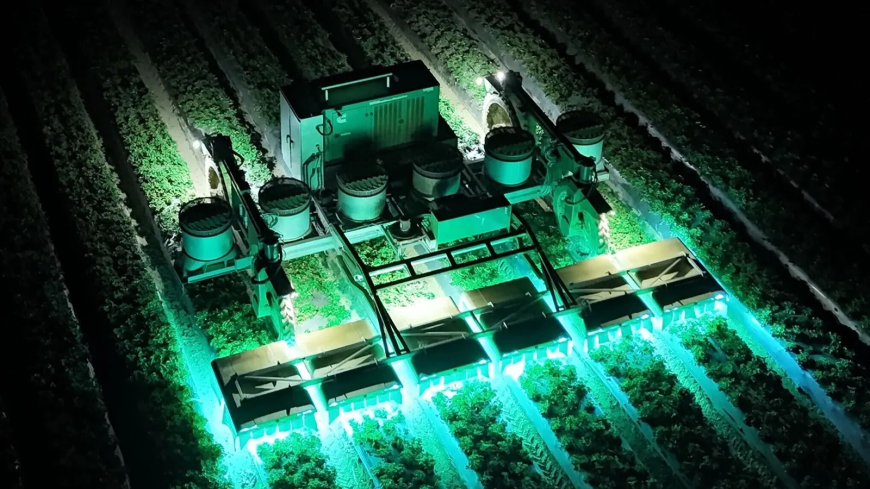
To deliver that level of accuracy, Point One combines an augmented GNSS system with computer vision and sensor fusion, all delivered through an API. Most newer vehicles already include the necessary hardware, allowing Point One to offer its solution purely as software. For machines that don’t — such as older farm equipment or certain emergency-response vehicles — the company supplies an additional chipset.
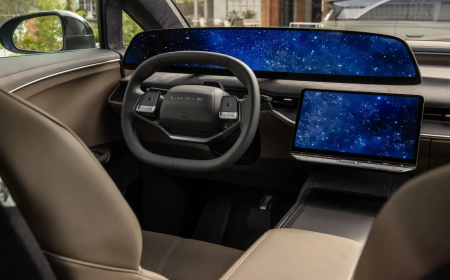
Point One initially focused on automotive customers, reflecting the excitement around autonomous vehicle technology at the time. That segment still accounts for a significant share of its business today. While the company declined to name most of its clients, it confirmed that its technology powers both the advanced driver-assistance systems and infotainment features of an EV manufacturer, and is already deployed in more than 150,000 of that automaker’s vehicles.
Point One also works with leading turf-care and mowing equipment manufacturers, a distribution company operating 300,000 last-mile delivery vehicles, and a global producer of both street and racing bikes.
The company began expanding more aggressively into new sectors around 2021 after closing its $10 million Series A. Since then, adoption has surged. Over the past year, the number of manufacturers using its platform has increased tenfold, spanning industries like robotics, wearables, industrial equipment, and automotive.
“And now it’s just accelerating,” Nathan said.
The new Series C funding will support development across the entire technology stack, including Point One’s Polaris RTK Network. This crucial hardware system enables centimetre-level precision even in remote areas across North America, Europe, and parts of Asia.
“Industries are demanding higher and higher precision — whether it’s precision agriculture, line painting, or lawn mowing,” COO Tom Weeks told TechCrunch. “You can’t be off by 10 centimeters and end up in someone’s flower bed. Everything is moving toward one- to three-centimeter accuracy.”
To achieve that, Point One has spent eight years building the Polaris network, which consists of compact, lunchbox-sized units installed in secure sites such as cell-tower facilities. These stations deliver real-time corrections to nearby vehicles or devices. For consistent centimetre-level precision, they need to be placed within 40 kilometres of the user. That requires a dense network — something the company is actively expanding.
“From Midwestern farming regions to the East Coast, you need strong coverage because you have farming, cars, trucks, and huge volumes of middle-mile freight,” Weeks said. “We’re close to full build-out.”
Point One is also developing improved indoor navigation. Currently, a vehicle moving from outdoors into a parking garage retains its precise location. But Nathan wants that reliability to extend to warehouses and factories, where robots spend most of their operational life.
“What we’re building next — and what this funding supports — is long-term indoor navigation,” he said. “As our business evolves, our goal is to deliver ubiquitous location across all environments, indoors and outdoors.”
What's Your Reaction?
 Like
0
Like
0
 Dislike
0
Dislike
0
 Love
0
Love
0
 Funny
0
Funny
0
 Angry
0
Angry
0
 Sad
0
Sad
0
 Wow
0
Wow
0