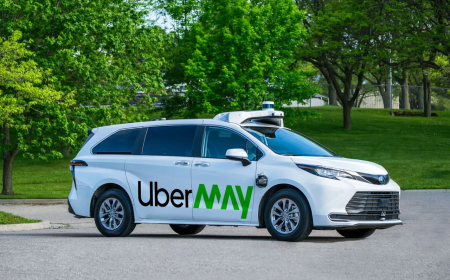
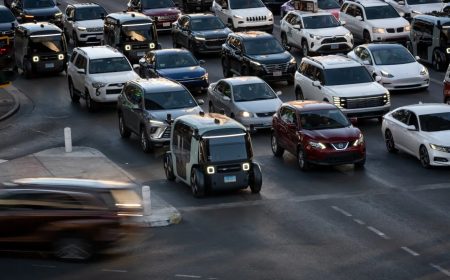
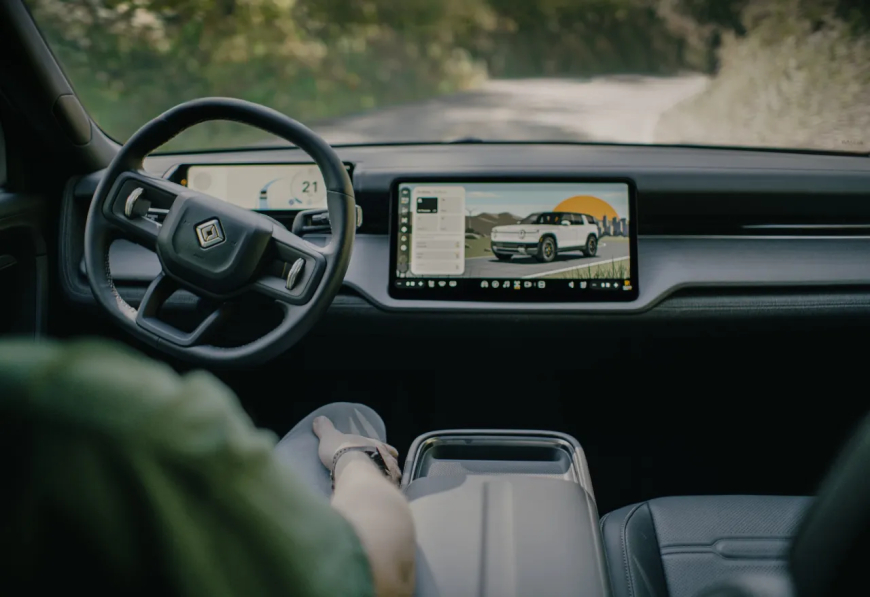
Rivian announced on Thursday that it has entered into a partnership with Uber to develop thousands of robotaxis based on its upcoming R2 SUV. The agreement could be valued at up to $1.25 billion for the electric vehicle manufacturer.
As part of the deal, Uber will begin with an initial $300 million investment in Rivian and is expected to purchase 10,000 fully autonomous R2 robotaxis ahead of a planned rollout in San Francisco and Miami in 2028.
Uber will also have the option to acquire up to 40,000 additional autonomous R2 SUVs starting in 2030. The companies stated that they aim to deploy these robotaxis across 25 cities in the United States, Canada, and Europe by the end of 2031. The fleet will operate exclusively on Uber's platform.
While the partnership presents a significant financial opportunity for Rivian, it also comes with substantial challenges. The company has not yet begun production of the R2 SUV, although it has indicated that manufacturing is expected to start by June. Additionally, Rivian has not yet tested or deployed a fully autonomous driving system specifically designed for robotaxi use.
Complicating matters further, the R2 robotaxis are planned to be manufactured at Rivian's Georgia facility, which is still under construction.
Despite these hurdles, Rivian's founder and CEO, RJ Scaringe, remains committed to advancing autonomous driving technology. He has identified it as a core priority for the company and, during Rivian's "Autonomy & AI Day" in December, hinted that this focus could open opportunities in the ride-sharing market.
Scaringe played a key role in the company's 2021 decision to transition from a rules-based driver assistance framework to an AI-first approach. This strategy leverages large language models to train the system to perceive and navigate its environment. The system is designed to continuously improve by learning from data collected across the vehicle fleet.
The resulting technology, known as the Rivian Autonomy Platform, was introduced in 2024 with the company's second-generation R1 vehicles. It serves as the foundation for Rivian's plan to progressively enhance its capabilities, moving from hands-free driving on certain highways to a point-to-point navigation feature expected later this year that aims to automate entire journeys.
Rivian ultimately intends to deliver a hands-off, eyes-off driving experience through future hardware upgrades. These upgrades include the addition of lidar sensors and a new "autonomy computer" capable of processing 5 billion pixels per second. This enhanced system is expected to debut in a version of the R2 SUV in late 2026.
However, even with these advancements, the technology does not yet meet the definition of full autonomy, where no human intervention is required at any time.
Rivian's long-term objective is to achieve that level of automation. During its autonomy event, the company outlined plans for what it calls "personal L4," referencing the Society of Automotive Engineers' classification, in which a vehicle can operate independently under specific conditions without human input.
Scaringe reiterated the importance of this goal during an appearance at SXSW 2026, stating that achieving hands-off, eyes-off capability by 2027 is the company's top investment priority.
"Our path to get to hands-off, eyes-off in 2027 is something we're spending more money on than anything else," he said.
He also expressed confidence in the pace of progress in autonomous driving.
"If you were to look at the progress in autonomy in the last five years and try to use it as a rough metric or gauge to predict the next five years, you would be wildly wrong. The rate of progress is so different when looking five years ahead than when looking five years back. The past, in this case, is not a good predictor of the future," Scaringe said.
Rivian is not the first electric vehicle company Uber has partnered with for robotaxi development. In the previous year, Uber announced a collaboration with Lucid Motors and autonomous technology firm Nuro to build robotaxis based on Lucid's Gravity SUV, with deployment expected in San Francisco by the end of this year.
Uber has established partnerships with more than 25 autonomous vehicle and robotaxi companies globally. Its most prominent collaboration is with Waymo, where the Alphabet-owned company's robotaxis are integrated into Uber's platform in cities such as Austin and Atlanta. Uber has also partnered with companies like Motional and Baidu and is an investor in the U.K.-based startup Wayve.



































 Like
0
Like
0
 Dislike
0
Dislike
0
 Love
0
Love
0
 Funny
0
Funny
0
 Angry
0
Angry
0
 Sad
0
Sad
0
 Wow
0
Wow
0