





























Volkswagen Mission Efficiency EV Targets Extreme Range With Minimalist Design
Volkswagen’s Mission Efficiency EV prototype achieved about 279 MPGe on a 794-mile trip, thanks to advanced aerodynamics, a lightweight design, and a compact battery.
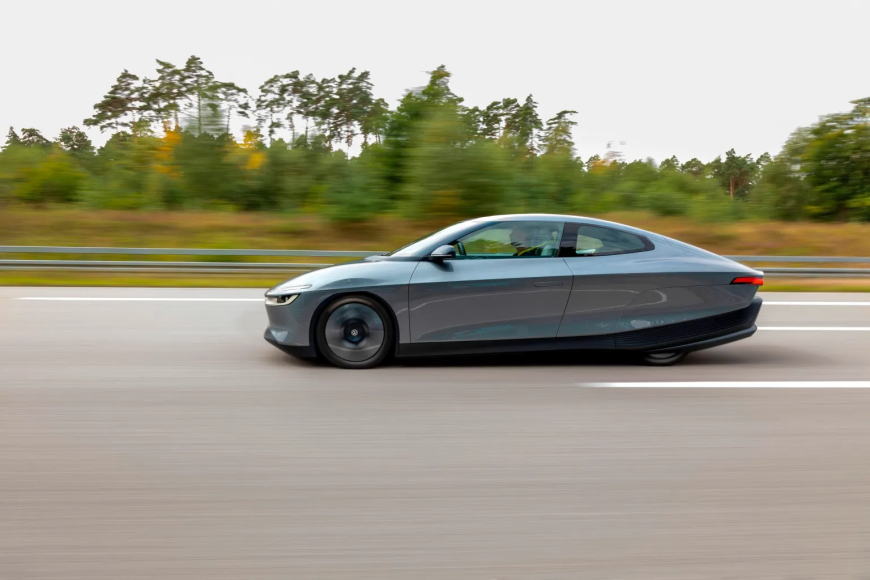
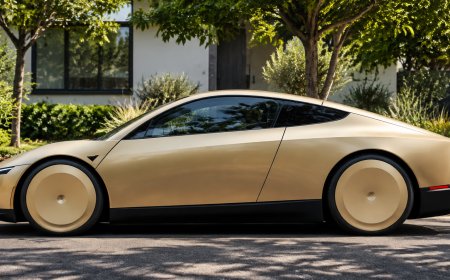
Volkswagen built an electric vehicle prototype focused almost entirely on efficiency, combining a highly aerodynamic body, lightweight construction, and production-derived hardware to dramatically reduce energy consumption.
The company’s Mission Efficiency prototype completed a 794-mile trip from Wolfsburg, Germany, to Vienna with one charging stop and arrived with about 104 miles of range remaining. Volkswagen recorded consumption of 7.51 kilowatt-hours per 100 miles, equivalent to roughly 279 MPGe.
Under ideal conditions, Volkswagen says the prototype can reach the equivalent of 323 mpg. The company describes the vehicle as “near production” because it uses the electric motor and battery from the ID. Polo, although Volkswagen has not committed to manufacturing the Mission Efficiency itself.
Aerodynamics drive the efficiency gains
The prototype uses a sharply tapered Kammback body shape that reduces aerodynamic resistance. Volkswagen achieved a drag coefficient of 0.158 while keeping the frontal area to 2.08 square meters.
Those choices come with compromises. Mission Efficiency uses a 2+2 seating layout, with rear seats designed primarily for passengers shorter than about 5 feet 3 inches. The space around the front wheels is also tightly controlled to reduce drag, which may limit suspension movement compared with a conventional production vehicle.
Volkswagen retained traditional side mirrors despite their aerodynamic penalty, saying cameras do not provide the same depth perception. Solar cells mounted on the roof and trunk can contribute additional energy. However, Volkswagen said they added only about 18 miles of range under ideal sunny, flat-road conditions at a constant speed.
A minimalist cabin borrows from Slate
Inside, Volkswagen stripped away equipment that adds weight and complexity. The prototype lacks a conventional infotainment system or built-in speakers, taking an approach similar to EV startup Slate Auto’s minimalist pickup.
Instead, drivers are expected to use their own devices, while a portable Bluetooth speaker handles audio. Lightweight seating and simplified interior components further reduce mass.
The efficiency figures put the prototype well ahead of current production EVs on energy consumption. However, the comparison comes with an important limitation: the Mission Efficiency sacrifices passenger space and some everyday practicality to achieve those numbers.
Volkswagen has not announced production plans, but the company has previously turned extreme-efficiency experiments into limited-run cars. Its earlier XL1 reached customers in small numbers, with 250 examples produced more than a decade ago.
What's Your Reaction?
 Like
0
Like
0
 Dislike
0
Dislike
0
 Love
0
Love
0
 Funny
0
Funny
0
 Angry
0
Angry
0
 Sad
0
Sad
0
 Wow
0
Wow
0