





















Tesla Cybercab Launch Could Define the Future of Its Robotaxi Business
Tesla’s Cybercab launch marks a major test of its autonomous driving ambitions as the company moves toward a robotaxi-focused future.
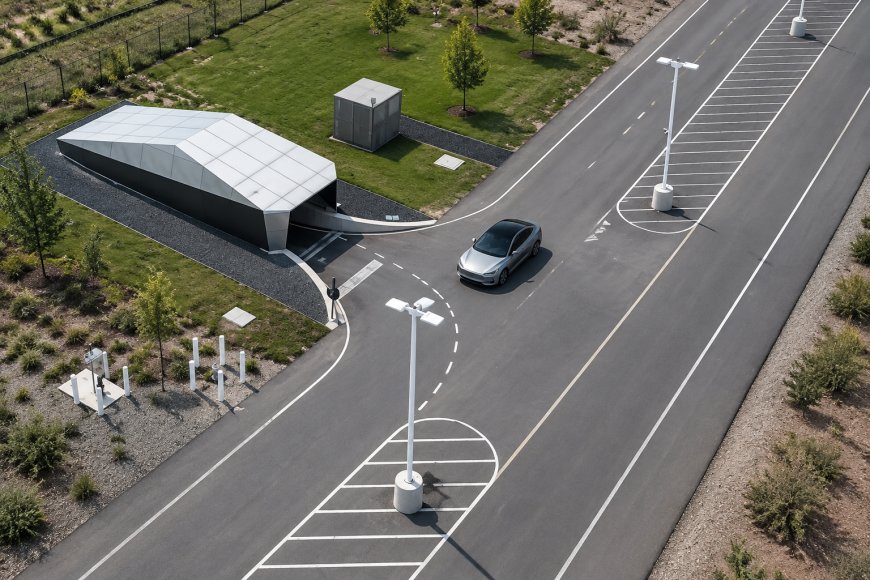
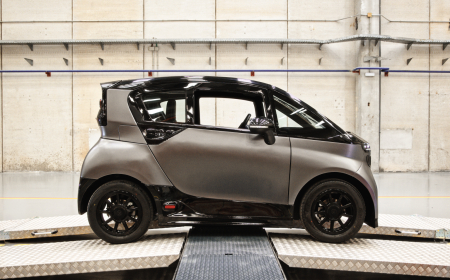
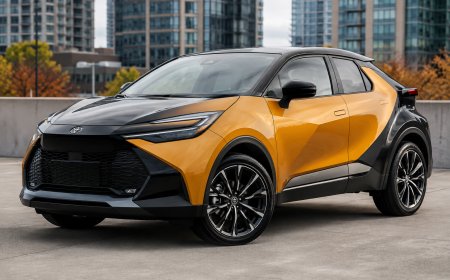
Tesla’s Cybercab launch in Austin, Texas, represents one of the company’s biggest tests of its autonomous driving ambitions. The small, gold, two-seat vehicle has no steering wheel or pedals and is designed to operate using Tesla’s camera-based driving system and artificial intelligence.
Tesla has not revealed the exact scale of the initial rollout. The company could begin with a limited number of vehicles in a small area or attempt a broader deployment to demonstrate the readiness of its robotaxi program.
Before the launch, Tesla placed Cybercabs around Austin and other U.S. cities while executives promoted the event online. Texas’ automated vehicle tracker showed 420 autonomous vehicles registered in the state at the time of the report.
Tesla AI chief Ashok Elluswamy suggested the rollout would change Austin’s streets, while CEO Elon Musk responded positively to a user who predicted Tesla was preparing a large Cybercab deployment. Musk also shared posts promoting the vehicle’s arrival.
Cybercab tests Tesla’s shift toward AI and robotics
The Cybercab is important because Tesla is trying to prove it can be more than just an electric vehicle manufacturer. A successful robotaxi network would provide the company with a major demonstration of its artificial intelligence and robotics capabilities.
Musk has promoted autonomous driving as a core Tesla goal for more than a decade. In 2016, he claimed that Tesla vehicles produced at the time had the hardware needed for full autonomy. Still, the company later changed its vehicle hardware and acknowledged that some cars may require upgrades to support future autonomous features.
Tesla’s current Full Self-Driving (Supervised) system has continued improving, but it remains a driver-assistance technology that requires human monitoring. The Cybercab is designed differently, with autonomous operation as its primary purpose.
Tesla built Cybercab around robotaxi economics.
The Cybercab originated from Tesla’s efforts to create a lower-cost electric vehicle platform. Instead of developing another traditional passenger car, the company focused on a purpose-built robotaxi with a smaller design, fewer components, and a lower-capacity battery.
Tesla believes the simpler design could reduce production costs and improve the economics of operating a large autonomous fleet. Supporters have argued that this approach could give Tesla an advantage over companies using modified production vehicles for robotaxi services.
Musk has highlighted the vehicle’s potential efficiency compared with competitors. In a social media response, Musk pointed to Cybercab’s operational advantages as part of Tesla’s robotaxi strategy.
Tesla’s robotaxi network faces scaling challenges.s
Tesla began testing its Robotaxi service in Austin in 2025 using modified Model Y vehicles. Early versions included employees inside the vehicles who could intervene if problems occurred.
The company has reported several incidents during testing, mostly involving minor collisions with stationary objects. Tesla later expanded the Model Y-based service to additional locations in Texas and Florida, but the network remained limited.
The Cybercab is intended to provide a more scalable foundation than modified consumer vehicles. However, Tesla still faces challenges in proving that its autonomous system can operate reliably over larger areas and in more complex driving conditions.
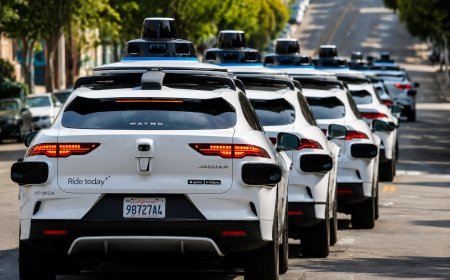
Tesla has so far operated robotaxi services within defined geographic areas, while larger autonomous fleets have gained experience from more extensive operations. Waymo, for example, had around 4,000 robotaxis on the road at the time of the report.
The Cybercab’s distinctive design also increases public visibility. Unlike failures in ordinary Model Y vehicles, those involving Cybercabs will be easier for passengers, regulators, and the public to identify.
The launch will ultimately test whether Tesla can transform years of autonomous driving development into a commercial transportation business and support its broader ambitions in AI and robotics.
What's Your Reaction?
 Like
0
Like
0
 Dislike
0
Dislike
0
 Love
0
Love
0
 Funny
0
Funny
0
 Angry
0
Angry
0
 Sad
0
Sad
0
 Wow
0
Wow
0