


































2026 Toyota C-HR Is Fast and Stylish, but Its Place in Toyota’s EV Lineup Is Awkward
2026 Toyota C-HR delivers 338 hp, standard AWD and up to 287 miles of range, but its price and overlap with Toyota’s bZ make its position less clear.
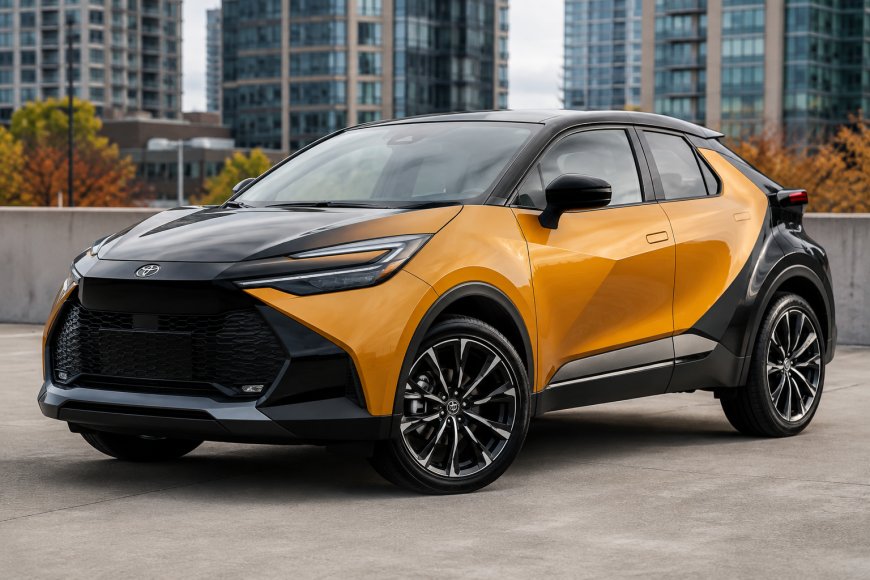
Toyota has brought the C-HR name back to the United States for 2026, but the new model has almost nothing in common with the small gasoline-powered crossover that disappeared after the 2022 model year.
The new 2026 Toyota C-HR is fully electric, comes standard with all-wheel drive and produces 338 horsepower. It can accelerate from 0 to 60 mph in an estimated 4.9 seconds, making it dramatically quicker than the old C-HR.
On paper, that sounds like a compelling transformation.
The problem is that Toyota already sells another electric crossover, the bZ, for less money while offering more maximum driving range. That overlap makes the C-HR an interesting EV but also raises a simple question: exactly who is it for?
The C-HR Is Now a Proper Performance EV
Toyota has completely reinvented the C-HR for the U.S. market.
A dual-motor electric powertrain is standard, putting one motor on each axle and giving every C-HR all-wheel drive. Combined output is 338 horsepower, and Toyota estimates a 4.9-second 0-to-60-mph time.
That is serious performance for a compact Toyota crossover.
The previous U.S.-market C-HR was known more for distinctive styling than acceleration. The new EV flips that equation by offering performance that would once have belonged to a much more expensive sport-oriented vehicle.
Toyota has also given the C-HR a lower, coupe-like shape and a more aggressive stance than the larger bZ.
The result is one of the sportier-looking EVs in Toyota’s current lineup.
Up to 287 Miles of EPA Range
The C-HR uses a 74.7-kWh lithium-ion battery.
The SE version carries an EPA-estimated driving range of 287 miles, while the XSE is rated at 273 miles, partly because of its larger wheels and equipment.
Those are respectable numbers, especially considering that all-wheel drive is standard.
Toyota also equips the C-HR with a NACS charging port, giving drivers access to compatible Tesla Supercharger locations and other NACS chargers.
Under ideal conditions, Toyota says DC fast charging can take the battery from 10% to 80% in around 30 minutes.
That makes the C-HR substantially easier to live with than Toyota’s earlier EV efforts.
The Price Is Where Things Get Complicated
Toyota priced the 2026 C-HR from $37,000 before processing and handling fees.
That figure is not unreasonable by modern EV standards.
The problem appears when the C-HR is compared with Toyota’s own bZ.
The 2026 Toyota bZ starts at $34,900, making it more than $2,000 cheaper before destination charges. Toyota also rates the front-wheel-drive bZ XLE at up to 314 miles of EPA-estimated range.
That means Toyota’s larger electric crossover can cost less and travel farther on a charge.
The comparison is not perfectly equal because the base bZ uses front-wheel drive, while the C-HR includes dual-motor AWD as standard.
But it still makes the C-HR’s position difficult to explain.
Buyers primarily concerned with range and value may naturally gravitate toward the bZ.
C-HR buyers are effectively paying for stronger standard performance, AWD and sportier styling.
The Performance Advantage Is Real
The C-HR does have a strong answer to the bZ in one area: speed.
Its 338-hp AWD system gives it far more performance than most buyers would expect from a Toyota compact crossover.
Independent testing has generally confirmed that the C-HR feels genuinely quick in a straight line. Car and Driver found the electric crossover powerful and comfortable, although it criticised the steering feedback and body control for not feeling as sporty as the acceleration figures might suggest.
That creates another interesting contradiction.
Toyota gives the C-HR aggressive styling, 338 horsepower and a 4.9-second acceleration claim, but it is still fundamentally a practical crossover rather than a dedicated performance EV.
The power is impressive.
Whether buyers need that much of it is another question.
A 14-Inch Screen Dominates the Cabin
Inside, Toyota has taken a more conventional approach.
The C-HR includes a large 14-inch Toyota Audio Multimedia touchscreen, along with wireless Apple CarPlay and Android Auto.
The vehicle also offers dual wireless smartphone chargers, heated front seats and a heated steering wheel on the SE trim, while the XSE adds more premium materials and equipment.
Cargo capacity is rated at up to 25.3 cubic feet behind the rear seats, giving the C-HR genuine crossover utility despite its sloping roofline.
With the rear seats folded, independent testing has measured significantly more usable cargo space, although the C-HR remains smaller and less conventionally shaped than Toyota’s bZ.
The Rear Seat Shows the Cost of the Styling
The C-HR’s coupe-like shape helps it stand out visually, but it also comes with compromises.
Independent reviews have noted tighter rear-seat accommodation and a driving position that will not suit everyone.
That matters because buyers shopping for an electric crossover often prioritise practicality.
Toyota has effectively sacrificed some of that boxier SUV usability to give the C-HR a more distinctive, sporty appearance.
For some customers, that will be exactly the point.
For others, it may make the bZ or another compact EV easier to justify.
Charging Is Good, but Not Class-Leading
The C-HR supports DC fast charging at roughly 150 kW, according to independent testing.
That is sufficient for Toyota’s claimed 10%-to-80% charging time of around 30 minutes under ideal conditions, but it is no longer particularly fast compared with the best 800-volt EV platforms available in 2026.
The NACS port arguably matters more.
Native access to Tesla’s charging standard reduces one of the biggest practical frustrations that affected earlier electric vehicles requiring adapters.
Toyota has also added battery preconditioning to help the battery charge faster in colder weather.
Those improvements make the C-HR a much more credible road-trip EV than Toyota’s first-generation electric offerings.
Toyota Now Has an EV Overlap Problem
The C-HR arrives during a major expansion of Toyota’s electric lineup.
The company now sells the bZ, C-HR and the more rugged bZ Woodland, giving customers several electric crossovers at increasingly close price points.
The bZ starts lower and offers up to 314 miles of range.
The C-HR starts higher but brings 338 horsepower, standard AWD and more aggressive styling.
The bZ Woodland starts at $45,300, produces 375 horsepower and offers 281 miles of EPA-estimated range while focusing more heavily on outdoor utility.
Toyota therefore has three EVs that overlap in capability while targeting slightly different personalities.
That gives buyers more choice, but it also makes the differences less obvious than the model names suggest.
The C-HR Makes Sense if Performance Matters
The 2026 Toyota C-HR is not a bad EV.
In fact, many of its specifications are surprisingly strong.
It offers 338 horsepower, standard AWD, sub-five-second acceleration, nearly 300 miles of range, NACS charging and a well-equipped interior.
Its weakness is not the vehicle itself.
It is Toyota’s own product lineup.
A buyer focused primarily on price and range can choose the cheaper bZ. Someone who wants more utility can move toward the bZ Woodland. Buyers who prioritise maximum cabin space have other Toyota options as well.
That leaves the C-HR targeting customers who specifically want a smaller, faster and more stylish electric Toyota.
There is nothing wrong with that niche.
But unlike the old C-HR, which occupied an obvious entry-level crossover position, the new model requires buyers to care about its particular combination of performance and design.
The 2026 C-HR therefore makes more sense as an electric hot crossover than as Toyota’s default compact EV.
Once viewed that way, the vehicle becomes easier to understand.
The question is whether enough buyers are looking for exactly that.
What's Your Reaction?
 Like
0
Like
0
 Dislike
0
Dislike
0
 Love
0
Love
0
 Funny
0
Funny
0
 Angry
0
Angry
0
 Sad
0
Sad
0
 Wow
0
Wow
0