


















Waymo Challenges Tesla’s AI-Only Self-Driving Approach Ahead of Cybercab Launch
Waymo challenges Tesla’s camera-only self-driving strategy, arguing that autonomous vehicles need multiple sensors ahead of Cybercab’s expansion.
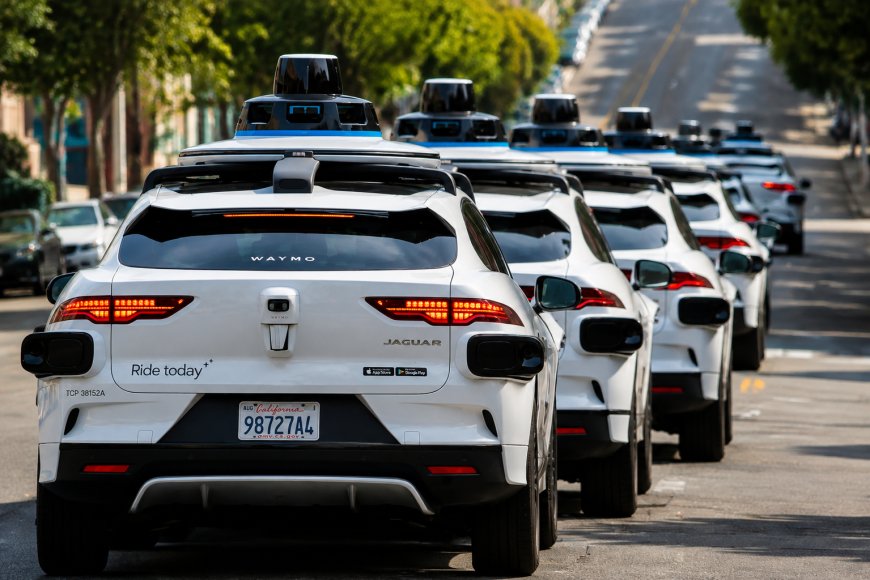
Waymo is stepping up its criticism of Tesla’s autonomous driving strategy as the two companies move closer to competing directly in the robotaxi market. The Alphabet-owned company argues that fully autonomous vehicles require a combination of sensors rather than relying only on artificial intelligence and cameras.
The debate intensified ahead of Tesla’s expected Cybercab event, where the company is set to showcase its purpose-built autonomous two-seater. Waymo used a recent company blog post and comments shared with Axios to argue that sensor diversity remains critical for safe self-driving systems.
Waymo did not name Tesla directly, but its comments closely targeted the company’s camera-focused approach to autonomy. Tesla has spent years developing a system based primarily on cameras and AI models, while Waymo uses a combination of cameras, lidar and radar.
Waymo defends multi-sensor approach
Waymo said its experience operating autonomous vehicles in real-world conditions shows that no single sensor type can provide enough information for safe driverless operations at scale.
The company said its autonomous driving system creates a more detailed view of the environment by combining multiple inputs. Waymo argues that relying only on camera-based AI systems creates risks because complex models can still produce unexpected failures.
The comments triggered a debate among technology analysts and industry observers. Tesla analyst Pierre Ferragu criticized Waymo’s position, arguing that the company’s approach could become outdated as AI systems improve. Ferragu shared his views in a post on X.
Waymo spokesperson Ethan Teicher responded on X, defending the company’s approach and highlighting the importance of real-world driving data and multiple sensor systems.
Tesla prepares Cybercab expansion
The competition between Waymo and Tesla is intensifying as the robotaxi market attracts significant investment interest. Analysts have projected that autonomous ride-hailing could become a large transportation market in the coming years, with estimates reaching hundreds of billions of dollars.
Goldman Sachs has estimated that robotaxis could become a major global mobility market, while Morgan Stanley has highlighted the long-term investment opportunity surrounding autonomous transportation.
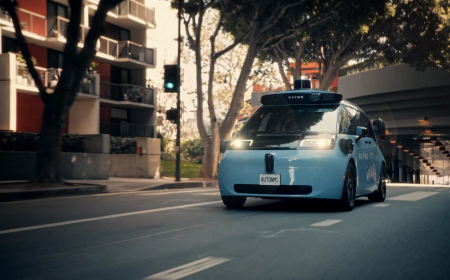
Waymo has built its robotaxi service around vehicles equipped with multiple sensors and has expanded to more than a dozen U.S. cities. The company operates a fleet of thousands of autonomous vehicles and provides hundreds of thousands of paid trips each week.
Tesla has taken a different path by developing its own vehicles and focusing on AI-driven autonomy. The company’s Cybercab is designed without a steering wheel or pedals and is intended to operate as a fully autonomous vehicle.
Tesla has also been testing its robotaxi service using modified Model Y vehicles in several cities. The company has reported progress with its autonomous driving efforts through its quarterly investor update.
Technology and cost remain key battlegrounds.
Beyond the technical debate, the companies are also taking different approaches to cost. Waymo relies on additional sensors and vehicles built by other manufacturers, increasing hardware costs before deployment.
Tesla’s strategy is based on producing its own vehicles and reducing hardware complexity by relying on AI and camera-based systems. If the approach succeeds, Tesla could potentially operate robotaxis at a lower cost.
However, Tesla still needs to demonstrate that its autonomous driving technology can operate safely at a larger scale. The company’s robotaxi testing remains limited compared with Waymo’s commercial operations, although recent reports have tracked expanded Tesla testing activity.
Tesla’s robotaxi efforts in Austin and other markets will be closely watched as the company moves toward broader deployment.
The upcoming expansion of Tesla’s Cybertruck program could turn the long-running debate over autonomous vehicle technology into a direct competition between two visions for the future of self-driving transportation.
What's Your Reaction?
 Like
0
Like
0
 Dislike
0
Dislike
0
 Love
0
Love
0
 Funny
0
Funny
0
 Angry
0
Angry
0
 Sad
0
Sad
0
 Wow
0
Wow
0