
































NHTSA Expands GM eBoost Brake Probe to More Than 1.1 Million Vehicles
NHTSA has expanded its investigation into GM’s eBoost braking system to more than 1.1 million vehicles after reports of brake-assist failures and crashes.
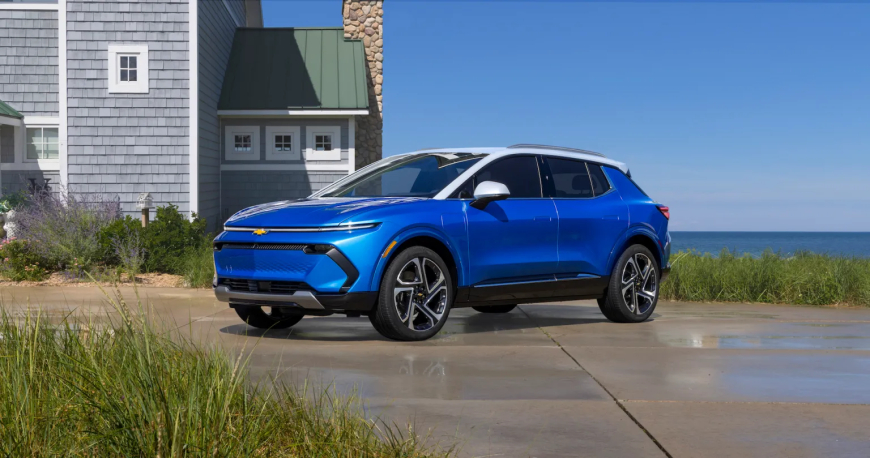
Federal auto safety regulators have expanded an investigation into General Motors’ eBoost braking system after receiving hundreds of reports involving brake-assist problems, crashes and injuries across more than 1 million vehicles.
The National Highway Traffic Safety Administration’s Office of Defects Investigation upgraded the probe to an engineering analysis, its most advanced investigative stage. The review now covers GM electric vehicles as well as some gasoline-powered models and vehicles developed with Honda.
NHTSA expands GM eBoost brake investigation
The investigation began in April 2024 after owners of 2023 Cadillac Lyriq vehicles reported losing brake assistance. Early complaints often described a hard brake pedal accompanied by a “Brake System Failure” warning at startup or after the vehicle had stopped.
GM conducted several internal investigations and linked the problem to fractures in a spindle inside its eBoost braking system. NHTSA said it later received additional reports that did not appear consistent with that explanation.
Some drivers reported an immediate loss of brake assistance while actively slowing their vehicles. Regulators said such a failure could increase stopping distance and raise the risk of a crash or injury, prompting a broader examination of potential eBoost failures.
GM said customer safety remains its highest priority and that its investigation found the alleged condition does not create an unreasonable motor vehicle safety risk. The automaker said it will continue cooperating with NHTSA.
EVs and gasoline models are included
GM introduced eBoost in 2019 and later deployed the electronically controlled braking system across numerous vehicles. Models under scrutiny include the Cadillac Lyriq, Chevrolet Blazer EV and Equinox EV, as well as the Honda Prologue and Acura ZDX, developed through GM’s collaboration with Honda.
The investigation also extends to non-EV models including the Chevrolet Colorado, GMC Canyon, Buick Enclave and Buick Envision. The discontinued Cruise Origin autonomous vehicle also used the system.
Driver reports submitted to NHTSA illustrate the potential severity of the alleged failures. One 2025 Lyriq owner reported losing braking while entering a parking space before the vehicle crossed a curb and crashed into a store. A 2024 Blazer EV driver reported intentionally steering into a concrete curb to slow the vehicle and avoid entering an intersection.
The engineering analysis does not, by itself, constitute a recall. NHTSA will continue to evaluate the scope, cause, and safety consequences of the reported failures before determining whether additional action is necessary.
What's Your Reaction?
 Like
0
Like
0
 Dislike
0
Dislike
0
 Love
0
Love
0
 Funny
0
Funny
0
 Angry
0
Angry
0
 Sad
0
Sad
0
 Wow
0
Wow
0