

































Liux Bets on Sustainable Microcar to Compete With Chinese EV Rivals
Spanish startup Liux is preparing its sustainable Big microcar for Europe, targeting urban buyers with recycled materials and a sub-€18,000 price.
Europe’s growing microcar market has increasingly attracted compact electric vehicles from Chinese manufacturers, while some of the region’s traditional small-car brands have shifted production abroad. Even the familiar European “yoghurt pot” style of tiny city car now competes in a market shaped by a much broader international supply chain.
A growing number of microcars sold in Europe are manufactured outside the region. Smart, once closely associated with European ultracompact cars, now manufactures vehicles in China.
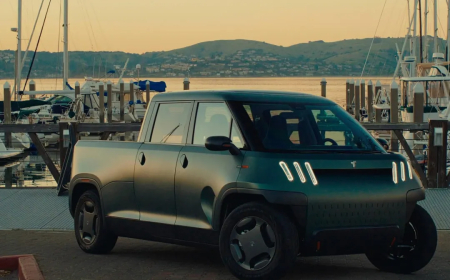
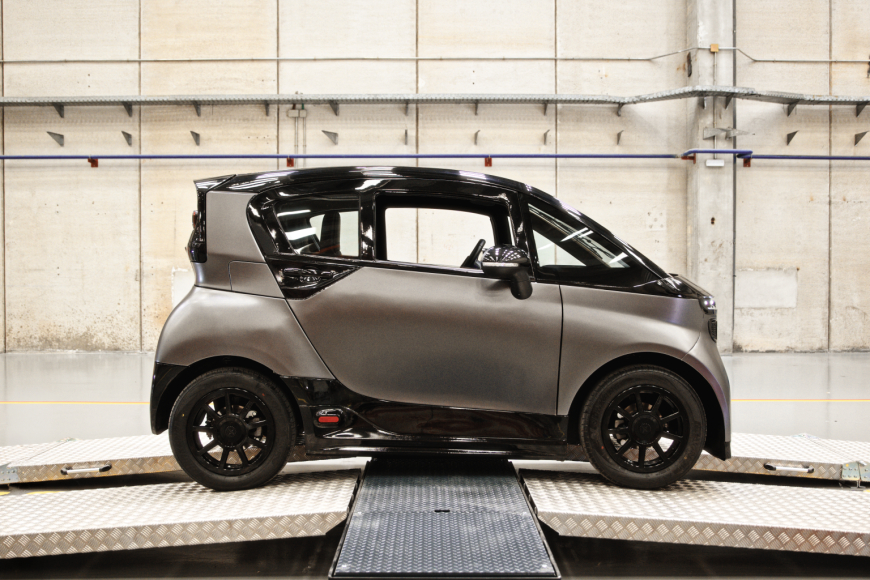
Spanish startup Liux believes it can stand out by putting sustainability at the centre of its approach. Its upcoming Liux Big is a two-seat electric microcar designed for urban driving, compact enough to park perpendicular to a curb despite its deliberately ironic “Big” name.
The strategy follows a path already explored by vehicles such as Switzerland’s Microlino, developed by Micro Mobility Systems. Liux, however, is trying to distinguish its vehicle by its materials, manufacturing choices, repairability, and efficiency.
Liux Prioritises Sustainability Over a Fully European Supply Chain
Liux co-founder and CEO Antonio Espinosa de los Monteros argues that building a completely European car supply chain is unrealistic. “The idea of a European car does not exist,” he said, reflecting the company’s view that components and materials inevitably come from multiple regions.
Liux has nevertheless established manufacturing operations in Spain. Eurofound describes its Azuqueca de Henares facility as Spain’s first new car manufacturing plant in more than 30 years.
The Big’s batteries are not produced in Europe, but the vehicle can be charged at home, including with electricity generated from residential solar panels. Liux is also designing the car around maintenance and longevity rather than rapid replacement cycles.
One of its most distinctive features is a body made with a linen-based biocomposite. Liux says the construction is designed to preserve materials so they can be recovered and reused rather than simply demonstrating that recycling is technically possible under laboratory conditions.
That philosophy reflects Espinosa’s background. He previously co-founded Auara, a Spanish social enterprise selling mineral water in recycled and recyclable bottles. The project later joined the Hijos de Rivera business group.
From a Five-Seater EV to a Much Smaller Car
Liux co-founder David Sancho brings a different automotive background. Before Liux, he worked on the Bóreas hybrid supercar, which was unveiled around the 24 Hours of Le Mans in 2017.
Liux initially pursued a much larger vehicle. Its prototype, the Animal, was a fully electric five-seater built extensively with recycled or plant-based materials.
The company changed direction after unveiling the Animal in 2022. Liux concluded that pursuing homologation would be more achievable with a smaller urban vehicle, shifting its attention toward the compact category that eventually led to the Big.
The change also aligned more closely with Liux’s sustainability goals. A smaller vehicle requires fewer materials and less energy to move and fits more naturally into dense European cities. The company’s move toward a compact-car strategy marked a significant change from its original five-seat EV ambitions.
European Homologation Clears a Major Hurdle
Liux has now secured Europe-wide homologation for the Big and expects sales to begin in the first half of next year. The company has grown to about 65 employees and is preparing to increase production across three facilities in Spain.
The Big has already obtained homologation for the European market, providing Liux with a regulatory foundation for its planned commercial launch.
The Azuqueca factory follows lean manufacturing principles and handles the final stages of production rather than every step of the manufacturing process. Liux says its overall production capacity could eventually reach 20,000 cars per year by 2030.
Demand remains difficult to predict before deliveries begin, but more than 7,500 people have joined the Big’s no-fee waiting list. Liux says the most common prospective customer profile is a city resident between 55 and 60 years old, suggesting the vehicle often serves as a household’s second car rather than entirely replacing conventional car ownership.
The company is also keeping the vehicle open to potential business uses, including fleet partnerships and future collaborations around autonomous driving technology.
Liux Big Targets a Price Below €18,000
Liux has not announced a final retail price, but says the Big will cost less than €18,000, or roughly $21,000, before any available electric-vehicle subsidies. That would place it toward the upper end of the microcar market while remaining far below the price of most conventional new electric cars.
The Big is homologated in Europe’s L7e category. European rules distinguish heavier L7e vehicles from lighter L6e four-wheelers, part of the broader L-category vehicle classification system.
Liux head of R&D Celso Fernández Llorens said weight and dimensional restrictions create significant engineering constraints for manufacturers in this category. Liux has tried to use the available limits to make the Big behave more like a conventional car than a lightweight quadricycle.
Despite its compact dimensions, the Big includes a 260-litre trunk. Much of the engineering work has focused on stability, braking, and structural strength, with the company emphasising that reducing weight should not compromise the vehicle’s ability to handle real-world driving conditions.
The category does not require the same crash-testing regime as conventional passenger cars, but Liux has been testing and demonstrating the Big through slalom, braking and other handling exercises.
Two Battery Options and More Models Planned
Liux plans two primary versions of the Big, with 15-kWh and 20-kWhh battery configurations. A cargo version is also planned as the startup looks beyond a single passenger model.
Liux has publicly reinforced that broader ambition, saying in a LinkedIn post that it is not building “a one-car brand.”
The company has secured €16 million, or about $18.5 million, including European funding. Its immediate priority is bringing the urban version of the Big to market through partnerships with car dealerships across Europe.
Liux is also using its showroom to communicate the vehicle’s sustainability strategy. The space includes textile screens, models showing the Big’s three colour choices,s and a linoleum floor that references the linen used in the car’s body.
For Liux, competing with established microcars and Chinese EV manufacturers will depend on whether buyers value that combination of compact dimensions, European production and material-focused sustainability enough to accept a relatively premium microcar price. The Big’s homologation and planned production ramp give the startup a path to test that proposition in the European market.
What's Your Reaction?
 Like
0
Like
0
 Dislike
0
Dislike
0
 Love
0
Love
0
 Funny
0
Funny
0
 Angry
0
Angry
0
 Sad
0
Sad
0
 Wow
0
Wow
0