


















Tesla Renames Full Self-Driving to Tesla Assisted Driving in Europe
Tesla renames Full Self-Driving to Tesla Assisted Driving across Europe after German regulators questioned its name, as the company pursues wider approval.
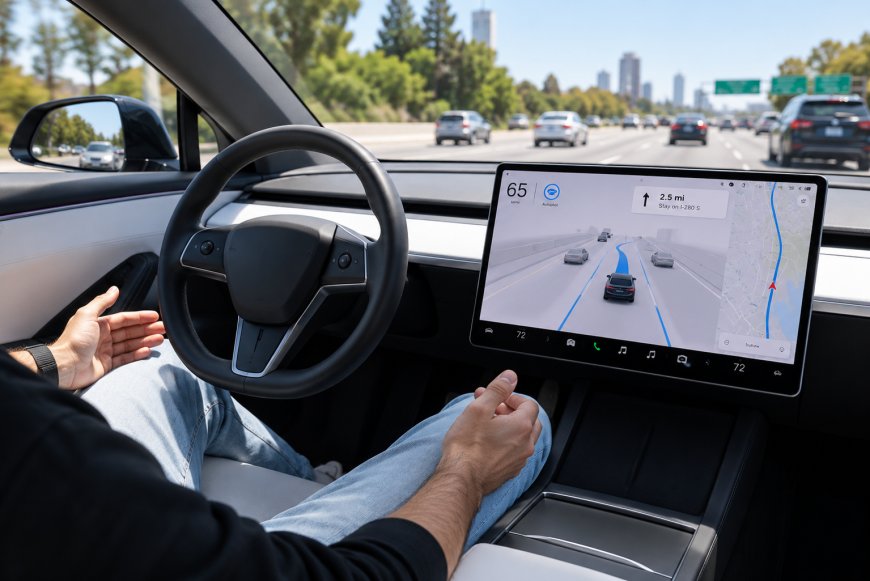
Tesla has renamed its Full Self-Driving (Supervised) software to Tesla Assisted Driving in Europe after German regulators raised concerns that the original name overstated the system’s capabilities. The change comes as the automaker seeks broader European approval for technology that still requires driver supervision.
Germany’s transport minister, Steffen Bilger, questioned the Full Self-Driving name because the software does not independently handle every aspect of driving. According to an official ministry statement, Tesla proposed the new name during discussions with German officials in September.
Bilger welcomed the agreement and said he would support efforts to secure European approval for the renamed system. Tesla CEO Elon Musk subsequently thanked the minister on X for backing its introduction across Europe.
Tesla Seeks Wider European Approval
Musk has repeatedly criticised European restrictions on Tesla’s driver-assistance technology. In a March post, he argued that the European Union’s regulatory requirements were limiting innovation and preventing local customers from accessing Tesla’s more advanced driving features.
The Netherlands became the first European country to approve FSD (Supervised) in 2026, providing an important step toward wider authorisation. However, questions remain about the safety evidence supporting Tesla’s application and the pressure regulators faced during the approval process.
A Reuters investigation published October 7 found that Tesla pushed European authorities to accelerate approval while relying on safety studies whose methodology independent researchers questioned. The report also described repeated efforts to influence the scope of evaluations conducted by the Dutch vehicle regulator.
Tesla’s software can navigate city streets, highways and parking areas while controlling steering, acceleration and braking. Despite those capabilities, drivers must remain attentive and ready to intervene, making the system a supervised driver-assistance product rather than fully autonomous driving technology.
The system has also faced investigations and lawsuits in the United States involving crashes where Tesla’s driver-assistance features were allegedly active. Earlier disputes over Autopilot marketing have also fueled regulatory concerns about how the company describes its technology.
The European name change addresses one objection raised by German authorities but does not automatically authorise Tesla Assisted Driving throughout the EU. The company still needs further regulatory clearance before it can make the system broadly available across the region.
What's Your Reaction?
 Like
0
Like
0
 Dislike
0
Dislike
0
 Love
0
Love
0
 Funny
0
Funny
0
 Angry
0
Angry
0
 Sad
0
Sad
0
 Wow
0
Wow
0