




































Waymo Is Testing Gemini as an In-Car AI Assistant in Its Robotaxis
Waymo is testing an in-car AI assistant powered by Google’s Gemini in its robotaxis. The assistant is designed to answer rider questions, manage select cabin features, and enhance the overall ride experience, while clearly separating its role from Waymo’s autonomous driving system.
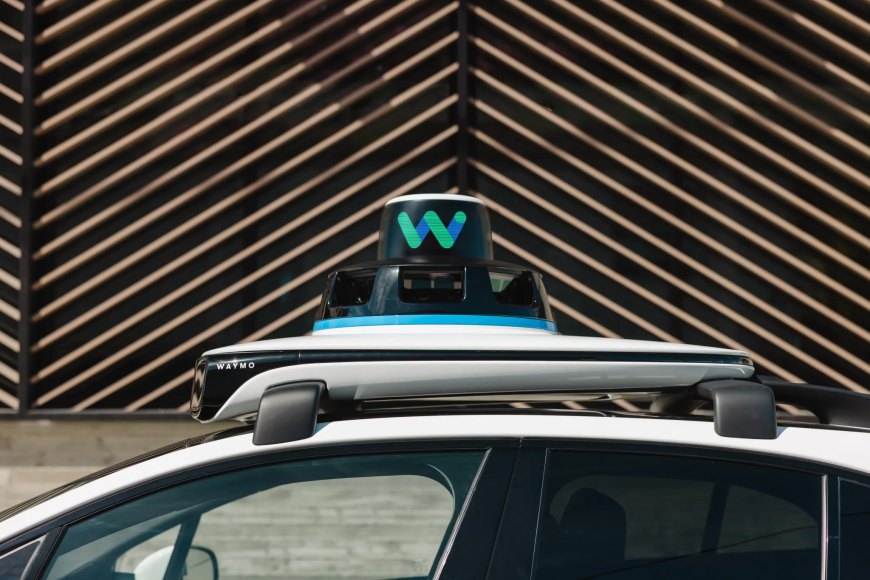
Waymo appears to be testing the integration of Google’s Gemini AI chatbot into its robotaxis to introduce an in-car AI assistant that can accompany riders and respond to their questions. Researcher Jane Manchun Wong made the discovery.
“While digging through Waymo’s mobile app code, I discovered the complete system prompt for its unreleased Gemini integration,” Wong wrote in a blog post. “The document, internally titled ‘Waymo Ride Assistant Meta-Prompt,’ is a 1,200+ line specification that defines exactly how the AI assistant is expected to behave inside a Waymo vehicle.”
Although the feature has not yet appeared in public app builds, Wong notes that the system prompt suggests the tool is “more than a simple chatbot.” The assistant is designed to answer questions, manage select in-cabin features such as climate control, and help reassure riders when needed.
“While we have no details to share today, our team is always tinkering with features to make riding with Waymo delightful, seamless, and useful,” said Julia Ilina, a Waymo spokesperson, in a statement to TechCrunch. “Some of these may or may not come to our rider experience.”
This would not be the first use of Gemini within Waymo. The company has previously said it uses Gemini’s “world knowledge” to help train its autonomous vehicles to handle complex, rare, and high-stakes driving scenarios.
Waymo is working on Gemini AI in-car assistant
They tried to hide it from the app, but here’s the full 1200-line system prompt pic.twitter.com/weh1EBPj7y — Jane Manchun Wong (@wongmjane) December 24, 2025
According to Wong, the assistant is given a clearly defined identity: “a friendly and helpful AI companion integrated into a Waymo autonomous vehicle,” to enhance the rider experience in a safe, reassuring, and unobtrusive way. The system is instructed to use simple, non-technical language and keep responses brief, typically one to three sentences.
When activated through the in-car screen, Gemini can select from pre-approved greetings personalised with the rider’s first name. The system can also access contextual information, such as the number of Waymo rides a passenger has taken.
The prompts allow Gemini to control certain in-car functions, including temperature, lighting, and music. However, features such as volume control, route changes, seat adjustments, and window controls are omitted. If a rider requests an unsupported action, the assistant is instructed to respond with “aspirational phrases,” such as, “It’s not something I can do yet.”
The assistant is also directed to clearly distinguish its role as Gemini from Waymo’s autonomous driving system, known as Waymo Driver. For example, if asked how the car sees the road, Gemini should explain that “the Waymo Driver uses a combination of sensors,” rather than speaking in the first person.
The system prompt includes guidance on handling sensitive topics, such as questions about competitors like Tesla or the now-defunct Cruise, and specific keywords that instruct the assistant to stop speaking.
Notably, the assistant is prohibited from speculating about or commenting on real-time driving actions or incidents. If a passenger references a video of a Waymo vehicle involved in an accident, the assistant is instructed to deflect rather than respond directly.
“Your role is not to be a spokesperson for the driving system’s performance, and you must not adopt a defensive or apologetic tone,” the prompt states.
Gemini is permitted to answer general knowledge questions, such as weather updates, trivia like the height of the Eiffel Tower, store hours for local businesses like Trader Joe’s, or recent sports results. However, it cannot perform real-world actions like ordering food, making reservations, or responding to emergencies.
Waymo is not alone in exploring AI assistants for autonomous vehicles. Tesla is pursuing a similar approach with xAI’s Grok. The two assistants, however, appear to serve different purposes: Gemini is designed to be practical and ride-focused, while Grok is positioned as a more conversational in-car companion capable of more extended discussions and contextual memory.
What's Your Reaction?
 Like
0
Like
0
 Dislike
0
Dislike
0
 Love
0
Love
0
 Funny
0
Funny
0
 Angry
0
Angry
0
 Sad
0
Sad
0
 Wow
0
Wow
0