






















What Users Really Expect From AI Assistants Beyond Basic Voice Commands
Consumers are looking for AI assistants that do more than answer questions. Discover how personalised AI, proactive assistance, and smarter digital experiences are shaping the future of Siri and artificial intelligence.

Two years after Apple first outlined its plans for a next-generation Siri, and following a $250 million lawsuit tied to its voice assistant, the company is finally preparing to bring its AI-powered Siri experience to iPhones, Macs, and even the Apple Vision Pro headset. During Monday’s WWDC keynote, Apple shared a range of new details about the long-awaited upgrade, which is designed to take advantage of hardware the company says was built specifically for Apple Intelligence.
For many users, however, AI still has a lot to prove.
Despite the rapid adoption of generative AI tools, there remains scepticism around their practical value in everyday life. Large language models continue to raise concerns about reliability; many people remain uncomfortable using AI for writing and creative work, and novelty features such as AI-generated avatars or stylised images have not convinced everyone that the technology is essential.
Still, there are moments when the promise of AI feels genuinely compelling.
That feeling was evident during Apple’s demonstrations of the new Siri. The company presented a vision of an assistant that is constantly available, understands personal information across devices, and can help users manage the overwhelming number of conversations, notifications, and commitments spread across multiple apps.
The concept raises obvious questions about privacy and data access. Yet it also appeals to anyone who feels overwhelmed by the amount of information flowing through their phone every day.
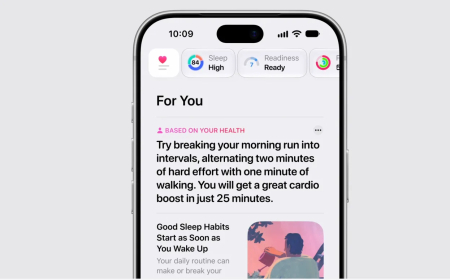
The ideal AI assistant is not simply a voice command tool. Many users want something closer to a digital second brain — a system capable of anticipating needs, organising information, and surfacing important details before they are forgotten.
Imagine receiving an automatic calendar event when a text conversation confirms dinner plans. Imagine being reminded to pick up a prescription as you walk past a pharmacy. Imagine receiving a prompt when an important email has gone unanswered for several days.
Apple’s upcoming Siri will not accomplish all of those tasks immediately, but it appears to be moving in that direction.
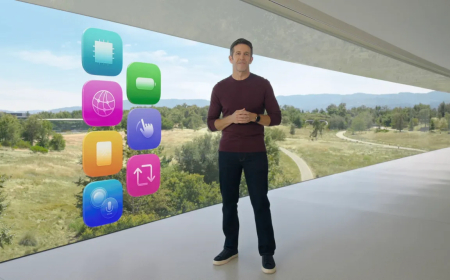
During one WWDC demonstration, Apple AI engineering executive Justin Titi asked Siri to recall a dessert his daughter had mentioned several weeks earlier. Siri searched through messages on the device and found a text from about a month earlier, revealing that she wanted to make coconut cookies. The example was simple, but it highlighted how AI can save users from manually searching through long message histories.
A key component of the new Siri experience is what Apple calls “personal context.” This includes information stored within Apple services such as Messages, Notes, Mail, Photos, Calendar, and other native applications. Siri will also gain awareness of what is currently displayed on the screen. For example, if a user encounters a photo of a park while browsing social media, Siri can help identify the location shown in the image.
Questions remain about how deeply these capabilities will extend into third-party applications. Apple has suggested that broader integration may depend on support from individual developers.
Other startups have already attempted to build similar AI assistants. Products such as Poppy and Poke aim to provide agent-like assistance across mobile devices. However, these tools often require extensive access to personal information to function effectively, raising privacy concerns that can outweigh the benefits.
The challenge is familiar: the more capable an assistant becomes, the more personal data it generally needs.
While no major technology company is entirely free from privacy concerns, Apple continues to position itself as more focused on security than many of its competitors. The company has emphasised on-device AI processing wherever possible, allowing data to remain on users’ devices rather than being sent to external servers. Existing Apple Intelligence features, including email summaries and AI-generated emojis, already rely on this approach.
For more demanding workloads, Apple has developed what it calls Private Cloud Compute (PCC), a system designed to process complex AI requests in the cloud while limiting Apple’s own access to user data. According to the company, the technology has remained secure despite ongoing scrutiny and a bug bounty program offering rewards of up to $1 million.
Yet even if the technology works exactly as intended, broader questions remain about how much responsibility people should hand over to AI systems.
Some observers argue that relying on AI for every aspect of personal organisation risks weakening important habits and skills. Managing schedules, remembering commitments, and paying attention to conversations are all fundamental parts of daily life. If AI takes over too much of that work, users may become less engaged with the people and responsibilities around them.
The concern extends beyond productivity. If an AI assistant starts handling tasks such as remembering birthdays, selecting gifts, or tracking relationships, it raises questions about what people may lose in exchange for convenience.
Supporters of AI assistants see them as tools that reduce mental clutter. Critics worry they could encourage users to disengage from ordinary human responsibilities.
That tension sits at the heart of Apple’s Siri strategy. The company is presenting AI as a helpful assistant rather than a replacement for human decision-making. Whether users embrace that vision will depend on how useful, trustworthy, and respectful of privacy the technology proves to be in practice.
For those who remain unconvinced, Apple is leaving the choice in users’ hands. Unlike some AI features that are increasingly becoming unavoidable parts of digital products, the new Siri experience can be enabled or disabled. Users who prefer a more traditional smartphone experience will still have that option.
Until the upgraded Siri arrives more broadly, many people will continue weighing the same question: whether the convenience of a deeply personal AI assistant is worth the trade-offs that come with it.
What's Your Reaction?
 Like
0
Like
0
 Dislike
0
Dislike
0
 Love
0
Love
0
 Funny
0
Funny
0
 Angry
0
Angry
0
 Sad
0
Sad
0
 Wow
0
Wow
0