































Why Europe is moving away from US software toward sovereign tech solutions
Europe is accelerating efforts to reduce reliance on US software, focusing on sovereign tech, data control, and digital independence.
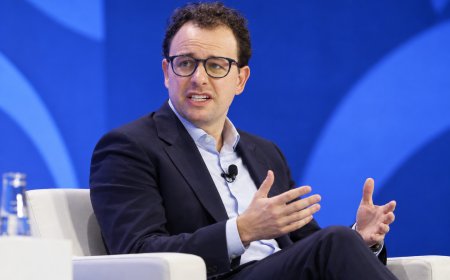
Satya Nadella is generally less outspoken about political or ideological views than Alex Karp, yet developments across Europe highlight a growing shift in attitudes toward American technology providers. For example, France has begun reducing its reliance on Windows, even as its domestic intelligence services have renewed contracts with Palantir.
This apparent contradiction reflects a broader, often uneven transition across Europe, where governments are reassessing their dependence on U.S. technology after recognising potential risks related to control, access, and geopolitical influence.
The CLOUD Act reshaped the landscape.
One of the most significant catalysts for this shift is the CLOUD Act, enacted during Donald Trump's first administration in 2018. The law requires U.S.-based technology companies to comply with law enforcement requests for data, even when that data is stored outside the United States. As a result, hosting sensitive information on European servers no longer guarantees that it remains beyond U.S. jurisdiction.
This issue has been particularly relevant in sectors handling highly sensitive data, such as healthcare. During the pandemic, the United Kingdom entered into agreements with companies like Google, Microsoft, and Palantir to manage data from its National Health Service. However, criticism of such arrangements has led to reconsideration in several countries.
France, for instance, announced that its Health Data Hub would transition away from Microsoft Azure toward a sovereign cloud infrastructure. The contract has since been awarded to Scaleway, a French company expanding its data centre footprint across Europe.
Scaleway, a subsidiary of Iliad, was also among four providers selected in a €180 million sovereign cloud initiative led by the European Commission. Other selected companies include OVHCloud, Clever Cloud, and STACKIT, which are operated by the Schwarz Group. Notably absent from the list is Amazon's AWS European Sovereign Cloud offering. At the same time, concerns remain about indirect dependencies. One of the selected providers relies on S3NS, a joint venture between Thales and Google Cloud, raising questions about whether U.S. influence could persist through technical partnerships.
European alternatives face structural challenges.
Efforts to build alternatives to major U.S. platforms have not been without difficulty. The French search engine Qwant was once promoted as a default option for public sector use, but its reliance on Microsoft's Bing infrastructure created tensions. After disputes with Microsoft, Qwant partnered with German nonprofit Ecosia to develop Staan, a European search index aimed at reducing reliance on external providers.
Despite these efforts, European alternatives still struggle to match the scale and reach of global competitors. Ecosia, for example, has around 20 million users, far below the billions served by leading U.S. platforms.
Public sector contracts are seen as a key lever to support domestic technology providers. Initiatives like the European Commission's cloud tender are intended not only to diversify infrastructure but also to encourage the development of sovereign digital solutions aligned with EU regulations and values.
However, diversification strategies can also dilute focus. While spreading contracts across multiple providers may reduce dependency risks, it may also limit the emergence of a single dominant European technology company capable of competing globally.
Open source and "build vs buy" debates
In addition to supporting local companies, some governments are turning to open-source solutions. France is moving away from Windows toward Linux, while institutions in Austria, Denmark, Italy, and Germany are considering alternatives to Microsoft's productivity tools, such as LibreOffice.
This shift is often accompanied by a "build, don't buy" approach, which has drawn criticism. France's Court of Auditors has questioned investments in internally developed tools, including Visio, a proposed alternative to platforms like Zoom and Microsoft Teams. Critics argue that without strong leadership from governments, private companies may be reluctant to follow similar paths.
Private sector decisions remain decisive.
Despite policy efforts, large private enterprises have not consistently moved away from U.S. providers. Lufthansa has adopted Starlink, developed by Elon Musk's companies, for in-flight connectivity. Air France has made similar choices, and there are indications that SNCF may follow suit.
These decisions underscore the importance of having competitive European alternatives. Without offerings that meet global standards for performance and reliability, private-sector adoption of sovereign solutions may remain limited.
Changing sentiment and new opportunities
Public sentiment is also influencing the shift. In Denmark, applications promoting the boycott of American products have gained popularity, reflecting broader concerns about reliance on foreign technology. At the same time, political tensions — including disputes involving U.S. policy toward Greenland — have contributed to calls for greater independence.
Technology companies themselves have also signalled that Europe is not always a primary market. For instance, Meta delayed the European launch of its Threads platform due to regulatory considerations, highlighting how global firms may prioritise other regions.
This environment is creating opportunities for European-focused solutions tailored to local languages, regulations, and cultural contexts. Initiatives such as EuroStack aim to encourage public sector adoption of domestic technologies, potentially strengthening the regional ecosystem.
There are also signs that sovereign technology could gain traction internationally. Mistral AI has reportedly seen increased demand as an alternative to U.S.-based providers, while governments in Canada and Germany are supporting the merger of Cohere and Aleph Alpha to form a transatlantic AI entity. As geopolitical dynamics continue to evolve, the ability to position technology as independent — not aligned with the United States, China, or Russia — is increasingly becoming a competitive advantage in global markets.
What's Your Reaction?
 Like
0
Like
0
 Dislike
0
Dislike
0
 Love
0
Love
0
 Funny
0
Funny
0
 Angry
0
Angry
0
 Sad
0
Sad
0
 Wow
0
Wow
0