






































Senator proposes taxing data centres to offset AI-driven job losses
A senator suggests imposing costs on data centres to address AI-related job losses, sparking debate over automation, workforce impact, and tech regulation.

The warning signs that artificial intelligence could contribute to widespread job displacement are becoming increasingly visible: entry-level job postings in the U.S. have declined by 35% since 2023, layoffs have affected major technology companies, and even leaders within the AI industry are raising concerns about the future.
Speaking backstage at the Axios AI Summit in Washington, D.C., on Wednesday, Mark Warner (D-VA) said a venture capitalist recently told him he is reducing software investment valuations to zero, largely due to advances by Anthropic’s Claude model. He also noted that a large law firm indicated it is no longer hiring first-year associates, as AI systems can now perform much of the work traditionally handled by junior lawyers.
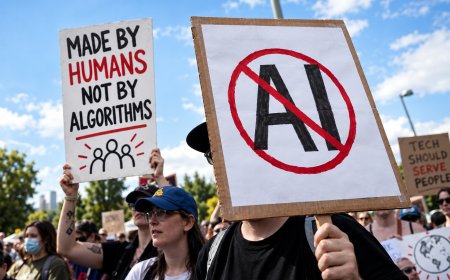
Warner described concerns about AI-driven job loss as “palpable,” even as some data suggest AI has not yet significantly reduced employment. As anxiety grows, it is beginning to intersect with another debate — who should bear the financial responsibility for the transition.
Warner proposes imposing taxes on the data centres that power AI systems and directing that revenue toward helping workers adapt. While no formal legislation has been introduced, the idea is gaining traction amid rising public frustration with both AI and data centre expansion.
Across the United States, opposition to data centres has been increasing. On the same day, Bernie Sanders (D-VT) and Alexandria Ocasio-Cortez (D-NY) introduced legislation calling for a moratorium on new data centre construction. Public concerns have largely centred on noise, environmental impact, and higher electricity costs. However, there is also a deeper unease — resistance to hosting infrastructure that supports technologies some fear could replace human jobs.
Warner made it clear he does not support a moratorium. Speaking at the event, he stated, “A data centremoratorium simply means China is gonna move quicker, and this is one where we can’t lose.”
He added that reversing the growth of AI and data centre infrastructure is not realistic. While he supports measures to ensure that data centres do not pass water and energy costs on to residents, he believes communities should still receive meaningful compensation for hosting such facilities.
“I’ve thought for a long time there’s an obligation from the industry to help figure this out and help pay for it, but one of the questions I was asking was, Who should pay?” Warner said. He raised possibilities, including chip manufacturers like Jensen Huang, large language model developers, or major financial institutions such as Goldman Sachs that are using AI to reduce hiring needs.
In the end, Warner suggested that datacentress represents the most practical point for taxation.
Such revenue could be used to fund workforce retraining programs, including preparing individuals for roles in healthcare or supporting AI-related upskilling initiatives, provided there are clear benefits for local communities navigating economic change.
Warner views this approach as a way to balance continued data centre expansion with accountability to the communities that host them.
The concept is not entirely new. He cited Henrico County, Virginia, where tax revenue is generated from a data centre.
He emphasised that connecting data centre development to visible community benefits will be critical, warning that without such measures, “the pitchforks are coming out.”
Public sentiment appears to support this concern. A recent NBC News poll found that AI has a lower approval rating than Immigration and Customs Enforcement (ICE), with 46% of registered voters expressing negative views compared to 26% expressing positive views. In Virginia, this has translated into proposals to eliminate tax incentives for data centre construction, which currently result in nearly $2 billion in lost tax revenue annually in one of the world’s largest data centre markets. Warner suggested that other states could adopt similar measures.
He concluded that AI and data centres have become “easy to demonise,” reflecting the broader tension between technological advancement and its societal impact.
What's Your Reaction?
 Like
0
Like
0
 Dislike
0
Dislike
0
 Love
0
Love
0
 Funny
0
Funny
0
 Angry
0
Angry
0
 Sad
0
Sad
0
 Wow
0
Wow
0