





























Zevo wants to add robotaxis to its car-share fleet, starting with newcomer Tensor
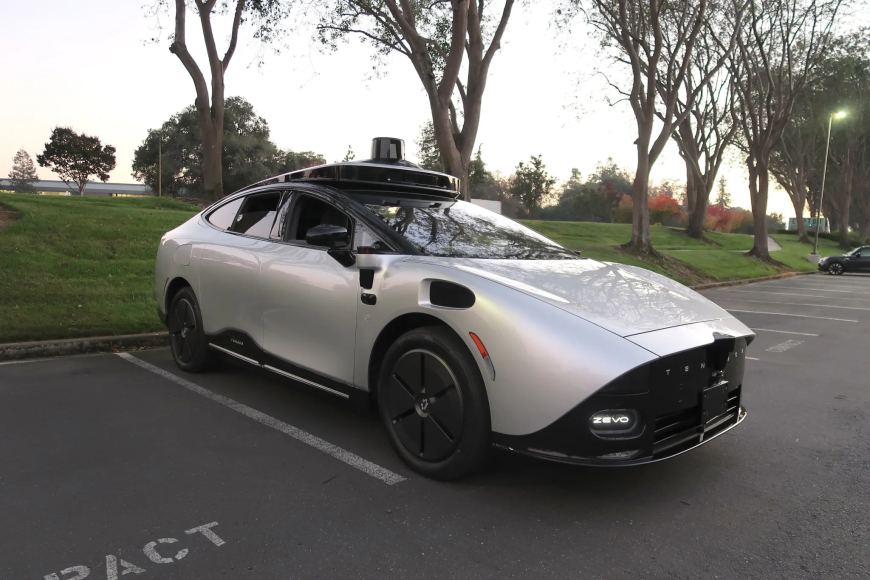
Zevo is expanding its EV-only car-share fleet by adding robotaxis through a new partnership with Tensor, a startup claiming it will sell fully autonomous consumer vehicles by 2026. Zevo plans to purchase up to 100 Tensor AVs, marking a bold move into decentralised robotaxi services as the autonomous vehicle market evolves. The deal reflects Zevo’s strategy of betting on flexible newcomers willing to enable deep software integration.
Driverless cars have moved far beyond science fiction, with companies like Waymo already running commercial robotaxi services in several cities. Automakers of all sizes are now working to bring similar autonomous capabilities to privately owned vehicles in the coming years.
If that happens, what might people do with their personal AVs? Some envision sending a self-driving car to pick up food or run errands — the premise behind Autolane. Tesla CEO Elon Musk envisions owners deploying their vehicles as on-demand robotaxis to generate passive income.
Hebron Sher, co-founder of Dallas-based Zevo, wants to capitalise on these emerging opportunities. The company has operated an EV-only car-sharing network for just over a year and is now preparing to incorporate robotaxis, beginning with a new startup called Tensor.
Tensor is unusual in several ways. The startup emerged earlier this year from the remnants of AutoX — a Silicon Valley–based company with operations in China — and now claims it will be the first to sell a fully autonomous vehicle to everyday consumers as early as 2026. Zevo says it plans to purchase up to 100 Tensor vehicles and integrate them into its fleet.
However, much remains uncertain. Tensor still needs to demonstrate its ability to manufacture vehicles consistently and at scale — that has halted many new automotive entrants. The company stated that its shipping timeline will depend primarily on global regulatory approvals rather than product constraints. If Tensor succeeds, Zevo customers would be able to rent autonomous cars, effectively creating a decentralised robotaxi network.
The announcement echoes many of the bold, often unfulfilled promises made during the peak of the autonomous vehicle hype a decade ago. Yet with actual robotaxis now operating on public roads, this vision feels slightly more plausible today.
“Tensor’s vision is to build a future where everyone owns their own Artificial General Intelligence — a personal AGI that enables more time, freedom, and autonomy,” Hugo Fozzati, Tensor’s chief business officer, said in a statement. “For us, this partnership with Zevo is not only just a batch sale of our vehicles, but also enables individuals and micro-entrepreneurs to participate and profit from AV business in this AI era.”
This isn’t Sher’s first major bet on a risky newcomer. In October, Zevo announced a nonbinding order for 1,000 vans from Faraday Future, a company long plagued by financial instability. Faraday has struggled for a decade to bring its FF91 luxury SUV to market and has recently begun importing lower-cost electric vans from China for assembly in the United States. The first vehicles are expected to be assembled later this month.
Sher says his willingness to take these risks comes from two motivations. First, cost: companies like Tensor and Faraday Future, given their track records, are more likely to offer favourable terms. Second is flexibility — these younger companies are more open to allowing deep software integration with Zevo’s platform, which is critical for enabling peer-to-peer vehicle sharing and robotaxi operations.
Legacy automakers, Sher noted, tend to be far less open to this level of collaboration. He also criticised the quality of their technology. Newcomer companies, he said, allow for “the synergy of startup and startup, sort of mingling, commingling together, and saying, ‘Let’s build a solution side by side…’ I think I’ve really enjoyed that experience.”
Sher views the Tensor agreement as mutually beneficial: Tensor secures an early customer and an opportunity to prove its autonomous technology, while Zevo gains attractive pricing and meaningful software access. Still, he acknowledges the risks.
“I think that’s what makes America great, you know, the fact that we do encourage startups to take risk,” he said.
This story has been updated to reflect that AutoX was headquartered in Silicon Valley.
What's Your Reaction?
 Like
0
Like
0
 Dislike
0
Dislike
0
 Love
0
Love
0
 Funny
0
Funny
0
 Angry
0
Angry
0
 Sad
0
Sad
0
 Wow
0
Wow
0