




































Honda scales back EV strategy, raising concerns about future competitiveness
Honda EV strategy, Honda electric vehicles, EV market competition, global EV industry, automotive electrification, Honda hybrid strategy, electric car market trends
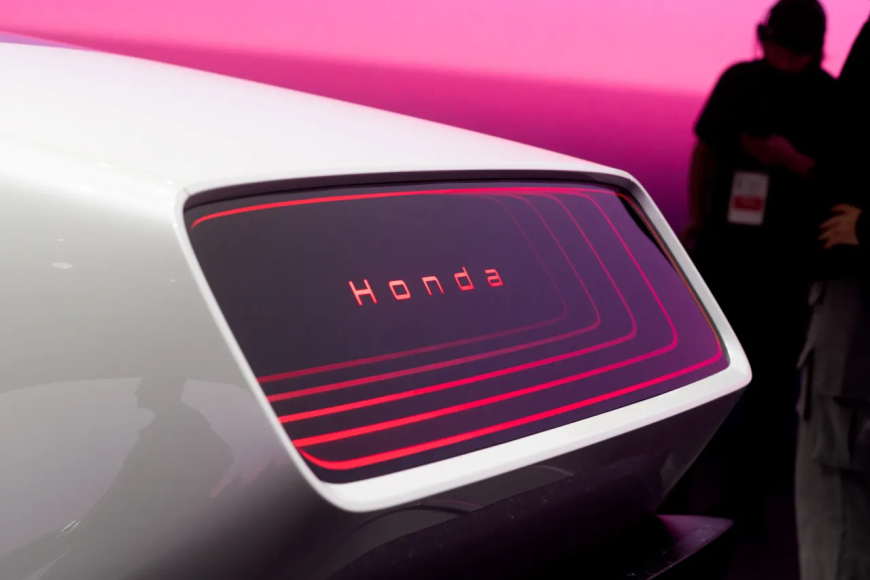
Understandably, legacy automakers are facing a difficult environment in which to sell electric vehicles, especially with reduced incentives and rising competition from Chinese manufacturers. However, Honda appears to be taking a more drastic step than most.
This week, the company effectively shut down an already limited and largely unconvincing EV program. Any momentum Honda had toward competing in the electric vehicle market now seems to have faded, along with its ability to keep pace in an industry undergoing rapid transformation.
Honda has pointed to U.S. tariffs and increasing competition from Chinese automakers as key reasons behind its decision — both valid challenges. Still, the company never seemed to have a strong or well-defined EV strategy in the first place.
The shift began on Thursday, when Honda paused development of the electric Acura RDX along with the Honda 0 sedan and SUV. These models were intended to be the company’s first fully developed, ground-up EVs, though details about them had been limited. The following day, Automotive News reported that Honda would also halt production of the Prologue, a model designed and manufactured entirely by General Motors.
This retreat could have serious consequences, particularly in two critical areas shaping the future of the automotive industry: electric drivetrains and software-defined vehicles.
Missed opportunities in EV development
For Honda — and for many traditional automakers still early in the transition — an electric vehicle is often viewed as little more than a conventional car with a different powertrain. It’s easy to imagine executives believing they can wait until battery and motor technology mature and then replace internal combustion components when the time is right.
That approach, however, has proven flawed. Many companies have discovered that adapting existing internal combustion platforms for electric use leads to compromises. While it may speed up development, the result is often a heavier, less efficient vehicle that costs more to produce.
Building EVs from the ground up offers a chance to rethink vehicle design entirely, often leading to greater efficiency and lower long-term costs.
Ford provides a useful example. Its Mustang Mach-E has performed well in terms of sales but has struggled financially. Built on a heavily modified platform originally designed for the gasoline-powered Escape, the vehicle reflects the limitations of adapting older designs. Ford CEO Jim Farley noted that legacy engineering choices, such as an overly heavy wiring harness, added unnecessary weight and complexity. These kinds of inefficiencies can accumulate quickly in a product as intricate as a car.
By stepping back from EV development, Honda also risks missing valuable learning experiences. These include practical knowledge gained through design and manufacturing, building relationships with new suppliers, and gathering customer feedback on what drivers actually want from electric vehicles.
Falling behind in software-defined vehicles
Honda’s retreat also puts it at risk in another major shift within the industry: the rise of software-defined vehicles (SDVs). These vehicles rely heavily on software systems that can be updated and improved over time.
Consumers — particularly those buying EVs from companies like Tesla, Rivian, and BYD — have come to expect regular software updates, advanced infotainment systems, and sophisticated driver-assistance features. Honda has yet to make meaningful progress in these areas.
While SDVs are not limited to electric vehicles, the two trends often go hand in hand. EVs, with their large battery systems, are better suited to power the high-performance computing required for features like over-the-air updates. Technically, Honda could develop a software-defined vehicle using a traditional internal combustion engine, but that seems unlikely given its current reluctance to embrace broader technological changes. For now, sticking to familiar methods may appear more practical and profitable.
An identity challenge for Honda
At its core, Honda has long been known for building high-quality internal combustion engines. That strength, however, is becoming less relevant as the industry shifts toward electrification.
The company has also built a reputation for producing cars that are lightweight, efficient, and enjoyable to drive. But as vehicles become increasingly automated, the concept of a “driver’s car” may lose its significance.
Even without considering autonomy, the appeal of driver-focused performance may be limited. Many consumers choose Honda for its reliability and affordability, with driving dynamics serving as a secondary benefit.
Electric vehicles, however, promise greater reliability due to fewer moving parts. At the same time, Chinese manufacturers are demonstrating that lower battery costs can translate into more affordable vehicles overall. If Honda cannot compete on reliability or price, its market position would weaken significantly.
Signs of this are already emerging in China. In its latest earnings report, Honda acknowledged declining competitiveness, stating that it had failed to deliver products that offered better value than those from newer EV-focused companies. Challenges in the Chinese market contributed to losses approaching $16 billion last year. Without a clear strategy for electric vehicles, Honda risks facing similar pressures in other markets.
What's Your Reaction?
 Like
0
Like
0
 Dislike
0
Dislike
0
 Love
0
Love
0
 Funny
0
Funny
0
 Angry
0
Angry
0
 Sad
0
Sad
0
 Wow
0
Wow
0