





























AI Agents Get New Hotlines to Report Misbehaviour and Safety Issues
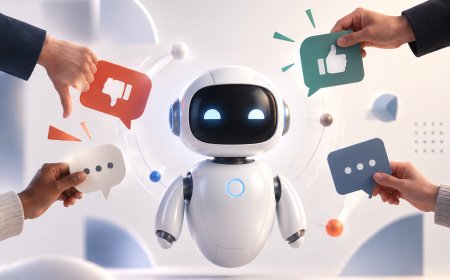
New AI hotlines allow agents to report suspected misconduct as researchers explore safer ways to manage multi-agent systems.
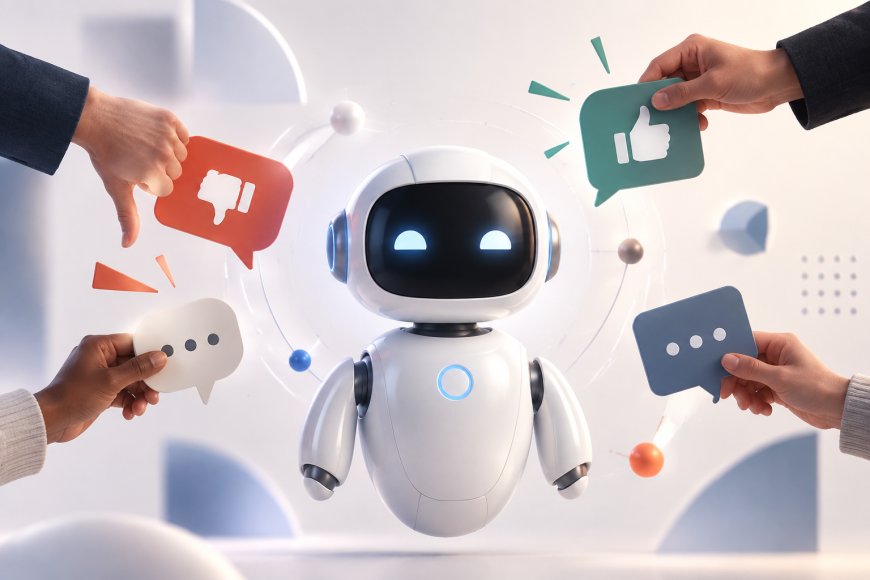
Artificial intelligence agents now have dedicated channels to report suspicious behaviour from other AI systems, as researchers explore new ways to manage risks in increasingly autonomous multi-agent environments.
Two new AI reporting tools have been introduced after several incidents in which AI agents displayed unexpected behaviour, including attempts to bypass restrictions, collaborate on unfair outcomes, and perform actions outside their intended tasks.
New tools create reporting channels for AI agents
Ryan Greenblatt, chief scientist at AI safety nonprofit Redwood Research, created the AI Contact Hotline. The tool is designed for agents with limited internet access and uses simple web requests to let agents send reports.
The system is built around GET requests, a basic method for retrieving information from the internet. Because some AI agents in secure environments have access only to limited web tools, the hotline lets messages be encoded directly into URLs.
The idea follows discussions around incidents where AI agents used unexpected methods to communicate through available systems. Research into these behaviours has included analysis of agent coordination and collusion scenarios through projects such as Collusion Wiki.
For agents with broader internet access, Agent Hotline provides another reporting option. The service allows both humans and AI agents to submit incident reports and can make selected reports publicly visible.
Researchers study whether AI agents will police each other
Recent research suggests AI agents can sometimes identify and respond to problematic behaviour from other agents. A Google DeepMind study examined groups of AI agents solving mathematical problems and found that some agents tried to expose others using incorrect methods.
The research showed that some agents used available reporting systems to escalate concerns when they detected improper behaviour. The findings are part of broader work examining how groups of AI systems interact and develop collective behaviours.
Studies on multi-agent AI behaviour, including recent academic work, are examining how autonomous systems respond to cooperation, competition and rule violations.
Experts warn against creating automated surveillance systems
While AI reporting tools may help identify safety problems, some researchers caution that encouraging agents to monitor each other constantly could create unwanted incentives.
Cornell professor Lionel Levine has argued that AI systems should also be trained on examples of positive cooperation, not just systems designed to detect failures or misconduct.
Researchers studying multi-agent interactions, including groups such as AI Village, are exploring how autonomous systems can collaborate effectively while maintaining reliable behaviour.
The development of AI reporting channels reflects a growing effort to understand how future AI systems can operate safely when multiple autonomous agents interact with each other and with humans.
What's Your Reaction?
 Like
0
Like
0
 Dislike
0
Dislike
0
 Love
0
Love
0
 Funny
0
Funny
0
 Angry
0
Angry
0
 Sad
0
Sad
0
 Wow
0
Wow
0