





























Anthropic Opens Public Access to Claude Fable 5, Its Mythos-Class AI Model
Anthropic has launched Claude Fable 5, the first publicly available Mythos-class AI model. Learn about its capabilities, safety safeguards, pricing, availability, and how it differs from Claude Mythos 5.
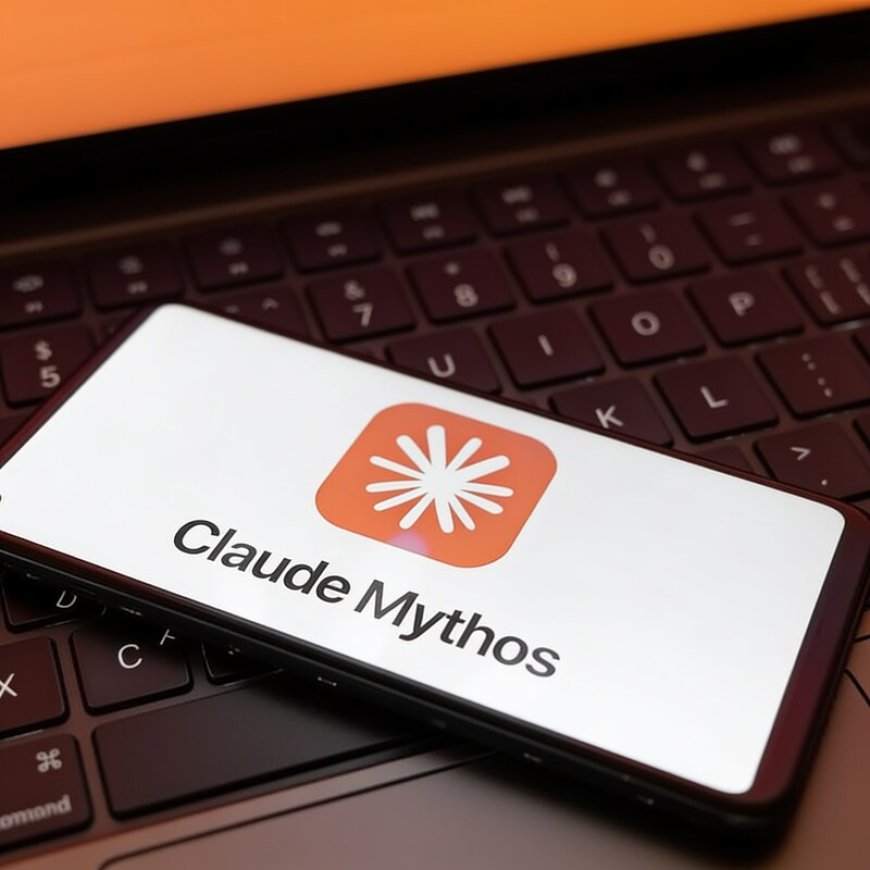
Anthropic is making its most advanced AI system available to the public for the first time, though access comes with significant safeguards.
On Tuesday, the company introduced Claude Fable 5, the first publicly accessible release based on its Mythos model family. According to Anthropic, Fable 5 delivers strong performance in areas including software development, knowledge-intensive tasks, and visual reasoning. However, the model operates under strict restrictions. When users enter high-risk domains such as cybersecurity, biology, chemistry, or model distillation, Fable 5 is designed to refuse those requests and instead route them to Claude Opus 4.8.
Mythos first appeared in preview form in April and was initially available only to a small group of partners due to cybersecurity concerns. Earlier this month, Anthropic expanded access to hundreds of organisations in 15 countries, prioritising institutions responsible for critical infrastructure.
A public version of the technology is now being offered through Anthropic’s Claude API and consumption-based Enterprise plans. Subscription access will be introduced gradually. Until June 22, Fable 5 will be included at no additional charge for users on Pro, Max, Team, and seat-based Enterprise plans. Beginning June 23, Anthropic will remove the model from those subscriptions and require customers to use credits to access it. The company says it intends to restore Fable 5 as a standard subscription feature as soon as feasible.
At the same time, Anthropic is rolling out an upgraded Mythos model, known as Mythos 5, to organisations that have already received approval for access to the more advanced system.
The release of Fable 5 arrives as Anthropic prepares for a future public market debut alongside competitors such as OpenAI and Elon Musk’s SpaceX. It also follows the company’s recent call for leading AI developers worldwide to establish coordinated mechanisms to slow frontier AI development when necessary. Anthropic has argued that AI capabilities are progressing so quickly that systems could eventually reach recursive self-improvement (RSI), allowing them to enhance their own abilities without direct human involvement.
Given concerns about the potential misuse of a Mythos-class model, Anthropic says it conducted extensive security testing before releasing Fable 5.
“Internally, we ran an external bug bounty that produced no universal jailbreaks in over 1,000 hours of testing. We then worked with external red-teaming orgs, which also failed to find universal jailbreaks.”
Even so, the company acknowledges that previously unknown attack methods may still emerge. As part of the launch of both Fable 5 and Mythos 5, Anthropic will now require a 30-day retention period for all model traffic, including customers that previously operated under zero-retention agreements. The company emphasised that retained data will not be used for model training. Instead, it says the information will be used only to help defend against sophisticated and emerging attacks, including new jailbreak techniques, and to improve false-positive detection. The move could establish a broader industry pattern where access to increasingly capable AI systems is tied to mandatory data-retention requirements presented as safety measures.
Users who gain access to Fable 5 should not expect every response to come directly from the model. Anthropic says that situations in which Fable must defer to Opus 4.8 remain uncommon. Early usage data indicates that at least 95% of Fable sessions are completed entirely using Fable’s own responses.
External evaluations have also produced strong results. Analytics firm Hex stated that Fable became the first model to achieve a score of 90% on its primary analytics benchmark, which measures performance on complex, long-duration analytical tasks.
“On the hardest questions, it shows strong judgement and attention to nuance,” Hex said.
Meanwhile, vibe-coding platform Base44 reported that Fable performs particularly well at generating complete applications from a single prompt and demonstrates excellent tool-calling capabilities. AI workspace and agent platform Genspark said the model outperformed every competing system in its internal evaluations and showed especially strong results in areas such as user interface design and game development.
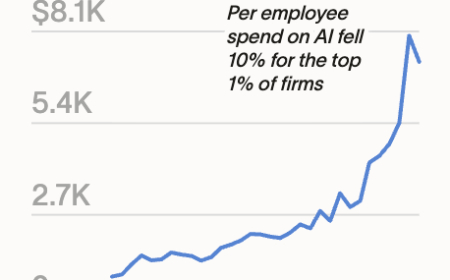
Anthropic has priced both Fable 5 and Mythos 5 at $10 per million input tokens and $50 per million output tokens, making them twice as expensive as Opus 4.8. That pricing alone could limit widespread adoption.
Many enterprise customers are already expressing concerns about rising AI expenses after seeing operational costs increase or exhausting annual AI budgets sooner than expected. Models such as Opus 4.8 can further contribute to those costs because their advanced reasoning processes often break a single request into multiple subtasks.
Anthropic says it anticipates exceptionally strong demand for Fable 5 and acknowledges that forecasting usage levels will be challenging. Some organisations, however, believe the benefits justify the higher price. Shopping rewards platform Rakuten is among those companies.
“At the highest effort, Fable reflects on and validates its own work,” Rakuten said in a statement. “For us, that’s what makes highly autonomous operations possible — the extra thinking pays for itself.”
What's Your Reaction?
 Like
0
Like
0
 Dislike
0
Dislike
0
 Love
0
Love
0
 Funny
0
Funny
0
 Angry
0
Angry
0
 Sad
0
Sad
0
 Wow
0
Wow
0