
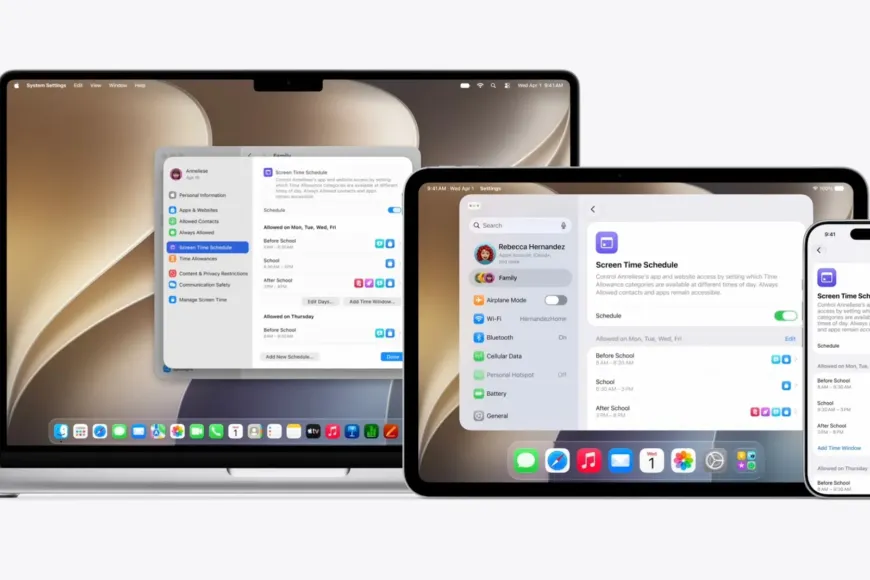
At its WWDC 2026 conference, Apple unveiled a broad range of new parental control features to give families greater oversight of how children use their iPhones. The updates include tools that allow parents to determine who their children can communicate with, which apps they can access, and what websites they are permitted to visit. Parents will also gain access to enhanced options for blocking inappropriate messages, setting screen time schedules, discovering age-appropriate apps, and more.
The updated Screen Time experience builds upon Apple’s existing parental management tools while introducing more detailed controls. The enhancements arrive as concerns about the impact of technology and social media on children’s mental well-being continue to grow, prompting lawmakers and regulators to examine ways to limit young users’ access to devices and online platforms.
When setting up a child account on a new Apple device, the company will automatically apply protections that correspond to the child’s age. These safeguards include blocking adult websites, limiting media to age-appropriate content, and enforcing age-based restrictions on the App Store. While parents can modify these settings, Apple is now providing additional options that enable deeper customisation.
For example, parents can initially grant access only to content they feel comfortable allowing and then gradually expand those permissions as their child matures. During setup, Apple will also provide intelligent app recommendations, enabling parents to decide whether a child should have access only to essential apps or manually choose specific apps. The approach is particularly useful for younger users, including tweens and school-age children receiving their first iPhone, who may not yet be ready for unrestricted access to the device’s broader social features.
Apple is also introducing expanded website controls, allowing parents to decide which websites their children can access. The feature addresses a longstanding concern among parents, as many children have historically bypassed restrictions on certain apps—especially social media services—by accessing similar content through web browsers.
Called “Ask to Browse,” the new feature is available on iPhone, iPad, and Mac devices via Safari. Apple noted that it will be enabled by default for children under 13, alongside the existing “Ask to Buy” feature that requires parental approval for app and game downloads.
Parents will additionally gain more control over contacts, including the ability to decide which individuals a child can add to their contact list. Apple is also expanding safety protections within Messages by allowing parents to block incoming media that may contain graphic violence or gore. The company already offers a related feature that helps detect and restrict potentially nude content, addressing concerns surrounding inappropriate image sharing and sexting.
Apple’s current Screen Time system already allows families to establish schedules and determine which apps can be used on specific days and during certain hours. Many parents use the feature to limit access to social media and entertainment apps during school time while permitting broader access on weekends or outside study hours.
One of the most significant additions is a recommendation system based on guidance from child development and health experts. Apple said it worked with organisations, including the American Academy of Paediatrics, to develop suggested screen time limits that take a child’s age and an app’s category into account. The company specifically highlighted social media applications, noting that such services are generally not recommended for children under 13, which may prompt Apple to suggest disabling access to that category for younger users.
The Screen Time interface itself has also been redesigned to simplify parental oversight. The updated layout makes it easier for parents to understand how children spend time on their devices and provides quicker access to settings, allowing adjustments to be made with minimal effort.
Apple is also extending support to app developers through a comprehensive set of APIs designed to improve child safety. These tools can help developers filter nudity and violent content, require parental approval before children add new contacts within apps, verify age eligibility, and implement additional safeguards tailored to younger audiences.
The expanded parental control features are scheduled to become available to consumers with the launch of iOS 27 later this fall.