




























Arena AI Leaderboard Reaches $100 Million in Annual Revenue After Rapid Growth
Arena, the widely used AI leaderboard platform, has reached $100 million in annualised revenue just months after launching its commercial AI evaluation service. Learn how Arena became a leading platform for AI model benchmarking.
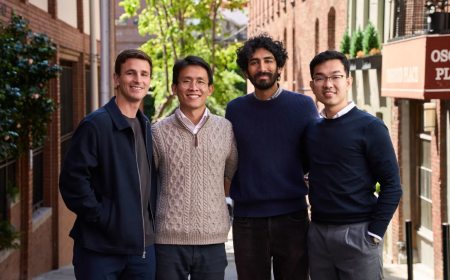
Just eight months after launching its commercial business, AI evaluation platform Arena has reached an annualised revenue run rate of $100 million. The company, which began as a research project at the University of California, Berkeley, in 2023, has rapidly transformed from an open research initiative into a fast-growing AI infrastructure business.
Arena is widely recognised for operating one of theindustry’ss most popular crowdsourced AI model leaderboards. Built from more than 10 million user evaluations, the platform allows users to enter a prompt, which is then sent to two different AI models. After comparing the responses, users choose which model performed better, helping Arena generate large-scale performance rankings.
Although the public AI leaderboard remains free to use, Arena introduced a commercial offering, AI Evaluations, in September. The service provides AI model developers and enterprise customers with detailed performance analysis based on data collected from Arena’s global community of evaluators.
The company’s rapid financial growth suggests that its enterprise products are attracting strong customer demand alongside its popular public platform, which many users visit to gain early access to newly released or even unreleased AI models.
“A lot of people don’t even understand that our business is making any money at all; people still see us as an open source project,” said Arena co-founder and CEO Anastasios Angelopoulos.
While Arena describes the milestone as annual recurring revenue (ARR), Angelopoulos clarified that the company actually charges customers based on usage or consumption, meaning its revenue is not subscription-based or recurring in the traditional sense.
Arena currently has few direct competitors—Yupp, another startup that focused on crowdsourced AI model comparisons, shut down in March. Angelopoulos said Arena instead competes for customer budgets with companies such as Mercor, Surge, and Scale AI, which provide human labelling and evaluation services to help AI developers improve models during post-training.
As AI companies continue to invest heavily in improving model performance, demand for post-training evaluation and optimisation services has accelerated. When Arena announced its $150 million Series A funding round in January, at a post-money valuation of $1.7 billion, the company reported annualised revenue of approximately $30 million.
Growth across the broader AI training market has been equally significant. According to The Information, Handshake’s gross annualised revenue from AI training nearly doubled from $550 million in January to almost $1 billion by April. The publication also reported that Mercor’s annualised revenue exceeded $1 billion earlier this year, up from roughly $500 million last September.
Arena evaluates AI models across a wide range of categories, including text generation, coding, computer vision, image generation, and, more recently, complex, long-running tasks via its newly introduced Agent Mode.
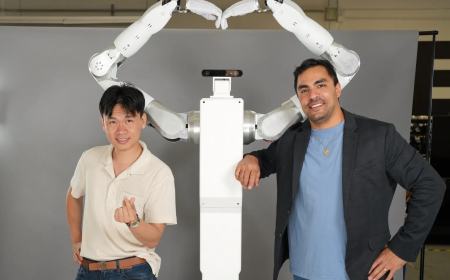
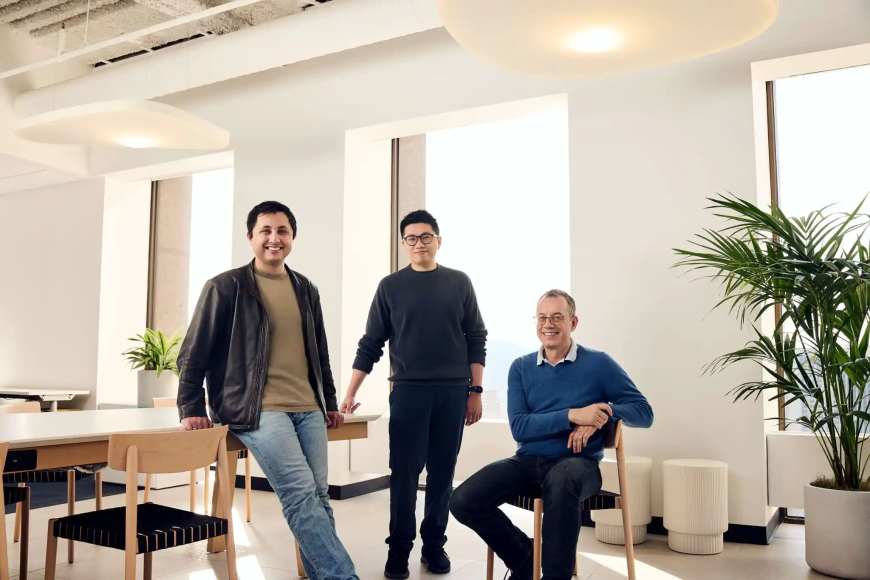
In addition to Angelopoulos, Arena was co-founded by fellow UC Berkeley postdoctoral researcher Wei-Lin Chiang, who serves as the company’s Chief Technology Officer. The founding team also includes renowned UC Berkeley professor and Databricks co-founder Ion Stoica, who initially advised the research project before Arena formally incorporated as a company in April 2025.
Since its launch, Arena has raised a total of $250 million from investors. Its backers include Felicis, Andreessen Horowitz, The House Fund, LDVP, Kleiner Perkins, Lightspeed Venture Partners, Laude Ventures, and UC Investments.
What's Your Reaction?
 Like
0
Like
0
 Dislike
0
Dislike
0
 Love
0
Love
0
 Funny
0
Funny
0
 Angry
0
Angry
0
 Sad
0
Sad
0
 Wow
0
Wow
0