
































Meta Launches Glimmer AI Model for Personal Agents Running on Consumer Hardware
Meta has released Muse Glimmer, a 30-billion-parameter open-weight AI model designed to run personal AI agents locally on consumer computers and GPUs.
Meta has released Muse Glimmer, a 30-billion-parameter open-weight AI model designed to run personal AI agents directly on consumer hardware, offering an early look at CEO Mark Zuckerberg’s vision for what he calls “personal superintelligence.”
Glimmer is effectively an open version of Meta’s more powerful Muse Spark model, which the company introduced in April. Unlike Spark, Glimmer’s model weights are available under the Apache 2.0 licence, allowing developers to download, modify and fine-tune the model.
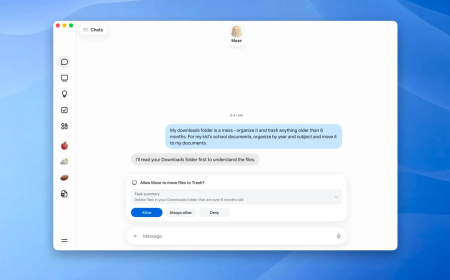
Meta designed Glimmer to run locally on a Mac or PC equipped with a single consumer GPU. The model can power AI agents capable of completing multi-step workflows, including calling tools, writing and debugging code, working with files and screenshots, and carrying out tasks over extended periods.
Glimmer supports both text and images and was trained across more than 100 languages, according to Meta.
Meta wants personal AI to run locally
Meta sees the model being used for highly personal tasks such as managing schedules, drafting messages and organising files. Those activities can require extensive access to private information, making local processing an important part of the company’s approach.
Instead of sending that information to cloud servers for processing, Glimmer can operate directly on a user’s device. Meta says the model is designed to be “always-on” and capable of operating with or without an internet connection.
That approach provides a clearer picture of how Meta could eventually deliver personal AI agents that continuously assist users while keeping more of their information on their own hardware.
The strategy reflects Zuckerberg’s broader argument that increasingly powerful artificial intelligence should be distributed to individuals rather than controlled exclusively by a small number of companies.
Zuckerberg outlines personal superintelligence vision
In a letter published Monday, Zuckerberg argued that widely distributing superintelligence could create a new era of personal empowerment by helping people pursue their interests and improve different areas of their lives.
He described a future personal agent that could work continuously on a user’s behalf across relationships, health, careers, finances, home management and hobbies. Zuckerberg also suggested that advanced AI could give individuals tools to create businesses or contribute to scientific progress.
One of the central promises of that vision is broad access. Zuckerberg said Meta wants everyone to have free or affordable access to powerful AI tools eventually.
Meta draws a line between open and closed AI
Glimmer also illustrates the limits of Meta’s open-model strategy. While developers can download and modify Glimmer, the company’s more capable Muse Spark model remains closed-weight.
Zuckerberg has previously acknowledged that Meta may need to restrict access to some increasingly powerful models when releasing them openly could create safety risks.
That creates an important distinction between making advanced AI widely accessible and allowing users to own and control the underlying technology fully.
For now, Glimmer represents the type of AI Meta appears comfortable putting directly into developers’ and users’ hands: a model capable enough to operate personal agents locally, but smaller than the most powerful systems the company is keeping under its control.
What's Your Reaction?
 Like
0
Like
0
 Dislike
0
Dislike
0
 Love
0
Love
0
 Funny
0
Funny
0
 Angry
0
Angry
0
 Sad
0
Sad
0
 Wow
0
Wow
0