
































As Its Voice Dictation App Surges in Popularity, Wispr Secures $25M Led by Notable Capital
Wispr secures $25M led by Notable Capital as its voice dictation app surges in adoption, fueling global expansion, new AI models, and enterprise growth.
Voice AI startup Wispr is seeing rapid adoption of its dictation app, Wispr Flow, and is now raising fresh capital to sustain its momentum. The company says that after just three months of use, the average user types more than 50% of their characters through the app. Wispr has also reached 270 Fortune 500 companies and signed 125 enterprise customers.
Following its $30 million round in June led by Menlo Ventures, Wispr has now raised an additional $25 million, this time led by Notable Capital, with participation from Steven Bartlett’s Flight Fund, TechCrunch has learned exclusively. This brings Wispr’s total funding to $81 million.
Notable Capital’s Hans Tung — known for backing firms like Affirm, Airbnb, Slack, Coinbase, Anthropic, and TikTok — will join Wispr’s board as an observer.
CEO Tanay Kothari says Wispr Flow has been growing by 40% month over month since June. The app has become particularly popular in the venture community, leading to significant inbound investor interest.
“We weren’t planning to raise again anytime soon,” Kothari said. “We had a long runway and a lean team. But when Hans and Steven reached out, it made sense to bring them in.”
Kothari added that Notable’s team, including investor Chelcie Taylor, came prepared with in-depth research, competitor interviews, and a strong thesis for backing Wispr.
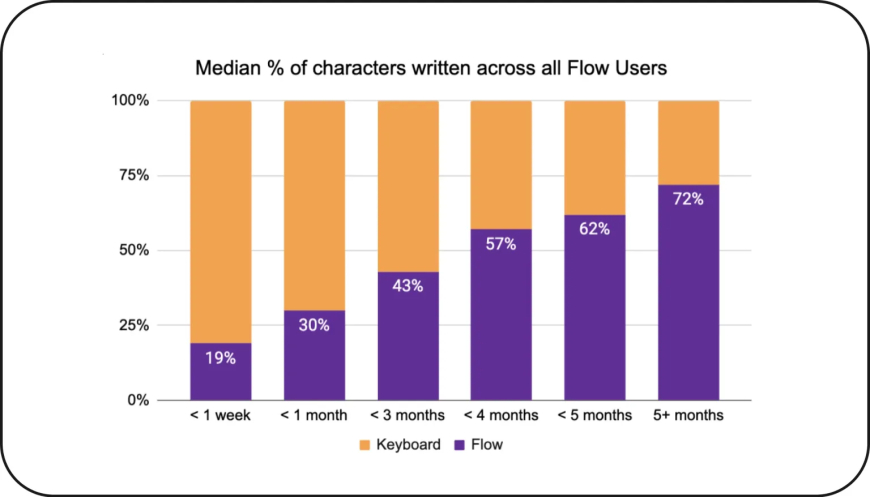
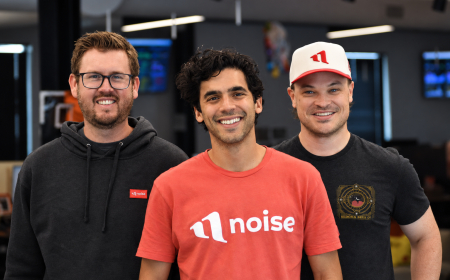
Image Credits: Wisp
With the new funding, Wispr aims to accelerate international expansion, recruit top-tier machine learning talent, and explore new product opportunities. The company is particularly interested in hiring researchers who might otherwise join companies like OpenAI or Anthropic.
User growth metrics remain strong. Wispr is now at 100x its user base year-over-year, with 70% retention over 12 months. However, the team did face challenges when non-technical users installed the app, but dropped off quickly after testing dictation within itp — unaware they could use it in other apps. Wispr addressed this by creating an onboarding flow that guides new users to enable dictation across the app.
Wispr also plans to broaden Flow’s availability beyond Windows, macOS, and iOS. An Android beta is expected by the end of the year, with a full launch in Q1 2025.
The company is investing heavily in developing its own personalised voice models to boost transcription accuracy. Wispr claims a 10% error rate, compared to 27% for OpenAI’s Whisper and 47% for Apple’s native transcription.
Image Credits: Wispr
Although Wispr remains focused on consumer applications for now, it is quietly testing its technology with select enterprises and hardware partners through a closed API. A broader developer launch is expected next year.
Wispr’s competitors include Willow, Aqua, Monologue, Typeless, TalkTastic, Superwhisper, and BetterDictation — all aiming to capture the growing demand for voice-led productivity tools.
But Wispr wants to go beyond dictation. The company is exploring workflow automation, such as automatically replying to emails or executing tasks through voice.
“What I really like about Wispr is that they’re aiming to become more than a dictation app — they want to be a voice-led operating system,” Notable’s Hans Tung told TechCrunch. “Their team quality, speed, and product vision stand out. I see the same type of potential I saw in other apps with great user experiences.”
What's Your Reaction?
 Like
0
Like
0
 Dislike
0
Dislike
0
 Love
0
Love
0
 Funny
0
Funny
0
 Angry
0
Angry
0
 Sad
0
Sad
0
 Wow
0
Wow
0