





































AWS re:Invent was an all-in pitch for AI. Customers might not be ready.
AWS re: Invent 2025 showcased Amazon’s all-in push toward AI with new agents, LLMs, and infrastructure tools, but analysts say most enterprises aren’t yet ready to adopt AI at scale.
If Amazon Web Services' annual re: Invent conference demonstrated anything, it's that the cloud giant is fully committed to an AI-first future.
Across the event, AWS unveiled a flood of AI-centric updates — from new AI agents and upgraded large language models to expanded LLM and agent-building tools targeted at enterprise users. AI dominated the week.
But a crucial question lingers: Are enterprise customers as ready as AWS wants them to be?
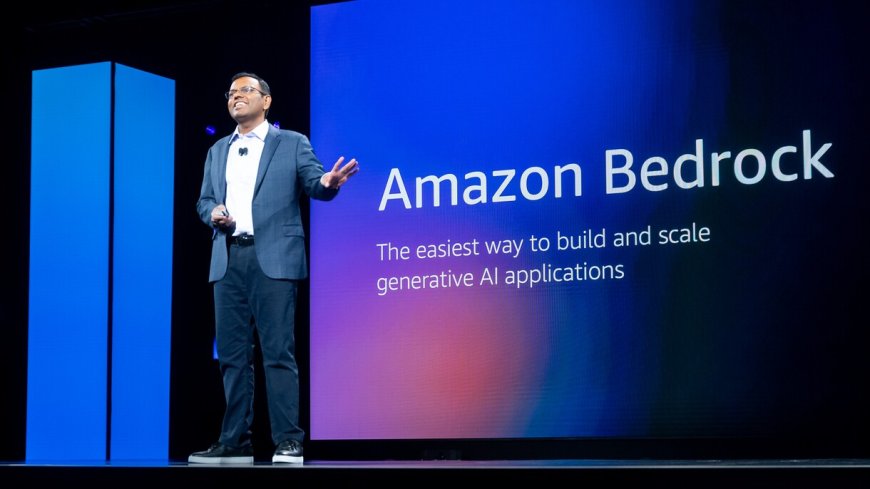
During his keynote, AWS CEO Matt Garman acknowledged what many in the industry already know: most enterprises have not yet realised meaningful returns from their AI investments. Still, he argued that' it's about to shift dramatically.
"I believe that the advent of AI agents has brought us to an inflection point in AI's trajectory," Garman said. "It's turning from a technical wonder into something that delivers us real value. This change is going to have as much impact on your business as the internet or the cloud."
Industry analysts who spoke with TechCrunch said they were impressed by some of AWS's technology but sceptical that these announcements would materially accelerate enterprise AI adoption — or alter AWS's standing in the competitive AI landscape.
AWS remains a dominant force in cloud infrastructure. But in enterprise AI models, Anthropic, OpenAI, and Google continue to lead the market by a wide margin. AWS's strength lies in the depth of its stack — infrastructure, chips, and models — all under one roof.
Forrester principal analyst Naveen Chhabra told TechCrunch that despite AWS showcasing sophisticated tools, most enterprises aren't close to ready for them.
"AWS AI announcements show that AWS is thinking ahead and maybe far too ahead," Chhabra wrote. "Most enterprises are still piloting AI projects and are rarely at the levels of maturity AWS expects them to be to take advantage of the offerings that come out of these announcements."
A widely referenced MIT report from August found that 95% of enterprises still aren't seeing ROI from AI, reinforcing this disconnect.
Zacks Investment Research equity strategist Ethan Feller told TechCrunch that it wasn't AWS' new Nova models or its agent tech that stood out — but rather its infrastructure moves.
He pointed to the new AWS AI Factory, which enables organisations to run AWS AI services in their own data centres.
"AWS is a huge player in where the models are being run and is dominant in the cloud industry," Feller said. "I think that is where Amazon's expertise really lies. It's a good thing to double down on where they have expertise."
Feller said AWS's vertical AI strategy makes sense in the long term. Still, it may be more successful if the company leans on deeper partnerships with leaders like Anthropic and Nvidia, rather than relying solely on its own tech stack.
Even so, AWS remains uniquely positioned to grow its AI footprint while maintaining strong momentum in its foundational cloud business. With $11.4 billion in operating income last quarter, AWS is insulated from the volatility of the broader AI market — allowing it to experiment, iterate, and refine its approach even if enterprises lag.
Because AWS effectively provides the underlying infrastructure for much of the AI ecosystem, a potential AI slowdown would impact it far less than it would competitors whose core business depends entirely on AI models or applications.
This breathing room allows AWS to continue evolving its AI technologies — even if customers aren't quite ready to deploy them at scale today.
Follow TechAmerica.ai's complete coverage of the annual enterprise tech event here, and catch up on all the announcements you may have missed here.
What's Your Reaction?
 Like
0
Like
0
 Dislike
0
Dislike
0
 Love
0
Love
0
 Funny
0
Funny
0
 Angry
0
Angry
0
 Sad
0
Sad
0
 Wow
0
Wow
0