



































China’s Hesai Will Double Production as Lidar Sensor Industry Shakes Out
China’s Hesai plans to double lidar sensor production in 2026 as the global lidar industry undergoes significant consolidation.
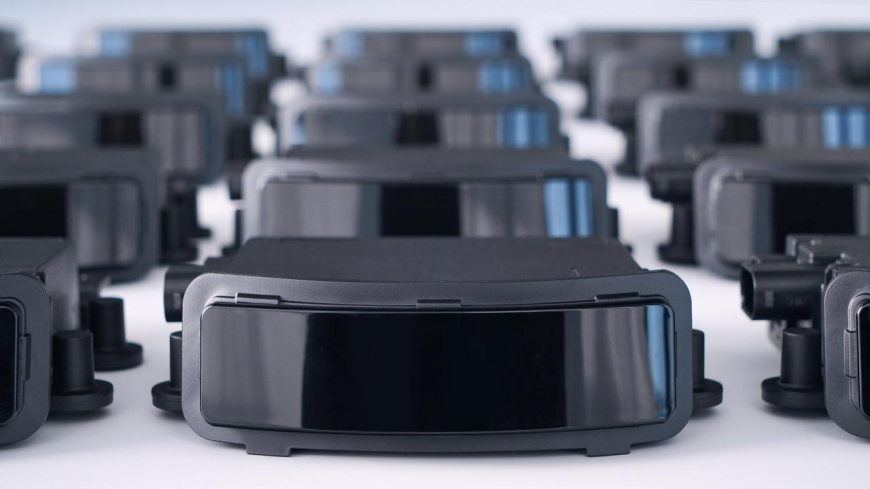
Chinese lidar manufacturer Hesai said Monday that it plans to double its production capacity this year, increasing output from 2 million units to 4 million units, as it seeks to strengthen its position in the global market for laser-based sensors. The expansion would mark a sharp rise from the more than 1 million lidar units the company produced in 2025.
Hesai’s move comes amid growing upheaval in the lidar industry, just a month after its leading U.S. competitor, Luminar, filed for Chapter 11 bankruptcy. Luminar is not expected to continue operating in its current form once its restructuring plan is approved, although it is pursuing a sale of its lidar business.
Over the past several years, Hesai has raised hundreds of millions of dollars and is now publicly listed on both the Nasdaq and the Hong Kong Stock Exchange. This growth has come despite heightened scrutiny from the U.S. government, which has accused the company of close ties to China’s military industry—an allegation Hesai has denied.
Speaking at the 2026 Consumer Electronics Show (CES) in Las Vegas, Hesai executives said the decision to double production was driven by accelerating demand from both the automotive and robotics sectors.
The company said its automotive business has benefited from the rapid adoption of lidar sensors in China’s electric vehicle market. According to Hesai, lidar is now used in about 25% of new electric cars sold in China, and many upcoming vehicle models are expected to integrate three to six lidar sensors per vehicle, significantly increasing the company’s addressable market. Hesai said it counts 24 automotive customers, including a “top European” automaker, and currently has 4 million orders for its latest ATX lidar sensor.
Outside China, however, the lidar automotive market has proven far less predictable. That volatility played a significant role in Luminar’s collapse, according to its bankruptcy filings. Although Luminar secured deals to supply lidar sensors for vehicles from Volvo, Polestar, and Mercedes-Benz, those plans unravelled. Volvo, for example, once agreed to purchase 1.1 million lidar sensors, but delays and rising costs led the automaker to scale back the deal, ultimately buying only about 10,000 units.
Robotics represents another potential growth area for lidar, though it is not without risk. Some industry players see a significant opportunity. San Francisco–based Ouster, which acquired rival Velodyne in 2023 as consolidation swept the sector, has said it believes robotics could represent a $14 billion market, spanning applications from humanoid robots to last-mile delivery and military uses.
At CES, Hesai demonstrated a robotic lawnmower and a robotic dog equipped with its JT-series lidar sensors, and suggested its technology could also be used in humanoid robots. The company has also signed agreements to supply lidar sensors to autonomous-vehicle developers, including Pony AI, Motional, WeRide, and Baidu.
Hesai also highlighted its role in sharply reducing lidar costs, claiming prices have fallen by 99.5% over the past eight years. That cost compression has been a significant challenge for Western competitors. Luminar has repeatedly cited “pressure to reduce costs due to lower price points of China-based competitors” in its bankruptcy filings as one of the key reasons it struggled to build a sustainable business.
As the lidar industry consolidates, Hesai’s production expansion underscores how Chinese manufacturers are increasingly shaping the global sensor market.
What's Your Reaction?
 Like
0
Like
0
 Dislike
0
Dislike
0
 Love
0
Love
0
 Funny
0
Funny
0
 Angry
0
Angry
0
 Sad
0
Sad
0
 Wow
0
Wow
0