





























Elon Musk says Tesla’s restarted Dojo3 will be dedicated to ‘space-based AI compute’
Elon Musk reveals that Tesla has revived its Dojo3 AI chip project, shifting its focus toward space-based AI compute and off-planet data centre ambitions.
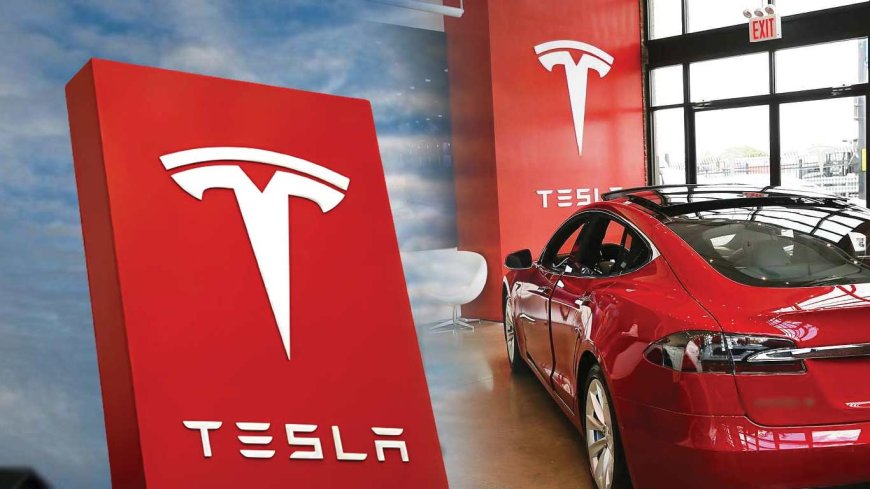
Elon Musk said over the long weekend that Tesla is planning to revive work on Dojo3, the electric vehicle maker’s once-shelved third-generation AI chip. This time, however, the project won’t focus on training self-driving models on Earth. According to Musk, Dojo3 will instead be dedicated to what he described as “space-based AI compute.”
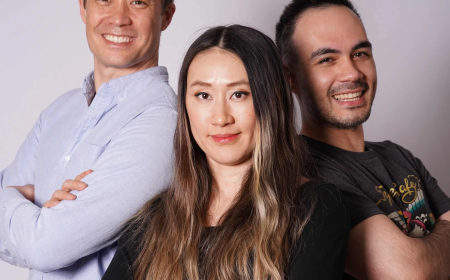
The announcement comes roughly five months after Tesla effectively shut down its Dojo initiative. The company disbanded the team behind its Dojo supercomputer following the departure of Dojo lead Peter Bannon. Around 20 engineers from the group also left to join DensityAI, a new AI infrastructure startup founded by former Dojo head Ganesh Venkataramanan alongside ex-Tesla employees Bill Chang and Ben Floering.
When Dojo was wound down, Bloomberg reported that Tesla intended to lean more heavily on external partners for computing power. That strategy included greater reliance on Nvidia, additional collaboration with AMD, and chip manufacturing with Samsung, rather than continuing to invest in in-house custom silicon. Musk’s latest comments suggest that the approach has shifted once again.
In a post on X, the billionaire CEO and prominent Republican donor said the decision to bring Dojo back was driven by progress on Tesla’s internal chip roadmap. He noted that the company’s AI5 chip design is now “in good shape.”
Now that the AI5 chip design is in good shape, Tesla will restart work on Dojo3.
If you’re interested in working on what will be the highest volume chips in the world, send a note to AI_Chips@Tesla.com with 3 bullet points on the toughest technical problems you’ve solved. — Elon Musk (@elonmusk) January 18, 2026
The AI5 chip, manufactured by TSMC, was built to support Tesla’s automated driving systems and its Optimus humanoid robots. Last summer, Tesla also signed a $16.5 billion agreement with Samsung to produce its next-generation AI6 chips. Those chips are expected to power future Tesla vehicles and Optimus, as well as support high-performance AI training workloads in data centres.
“AI7/Dojo3 will be for space-based AI compute,” Musk wrote on Sunday, framing the revived effort as a far more ambitious bet than previous Dojo iterations. To support that vision, Tesla is now preparing to rebuild the team it dismantled earlier this year. Musk used the same post to recruit engineers directly, writing: “If you’re interested in working on what will be the highest volume chips in the world, send a note to AI_Chips@Tesla.com with 3 bullet points on the toughest technical problems you’ve solved.”
The timing of Musk’s announcement is notable. At CES 2026, Nvidia unveiled Alpamayo, an open-source AI model for autonomous driving that directly challenges Tesla’s Full Self-Driving software. Commenting on X, Musk said that addressing the long tail of rare and unusual driving edge cases is “super hard,” adding, “I honestly hope they succeed.”
AI4 by itself will achieve self-driving safety levels very far above human.
AI5 will make the cars almost perfect and greatly enhance Optimus.
AI6 will be for Optimus and data centers.
AI7/Dojo3 will be space-based AI compute. — Elon Musk (@elonmusk) January 18, 2026
Musk and several other AI industry leaders have increasingly argued that the future of data centres may lie beyond Earth, as terrestrial power grids are already under significant strain. Axios recently reported that Sam Altman, a rival of Musk and the CEO of OpenAI, is also enthusiastic about the idea of placing data centres in orbit.
Musk may hold a unique advantage in pursuing that vision because he controls his own launch capabilities. According to Axios, he plans to leverage SpaceX’s upcoming IPO to help fund a constellation of computing satellites launched by Starship rockets. These systems would operate in near-constant sunlight, allowing them to harvest solar power around the clock.
Even so, significant obstacles remain before space-based AI data centres can become a reality. Among the most critical challenges is how to effectively cool high-power computing hardware in the vacuum of space. As with many of Musk’s past ideas, the notion of Tesla building “space-based AI compute” follows a familiar pattern: introduce a concept that sounds almost implausible, then attempt to force it into existence through sheer scale and engineering ambition.
What's Your Reaction?
 Like
0
Like
0
 Dislike
0
Dislike
0
 Love
0
Love
0
 Funny
0
Funny
0
 Angry
0
Angry
0
 Sad
0
Sad
0
 Wow
0
Wow
0