































Emil Michael, now a senior Pentagon official, says he’ll never forgive Uber investors who ousted him and Kalanick
Emil Michael, now a Pentagon official, criticises Uber investors over his and Travis Kalanick’s ouster, reviving tensions from Uber’s leadership crisis.
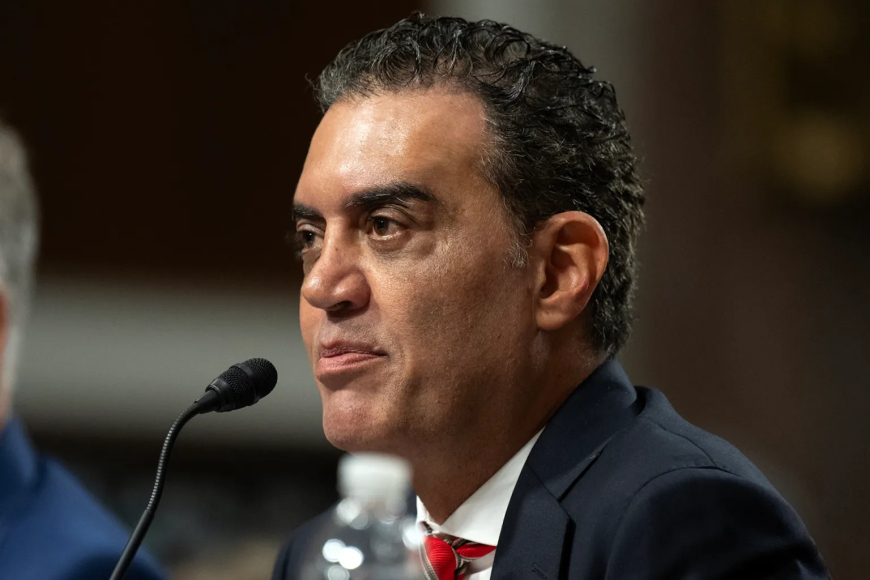
Emil Michael, now serving as a senior technology official at the Department of Defence, has returned to public attention amid the government’s ongoing dispute with Anthropic. A recently released podcast interview offers one of the clearest insights yet into his views on that conflict and revisits lingering frustrations from his time at Uber.
The interview, published Monday and recorded last month by Kleiner Perkins partner Joubin Mirzadegan, spans both policy issues and Michael’s personal history. Although it took place before tensions between the Department of Defence and Anthropic fully escalated, Michael’s comments about his departure from Uber — and the resentment he still carries — stood out most.
When asked directly whether he had effectively been pushed out alongside Uber co-founder Travis Kalanick, Michael responded: “Effectively.”
Michael stepped down eight days before Kalanick resigned in June 2017, following a workplace investigation triggered by allegations of sexual harassment and gender discrimination within the company. While Michael was not personally accused, the investigation, led by former U.S. Attorney General Eric Holder, recommended his removal. Kalanick’s departure followed shortly after, amid what The New York Times described as a shareholder-driven revolt led by major investors, including Benchmark.
When Mirzadegan pressed him on whether he still harboured resentment, Michael was direct: “I’ll never forget that, nor forgive.”
The fallout continues to weigh on both Michael and Kalanick, not only due to reputational damage but also because they remain convinced that Uber’s autonomous driving ambitions were cut short by investor decisions. They argue that self-driving technology represented the company’s long-term future, and that its abandonment ultimately undermined Uber’s potential. During the conversation, Michael suggested that investors prioritise short-term gains over long-term innovation. “They wanted to preserve their embedded gains, rather than try to make this a trillion-dollar company,” he said.
Kalanick has expressed similar views publicly. Speaking at the Abundance Summit in Los Angeles last year, he noted that Uber’s autonomous program had been among the leaders in the field before it was shut down. “You could say, ‘Wish we had an autonomous ride-sharing product right now. That would be great,” he told attendees.
Uber ultimately sold its self-driving division to Aurora in 2020, a move widely viewed at the time as a necessary step given the high costs and uncertain timeline of the technology. Since then, competitors like Waymo have made significant progress, with robotaxi services now operating in multiple U.S. cities. Whether Uber could have sustained the effort remains uncertain, but the decision clearly continues to resonate with its former leadership.
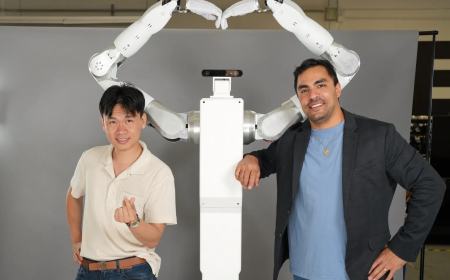
Kalanick has remained active in the technology space. This month, he unveiled Atoms, a robotics startup he has been developing quietly for several years. He also disclosed that he is the largest investor in Pronto, an autonomous vehicle company focused on industrial and mining applications, founded by former Uber executive Anthony Levandowski, and indicated plans to acquire it.
Meanwhile, Michael is now engaged in a different kind of battle through his role at the Pentagon. His interview included commentary on the Department of Defence’s negotiations with Anthropic, which have since broken down. Michael described Anthropic as one of a limited number of approved large language model providers for the department, in part due to its partnerships with Palantir.
According to Michael, the DoD already operates under extensive legal and regulatory constraints, which he said can be overwhelming. He argued that Anthropic’s attempt to impose additional restrictions on how its AI systems are used adds unnecessary complexity. “What I can’t do is have any one company impose their own policy preferences on top of the laws and on top of my internal policies,” he said, comparing the situation to software tools like Microsoft Office, which do not dictate how users can create content.
He also raised concerns about national security, referencing Anthropic’s own findings that Chinese technology firms have attempted to replicate its models through distillation techniques. Under China’s civil-military fusion policies, Michael argued, such developments could give the People’s Liberation Army access to comparable AI capabilities. At the same time, the U.S. military might be constrained by additional safeguards.
“I’d be one-armed, tied behind my back against an Anthropic model that’s fully capable — by an adversary,” he said, describing the situation as “totally Orwellian.”
Michael added that companies leading in AI development should support national defence efforts. “If you’re an American champion — and I believe they are — don’t you want to help your Department of War succeed with the best tools available?” he said.
Since the interview was recorded, the dispute between Anthropic and the Department of Defence has escalated into a legal battle. Defence Secretary Pete Hegseth designated Anthropic as a “supply-chain risk” in late February. The government later filed a detailed brief in federal court, arguing that granting Anthropic access to military systems could pose unacceptable risks, including the possibility that the company would alter or restrict its technology during critical operations.
Anthropic has strongly contested those claims. In filings submitted last week, the company argued that the government’s position is based on misunderstandings of how its systems function. Thiyagu Ramasamy, Anthropic’s head of public sector, stated in a sworn declaration that the company lacks the technical capability to interfere with military operations in the manner suggested
A hearing on the matter is scheduled for Tuesday in San Francisco.
What's Your Reaction?
 Like
0
Like
0
 Dislike
0
Dislike
0
 Love
0
Love
0
 Funny
0
Funny
0
 Angry
0
Angry
0
 Sad
0
Sad
0
 Wow
0
Wow
0