





























From E-Scooters to Space: The Founder Who Secured $5 Million for Orbital Data Centres
Former Spin founder Euwyn Poon has raised $5 million for Orbital, a startup developing space-based data centres to power future AI computing. Learn how the company plans to use satellite infrastructure and orbital technology to meet growing demand for data processing in space.
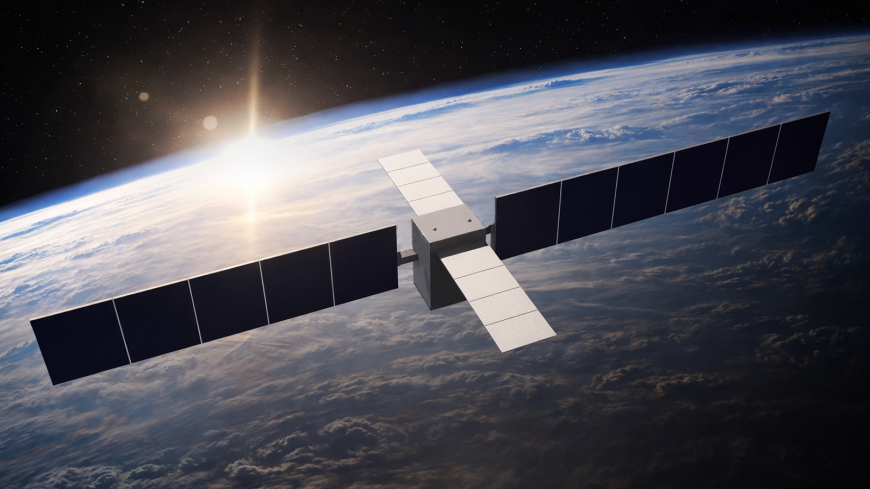
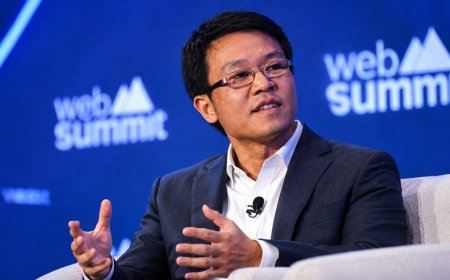
The growing influence of SpaceX is reshaping how investors view ambitious space ventures. One sign of that shift is Orbital, a startup building space-based data centres that has secured a $5 million seed round despite being led by a founder with no traditional aerospace background.
Orbital emerged in May from Andreessen Horowitz’s Speedrun accelerator program and is part of a new wave of startups aiming to run AI inference workloads in space. The round included backing from Basis Set, Human Element, Wayfinder, Antler, Anti Fund, Ascent, Rubik, Zero Knowledge Ventures, LYVC, Feld Ventures, New Legacy, FNDR, UpHonest, and Asterisk.
Founder and CEO Euwyn Poon launched e-scooter startup Spin in 2017 and sold it to Ford a year later. According to a16z partner Andrew Chen, Poon explored multiple startup concepts before deciding to pursue orbital computing infrastructure.
The idea is built around a familiar argument: AI demand continues to surge while expanding data centre capacity on Earth remains slow and expensive. Space offers abundant solar energy and fewer land-use constraints. The challenge, however, is the high cost of launching equipment into orbit.
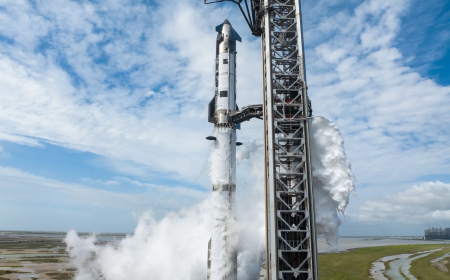
Like several competitors, Orbital is betting that SpaceX’s Starship rocket will dramatically lower those costs.
“We will get to full scale when Starship comes online,” Poon said, noting that current Falcon 9 launch economics “make this not economically feasible.”
For now, Orbital’s team of roughly a dozen employees in Los Angeles, including veterans from Amazon LEO, SpaceX, and Northrop Grumman, is preparing an early demonstration mission. The company plans to fly an Nvidia Blackwell chip aboard a partner satellite to test its radiation-shielding and thermal-management technology.
Orbital hopes to launch its first dedicated data-processing spacecraft in 2028, equipped with Nvidia’s Space-1 Vera Rubin-class GPUs. The company plans to generate revenue through piecewise inference services as additional satellites are deployed.
That strategy resembles rival startup Starcloud, which already has a GPU operating in orbit and plans to expand gradually while waiting for Starship to enable larger-scale deployments.
The company’s long-term vision is ambitious. Orbital aims to deploy 10,000 satellites capable of delivering a combined gigawatt of computing power, with each spacecraft producing around 100 kilowatts. By comparison, Elon Musk has said SpaceX’s AI satellites could generate up to 150 kilowatts, while Starcloud is targeting 200-kilowatt spacecraft.
Not every startup is waiting for Starship. Cowboy Space Company, another a16z-backed venture, has begun developing its own rockets, while Blue Origin has announced plans to launch orbital data centres using its New Glenn vehicle.
Despite increasing competition, Poon believes the scale of AI demand leaves room for multiple winners.
“There are so many lanes for companies in our space to pursue,” he said, pointing to different AI workloads, spacecraft designs, and approaches to building orbital computing platforms.
Chen believes Poon’s experience scaling Spin, which deployed approximately 250,000 scooters across 100 cities, demonstrates the operational skills needed to tackle a complex aerospace business.
While a project of this scale could require a decade and billions of dollars to realise fully, Chen said venture investors have become increasingly comfortable backing long-term opportunities.
“This kind of thing would have sounded crazy 10 years ago when we were all building mobile apps,” he said. “Starting it in 2026 just lets you tap into all the energy and excitement that’s happening in the capital markets.”
Poon’s path into orbital computing began after leaving Ford, when he purchased an Nvidia A100 chip and colocated it in a Santa Clara data centre to serve as a compute resource for open-weight AI models. That experience convinced him of the growing value of compute infrastructure in the AI era.
Now, Orbital is attempting to take that idea much further—by putting thousands of GPUs into space.
What's Your Reaction?
 Like
0
Like
0
 Dislike
0
Dislike
0
 Love
0
Love
0
 Funny
0
Funny
0
 Angry
0
Angry
0
 Sad
0
Sad
0
 Wow
0
Wow
0