Many artificial intelligence startup concepts today are still little more than surface-level “wrappers” built on top of existing AI models. As major model providers continue adding new capabilities, investors are becoming increasingly cautious about backing startups that could quickly lose relevance.
This trend became evident during the selection process for a joint AI accelerator in India run by Google and venture capital firm Accel. Out of more than 4,000 applications reviewed, “wrapper” ideas made up a significant portion — yet none were selected for the latest cohort, according to Accel partner Prayank Swaroop.
The AI-focused Atoms program, announced in November, is designed to support early-stage startups developing AI-driven products connected to India. Companies selected for the current cohort will receive up to $2 million in funding from Accel and Google’s AI Futures Fund, along with up to $350,000 in cloud and AI compute credits from Google.
Swaroop noted that approximately 70% of rejected applications fell into the “wrapper” category — meaning they added AI features, such as chatbots, to existing platforms without fundamentally rethinking workflows to use artificial intelligence.
Among the applications not selected, many were in highly competitive areas such as marketing automation and AI-based recruitment tools. According to Swaroop, these sectors are crowded and often lack meaningful differentiation, making it difficult for startups to stand out.
The surge in such applications is not entirely unexpected. This year’s program attracted nearly four times as many submissions as previous Atoms cohorts, with a large share coming from first-time founders.
India’s AI startup ecosystem continues to lean heavily toward enterprise solutions, as reflected in the application pool. Around 62% of submissions focused on productivity tools, while another 13% targeted software development and coding. In total, roughly three-quarters of the ideas were centred on enterprise software rather than consumer-facing products. Swaroop added that he had hoped to see more innovation in sectors like healthcare and education.
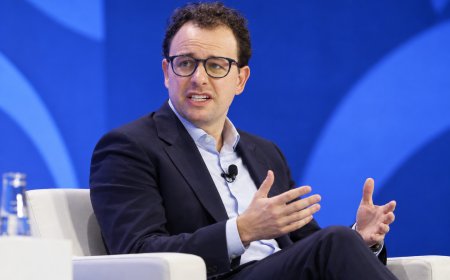
Jonathan Silber, co-founder and director of Google’s AI Futures Fund, said the startups selected for the program align with areas where Google expects AI to have a deeper real-world impact.
Silber also clarified that participating startups are not required to rely solely on Google’s AI models. Many companies use a combination of different models depending on their needs. The program’s broader aim is to gather insights into how Google’s models perform in practical applications.
These insights are then shared with teams at Google DeepMind to help refine future AI systems. Silber described this as a feedback loop where startup experimentation informs model development. “If a company is using an alternative model, that means Google has work to do to build the best model in the market,” he said.
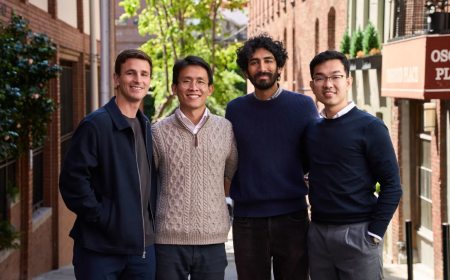
The five startups selected for this year’s cohort are:
- K-Dense, which is developing an AI “co-scientist” to accelerate research in areas such as life sciences and chemistry;
- Dodge.ai, focused on building autonomous agents for enterprise ERP systems;
- Persistence Labs, which is on voice AI solutions for call centre operations.
- Zingroll, creating a platform for AI-generated films and shows; and
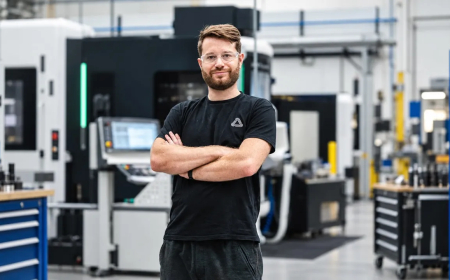
- LevelPlane, applying AI to industrial automation in sectors like automotive and aerospace manufacturing.






































 Like
0
Like
0
 Dislike
0
Dislike
0
 Love
0
Love
0
 Funny
0
Funny
0
 Angry
0
Angry
0
 Sad
0
Sad
0
 Wow
0
Wow
0