



































Google launches its most advanced AI research agent yet — on the same day OpenAI unveils GPT-5.2
Google has introduced a new version of its Gemini Deep Research agent, powered by Gemini 3 Pro, to expand its capabilities for developers and integrate it across major Google products. The announcement arrived on the same day OpenAI released GPT-5.2, intensifying competition in advanced AI research and benchmark performance.

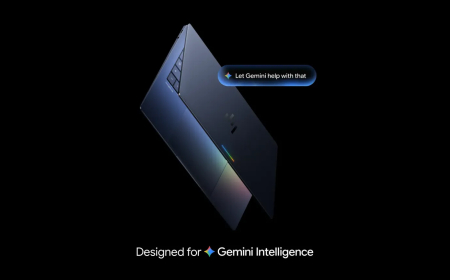
Google on Thursday introduced a “reimagined” edition of its Gemini Deep Research agent, now powered by its latest flagship foundation model, Gemini 3 Pro.
The upgraded system is no longer limited to producing research-style reports. Instead, developers can now integrate Google’s high-end SATA-model research capabilities directly into their own applications. This expansion is enabled by Google’s new Interactions API, designed to give developers greater control as the industry shifts toward agentic AI.
The updated Gemini Deep Research agent is designed to process and synthesise vast amounts of information and to manage huge context windows within a single prompt. According to Google, customers rely on the system for critical workloads, including due diligence and drug-toxicity safety analysis.
Google also announced that this deep research agent will soon be embedded into several of its products, including Google Search, Google Finance, the Gemini app, and NotebookLM. The company frames this as another move toward a future in which AI agents, rather than people, handle the bulk of information-seeking tasks.
A key part of the launch centres on the performance improvements enabled by Gemini 3 Pro, which Google describes as its “most factual” model to date—one specifically trained to reduce hallucinations during complex, multi-step reasoning.
Hallucination risks are especially problematic for long-duration agentic tasks, where a single incorrect inference can undermine the entire output. The more decisions an AI agent must make, the greater the likelihood that one flawed step disrupts the chain.
To support its performance claims, Google introduced a new benchmark, DeepSearchQA, designed to measure how systems perform on intricate, multi-stage information-retrieval tasks. The benchmark has been open-sourced.
Google also evaluated Deep Research on Humanity’s Last Exam — an independent collection of obscure, high-difficulty knowledge challenges — and on BrowserComp, a benchmark testing the capabilities of browser-based agents.
According to Google, its new agent outperformed rivals on DeepSearchQA and Humanity’s Last Exam. However, OpenAI’s ChatGPT 5 Pro trailed most metrics and slightly surpassed Google’s system on BrowserComp.
Those comparisons, however, became outdated almost immediately. On the same day Google published its results, OpenAI unveiled its highly anticipated GPT 5.2 model, codenamed “Garlic.” OpenAI claims the new model surpasses its competitors—including Google—across several widely recognised benchmarks and its internal test suites.
One of the most notable elements of the announcement was the timing: with industry attention focused on OpenAI’s upcoming release, Google strategically revealed a major AI upgrade of its own.
What's Your Reaction?
 Like
0
Like
0
 Dislike
0
Dislike
0
 Love
0
Love
0
 Funny
0
Funny
0
 Angry
0
Angry
0
 Sad
0
Sad
0
 Wow
0
Wow
0